
It's Safe to Have This
Stop standing in your own way.
Duration
9:50
Category
Light
Focus
Self-worth
Level
All levels
Listen to this practice
It's Safe to Have This
Be the first to try new practices
Get notified when new guided practices, tools, and resources are released.
No spam. Unsubscribe anytime.
About this practice
It's Safe to Have This is a gentle practice for the moments when you keep getting in your own way — procrastinating at the worst time, pulling back from what you want, or quietly undoing the good things just as they begin to take shape.
Self-sabotage can look like a lack of discipline, but underneath it is almost always a part of you trying to protect you — from failing, from being seen, from hoping and losing, or even from what success might ask of you. Met with willpower alone, that part only digs in.
This practice takes a different approach. Instead of forcing yourself forward, it turns toward the part that pulls back — with curiosity and kindness rather than self-attack — and gently reassures it that it is safe, now, to want and to keep good things.
Many people find It's Safe to Have This helpful during procrastination, fear of success or failure, perfectionism, and the familiar experience of wanting something and somehow standing in its way.
How to practice
- Settle comfortably and take a slow breath to arrive in this moment.
- Bring to mind something you want but keep moving away from, and notice the two movements: the part that reaches forward and the part that pulls back.
- Meet the part that pulls back with curiosity, and ask it what it is afraid would happen.
- Offer it kindness and reassurance — that it is safe, now, to have good things — then rest in open awareness.
Helpful for
- Self-sabotage
- Fear of success
- Getting in your own way
- Procrastination
- Self-worth
- Fear of failure
- Perfectionism
- Self-criticism
Frequently asked questions
What is self-sabotage?
Why do I get in my own way?
Can fear of success really cause self-sabotage?
Why doesn't willpower fix self-sabotage?
Who is this practice designed for?
When should I use this practice?
Will this make me stop wanting good things?
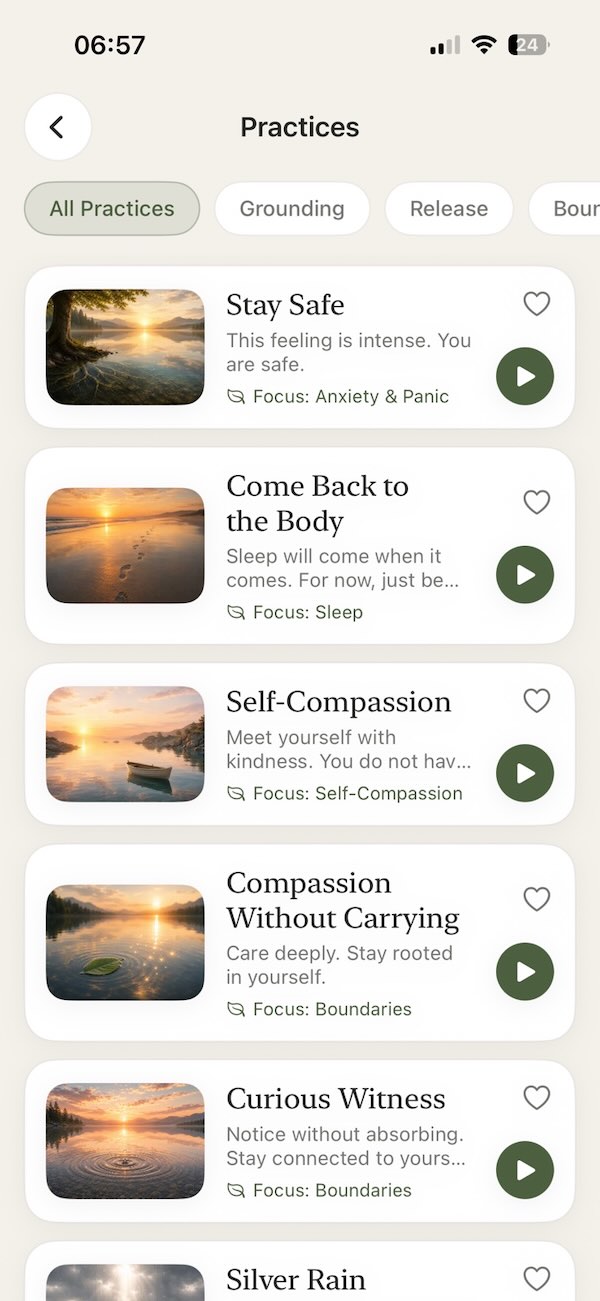
Ready for more support?
Continue your journey in Aira
Access the full library of guided practices, tools, and resources anytime, anywhere.
- 10+Guided Practices
- AnxietyRelief Tools
- SleepSupport
- TrackYour Progress
- OfflineAccess
Available on iPhone and iPad