Fear of Failure: Why Trying Can Feel So Risky
Why trying can feel so risky, where fear of failure comes from, its link to perfectionism, shame, and procrastination, and how to face it and act anyway.

For some people, the problem isn't failing — it's the fear of it, which can be loud enough to shape every choice long before any real risk appears. Fear of failure can keep you from trying, from finishing, from putting yourself forward, all to avoid a possibility that hasn't even happened yet. This is a look at why trying can feel so risky, where the fear comes from, and how it loosens.
What fear of failure really is
Fear of failure is an intense dread of not succeeding — strong enough that avoiding failure starts to matter more than pursuing success. For most people it isn't really the failure itself that terrifies; it's what failure is believed to mean. If a setback feels like proof that you're not good enough, then every attempt carries the weight of your whole worth, and the stakes of ordinary tasks quietly become enormous.
Why am I so afraid of failure?
The fear usually traces back to what failure got linked to. If mistakes once met criticism, withdrawal of approval, or shame, the mind learned that failing is dangerous — not just inconvenient, but a threat to belonging and self-worth. So the fear isn't irrational; it's an old protection, guarding against a pain you once felt was unbearable. Underneath most fear of failure sits the fear of the shame a failure might bring.
Fear of failure and perfectionism
Fear of failure and perfectionism are two sides of one coin. Perfectionism sets an impossibly high bar; fear of failure is the dread of not clearing it. Together they make action feel high-stakes and risky, which is why both so often lead to procrastination — if you never fully try, you never definitively fail. Not starting can feel safer than starting and falling short.
How fear of failure holds you back
The cruel irony is that avoiding failure usually costs more than failure would. Fear of failure leads to staying small: not applying, not speaking up, not attempting the thing you actually want, settling for less to avoid the risk of more. It can also masquerade as procrastination, indecision, or I'm just not that bothered, when underneath is a fear of giving something a real shot and finding out how it goes. The avoidance protects you from failure and from growth at the same time.
Reframing failure
Failure isn't the opposite of success — it's part of how success is built. Every skilled person has a long, invisible trail of failures behind their competence; the failures were the learning, not the disqualification. A failure is an event and a source of information, not a verdict on your worth. Separating I failed at this from I am a failure is most of what changes the fear, because the second sentence — not the first — is the one that actually hurts.
How to face the fear of failure
You don't usually eliminate the fear; you learn to act alongside it.
Shrink the meaning of failure
Ask what failing would actually cost — usually a setback and some discomfort, not the catastrophe the fear implies.
Let yourself do it badly
Giving yourself permission to fail, or simply to be a beginner, takes the unbearable stakes out of trying.
Separate worth from outcome
Practise treating the result of an attempt as information about the attempt, not a measurement of you.
Act before you feel ready
Courage isn't the absence of fear; it's moving while afraid. Confidence usually follows action rather than arriving before it.
The fuller picture
Underneath the dread sits one equation: if I try and fall short, it will prove I'm not good enough — so not trying is the safer bet. It feels true because somewhere failure got linked to shame, and the mind now treats every attempt as if your whole worth is riding on it.
But look closely at that link, because that's where the fear actually lives. A failure is an event — something that happened, a piece of information about one attempt. I am a failure is a verdict on the whole of you. The two got fused, and it's the second sentence, not the first, that hurts. Pull them apart and the stakes shrink to human size. Notice too what the avoidance really costs: not trying protects you from failure and from growth in the same move, so the thing meant to keep you safe quietly keeps you small. And every skilled person you admire has a long, invisible trail of failures behind them — those were the learning, not the disqualification. You don't have to feel fearless. You only have to let a setback mean this attempt didn't work, not I don't work, and move anyway.
Final thoughts
If the fear of failure runs your choices, it doesn't mean you're weak or lazy — it usually means failing once felt dangerous, and a part of you is still trying to keep you safe. But a failure is an event, not a verdict on your worth, and the cost of never trying is almost always higher than the cost of falling short. You don't have to feel fearless to act; you only have to let the stakes be smaller and move anyway. One attempt, one breath, one allowed mistake at a time.
Try a gentle practice
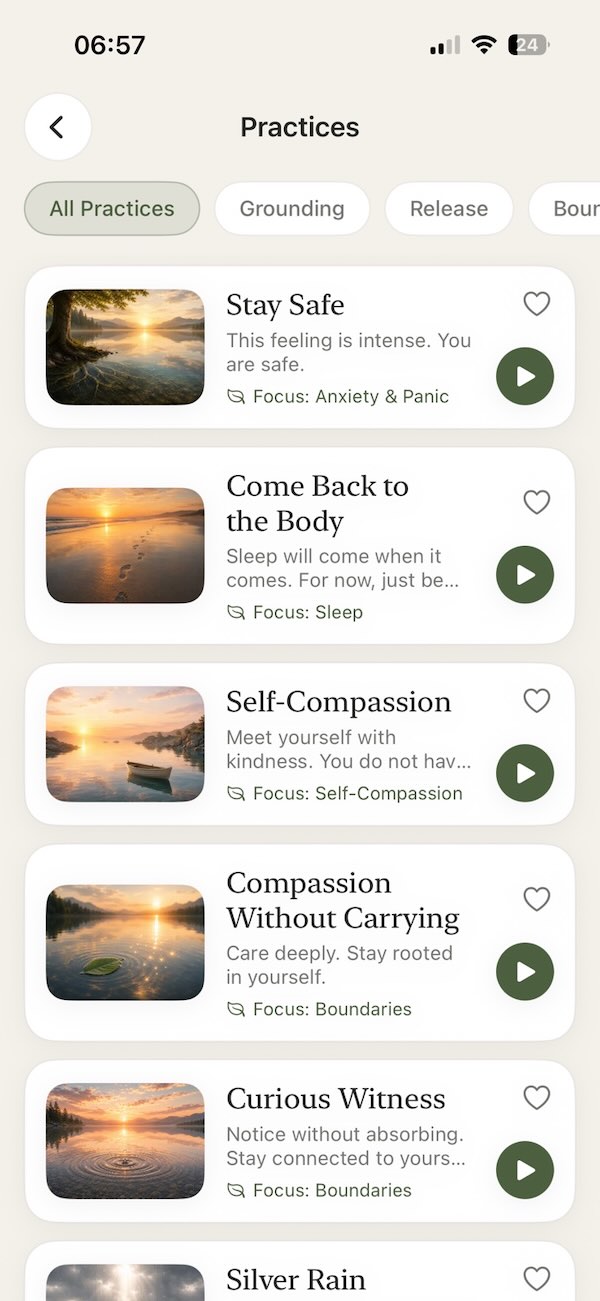
Fear of failure tightens everything, because a setback feels like proof you're not enough. Self-Compassion is a gentle practice for loosening that grip — a way to separate your worth from the outcome, meet the fear with kindness instead of pressure, and let yourself try, and sometimes fall short, as the human you're allowed to be.

Try the practice
Self-Compassion
Offer yourself the kindness you need.
Ready for more support?
Continue your journey in Aira
Access the full library of guided practices, tools, and resources anytime, anywhere.
- 10+Guided Practices
- AnxietyRelief Tools
- SleepSupport
- TrackYour Progress
- OfflineAccess
Available on iPhone and iPad