Self-Sabotage: Why We Get in Our Own Way
Why we undermine our own goals, the hidden logic behind self-sabotage, its link to self-worth and fear of success, sabotage in relationships, and how to stop.

You want the thing — the relationship, the goal, the change — and then, somehow, you're the one who gets in the way. You procrastinate at the worst moment, pick a fight when things are going well, quit just before the finish, or talk yourself out of the opportunity. Self-sabotage is the strange, frustrating experience of undermining your own goals, and it's far more common, and more understandable, than it feels. This is a look at why we do it and how to get out of our own way.
What is self-sabotage?
Self-sabotage is any pattern of behaviour that gets in the way of what you say you want — usually without conscious intent. It shows up as procrastination, perfectionism, picking fights, withdrawing, avoidance, numbing out, or quitting just as things start to work. The defining feature is the contradiction: part of you is reaching for something while another part keeps quietly pulling it back.
Why do I self-sabotage?
Self-sabotage looks irrational, but it almost always has a hidden logic: it's protecting you from something. Usually that something is a feared feeling — the shame of failing, the exposure of succeeding, the vulnerability of being seen, the disappointment of hoping and losing. If, deep down, you don't feel you deserve the good thing, or you fear what it would ask of you, sabotaging it removes the risk. The behaviour isn't self-destruction for its own sake; it's a misguided attempt at safety.
Self-sabotage and self-worth
Much self-sabotage runs on self-worth. If you don't believe you deserve success, love, or ease, a part of you may work to bring your circumstances back in line with that belief — pulling things down to match the level you feel you're worth. This is why people sometimes undermine exactly what they wanted most: not because they don't want it, but because having it contradicts a deeper story about what they're allowed to have.
Fear of success
It sounds backwards, but fear of success drives a lot of self-sabotage. Success can feel threatening — it raises expectations, increases visibility, risks a bigger future failure, and can change relationships or identity in ways that feel unsafe. So the part of you that fears those things may quietly pump the brakes. Sabotage, here, isn't fear of losing; it's fear of what winning would mean.
Self-sabotage in relationships
Relationships are a common stage for self-sabotage. Testing a partner, pushing people away as they get close, picking fights when things feel too good, or assuming it'll end so you end it first — these often come from a fear of being hurt or a belief that you'll be left anyway. Sabotaging the closeness can feel safer than risking the pain of losing it later. The protection and the damage are the same act.
How to stop self-sabotaging
Change starts with curiosity rather than self-attack.
Get curious about the payoff
When you catch the pattern, ask what it's protecting you from. Self-sabotage always has a hidden job; naming the job removes some of its power.
Notice the moment of choice
Sabotage often happens at predictable points — just before finishing, just as things get good. Learning your pattern's timing lets you catch it earlier.
Address the worth underneath
If the sabotage is guarding a belief that you don't deserve the good thing, the deeper work is on self-worth, not willpower.
Meet the fear with compassion, not force
White-knuckling rarely works, because the behaviour is protective. Reassuring the frightened part — it's safe to have this — loosens the need to sabotage in the first place.
The fuller picture
When you keep tripping yourself up, the conclusion writes itself: something is wrong with me — I must secretly not want the good thing, or not deserve it. It feels true because the pattern is so consistent and so against your own stated wishes; what else could explain it but a flaw?
But sabotage that looks irrational almost always has a hidden logic: it's protecting you from a feared feeling — the shame of failing, the exposure of succeeding, the vulnerability of being seen, the ache of hoping and losing. Seen that way, the behaviour isn't self-destruction; it's a clumsy bid for safety. The part of you pulling the brakes isn't an enemy, and isn't proof you don't want the thing — often it wants it so much that it's frightened of what having it would risk. Which changes what the work is. You don't dismantle a protective pattern with force or self-attack; that only fights the frightened part harder. You loosen it by getting curious about what it's guarding, and gently reassuring it that it's safe, now, to want and to keep good things. Nothing is broken in you. An old strategy has simply outlived its job.
Final thoughts
If you keep getting in your own way, it doesn't mean you're broken or secretly don't want good things — it usually means a part of you is trying to protect you from a feeling it learned to fear. Sabotage isn't a character flaw; it's an old strategy that has outlived its job. You don't dismantle it with force, but with understanding — by getting curious about what it's guarding and gently reassuring the part of you that's afraid. One noticed pattern, one breath, one reassured fear at a time.
Try a gentle practice
Self-sabotage rarely responds to willpower, because underneath it is a frightened part trying to keep you safe. It's Safe to Have This is a gentle practice for meeting that part — a way to soften the self-attack, get curious about what it's guarding, and gently reassure it that it's safe, now, to want and to keep good things.

Try the practice
It's Safe to Have This
Stop standing in your own way.
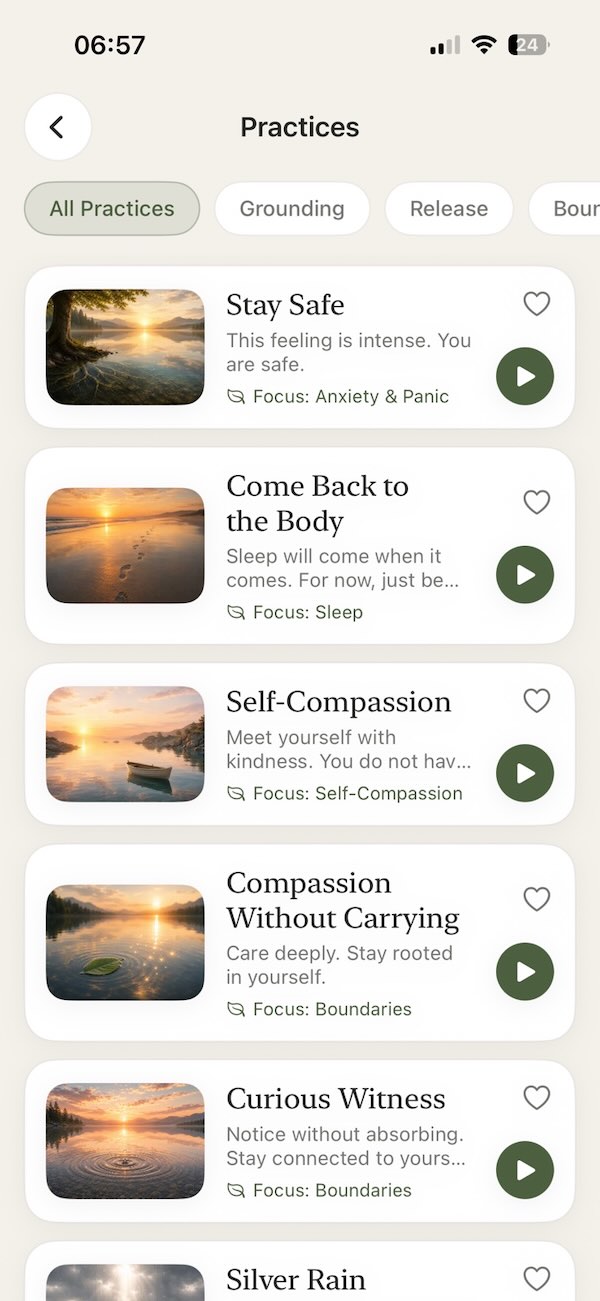
Ready for more support?
Continue your journey in Aira
Access the full library of guided practices, tools, and resources anytime, anywhere.
- 10+Guided Practices
- AnxietyRelief Tools
- SleepSupport
- TrackYour Progress
- OfflineAccess
Available on iPhone and iPad