
Permission to Rest
You've done enough. You're allowed to rest.
Duration
8:17
Category
Water
Focus
Rest
Level
All levels
Listen to this practice
Permission to Rest
Be the first to try new practices
Get notified when new guided practices, tools, and resources are released.
No spam. Unsubscribe anytime.
About this practice
Permission to Rest is a gentle practice for anyone who finds it hard to stop — who feels they have to earn rest, finish everything first, or be completely depleted before they're allowed to pause.
Burnout and overwhelm thrive on the belief that rest must be deserved. This practice gently dismantles that belief. It's a reminder that you're allowed to rest now, not once everything is done; that rest isn't a reward for productivity but part of how you sustain yourself; and that doing nothing, for a little while, is enough.
Rather than pushing you to relax — which rarely works — it simply gives permission: to put down the weight, to let the bracing part of you soften, and to be here without earning it.
Many people reach for Permission to Rest when they're burnt out, exhausted but unable to switch off, drowning in guilt about resting, or caught in the constant pull to do more.
How to practice
- Settle wherever you are and let your body be fully supported, breathing out a little longer than you breathe in.
- Notice the part of you still bracing or scanning for the next task — and let it know it can rest too.
- Remind yourself there's nothing to fix or finish in this moment; for now, doing nothing is enough.
- Let your shoulders, jaw, and breath soften, and simply be here, replenishing, without having to earn it.
Helpful for
- Burnout
- Exhaustion
- Rest guilt
- Overwork
- Slowing down
- Recovery
- Toxic productivity
- Feeling you must earn rest
Frequently asked questions
Why do I feel guilty when I rest?
Isn't rest just the reward for finishing the work?
I can't switch off even when I rest. What helps?
How is this different from Nothing Left to Do?
When should I use this practice?
Does resting mean I'm giving up?
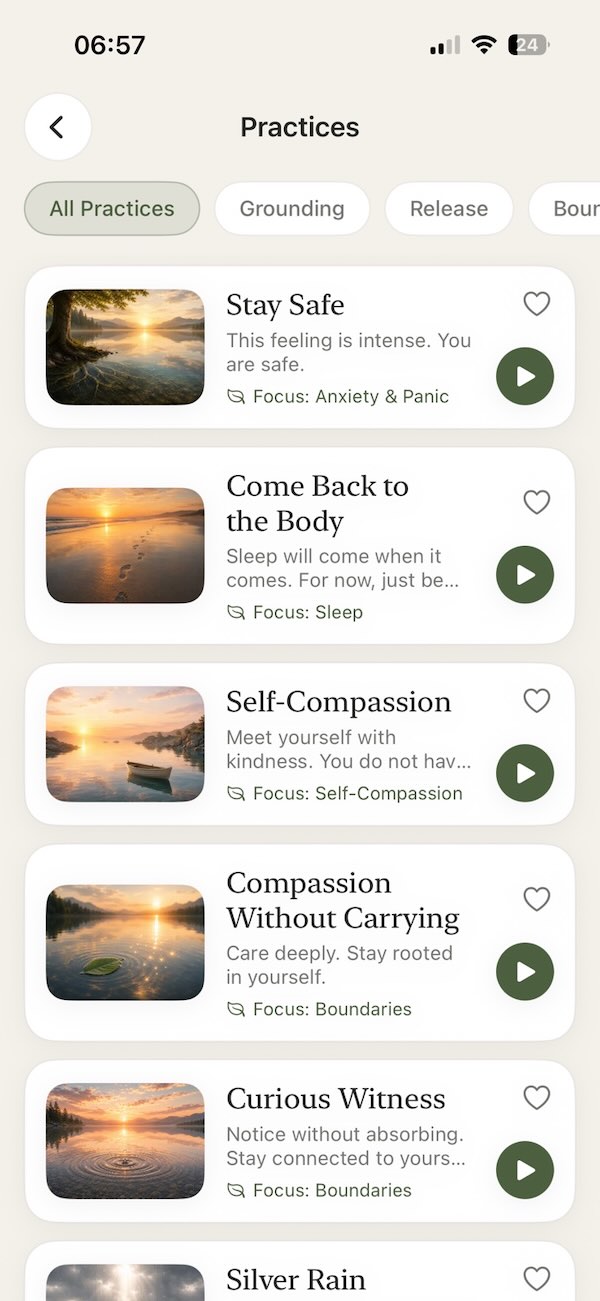
Ready for more support?
Continue your journey in Aira
Access the full library of guided practices, tools, and resources anytime, anywhere.
- 10+Guided Practices
- AnxietyRelief Tools
- SleepSupport
- TrackYour Progress
- OfflineAccess
Available on iPhone and iPad