Anxiety and Work Stress: How to Stay Grounded
Work anxiety often doesn't stay at work — it follows you home, into the evening, into Sunday nights. Why work triggers anxiety, and gentle ways to stay grounded under pressure.

Work can be meaningful, creative, and a source of purpose, structure, and financial stability. But it can also become one of the most common sources of anxiety — deadlines, emails, meetings, responsibilities, expectations, decisions. For many people, anxiety at work doesn't stay at work: it follows them home, appears in the evening, shows up while they're trying to sleep, and even intrudes on weekends that were supposed to feel restful. If this sounds familiar, you're not alone. Work anxiety has become one of the most common forms of anxiety in modern life.
Why Work Triggers Anxiety
Work combines many of the things the nervous system naturally finds challenging: uncertainty, responsibility, evaluation, deadlines, limited control, shifting priorities, and the ever-present possibility of mistakes. Even highly capable people experience workplace anxiety, because the nervous system responds to pressure, not just ability. You can be competent and still feel anxious, experienced and still feel overwhelmed, successful and still struggle with anxiety about work. The presence of anxiety doesn't mean you're failing — it often means you're carrying a lot.
What Work Anxiety Feels Like
Work-related anxiety looks different for different people. You may experience:
- anxiety before work
- anxiety during the workday
- anxiety after work
- difficulty switching off
- constant thinking about tasks
- tension in the body
- fear of making mistakes
- feeling overwhelmed at work
- difficulty concentrating
- emotional exhaustion
Some people feel anxious before opening their inbox, others before meetings, others throughout the day without any clear trigger. The experience varies, but the underlying nervous system response is often similar.
Anxiety Before Work
Many people experience anxiety before work, especially on Sunday evenings or first thing in the morning. You may wake up already feeling tense, already thinking about deadlines, already anticipating problems. This happens because the nervous system is preparing for expected demands — even before the workday begins, the body may be entering a state of readiness. The challenge is that this state becomes exhausting when it repeats day after day.
Anxiety During the Workday
During busy periods, anxiety often becomes focused on performance. You may worry about meeting expectations, keeping up with responsibilities, making mistakes, forgetting something important, falling behind, or disappointing others. The mind turns future-focused, asking what am I missing? what if I don't finish on time? what if I make the wrong decision? This is one reason anxiety and productivity pressure are so closely connected.
Anxiety After Work
One of the most frustrating experiences is anxiety after work. The workday ends, but the nervous system stays activated. You may find yourself replaying conversations, thinking about unfinished tasks, checking emails repeatedly, worrying about tomorrow, and struggling to relax. Your body may be at home, but your nervous system is still at work — often a sign that recovery isn't fully happening between periods of stress.
Anxiety and Job Pressure
Job anxiety isn't always about having too much work; sometimes it's about what work represents — the fear of making mistakes, of being judged, of disappointing people, of not performing well enough. Anxiety and work performance often become linked when self-worth becomes tied to achievement, and the mind starts to believe if I perform perfectly, I'll finally feel safe. Unfortunately, safety rarely comes from perfect performance, because the goalpost keeps moving.
Anxiety and Workload
Heavy workloads place significant demands on the nervous system. When tasks accumulate faster than they can be completed, many people experience anxiety from too much work, anxiety from too many tasks, anxiety and work overload, anxiety from responsibility, and a general sense of feeling overwhelmed at work. The issue isn't always time management. Sometimes there's simply more work than one nervous system can comfortably carry.
Anxiety and Deadlines
Deadlines naturally create pressure, and pressure itself isn't always harmful. The problem begins when pressure becomes constant — when every task feels urgent, every deadline feels critical, and there's never enough time to recover. Anxiety and deadlines become especially difficult when the nervous system starts treating every task as an emergency.
Anxiety About Making Mistakes at Work
Many people with workplace anxiety are highly conscientious. They care deeply about doing good work, and they want to be reliable and professional — real strengths. But anxiety can turn healthy responsibility into constant vigilance, so you may find yourself checking work repeatedly, overpreparing, struggling to delegate, worrying about small errors, and fearing criticism. The nervous system starts believing mistakes are dangerous, which creates chronic stress even in relatively safe environments.
Work Stress and the Nervous System
The nervous system was designed for periods of effort followed by periods of recovery, but modern work often provides effort without enough recovery. Work stress and anxiety become chronic when the system never receives a clear signal that it can rest, so the body stays alert, prepared, focused, and activated even after the workday ends. Over time, this can create nervous system fatigue and emotional exhaustion.
Work Burnout and Anxiety
Work burnout anxiety usually develops gradually. Most people don't suddenly burn out; it happens over time, through more pressure, more responsibility, less recovery, and less rest. Common signs of burnout include emotional exhaustion, irritability, chronic fatigue, feeling detached from work, reduced motivation, difficulty concentrating, and increased anxiety. Many people describe burnout as feeling both exhausted and unable to stop — too tired to continue, too anxious to rest.
Staying Grounded During a Busy Workday
When anxiety rises, the goal isn't necessarily to eliminate it. The goal is to stay connected to yourself while the pressure is present.
Return to your body
Feel your feet on the floor, notice your breathing, notice the support beneath you. Grounding helps remind the nervous system that this moment is manageable.
Focus on the next step
Anxiety wants to solve everything at once, but the nervous system responds far better to one clear action.
Separate urgency from importance
Not every email is urgent, and not every problem requires an immediate response. Anxiety often treats everything as an emergency, while reality is usually more nuanced.
Create recovery moments
Even sixty seconds of intentional pause can help regulate the nervous system. Recovery doesn't only happen on vacations — it happens in small moments throughout the day.
You Are More Than Your Work
Many people unknowingly tie their identity to their performance, so success feels personal, failure feels personal, and feedback feels personal. But your value is larger than your productivity, and your worth is larger than your output. You aren't a machine built for endless optimization — you're a human being, and human beings need rest, connection, and recovery.
The fuller picture
Underneath a lot of work anxiety sits a quiet rule: I have to carry all of this myself, stay switched on at all times, and earn my rest by working hard enough first. It makes sense — workplaces often reward exactly that, and the nervous system quickly learns to equate stopping with falling behind.
But the rule has the logic backwards. Rest isn't a prize you collect after enough output — it's the thing that makes good output possible in the first place. Your nervous system runs on effort then recovery, and skipping the recovery part is precisely what turns ordinary work stress into burnout. Staying alert around the clock doesn't make you more productive; it slowly wears down the very system you're relying on to perform. You don't have to earn the right to pause — the pause is part of the work, not a break from it.
Final Thoughts
Work stress is real, deadlines are real, responsibilities are real. But anxiety often convinces us that we have to carry all of it alone, stay alert at all times, and earn rest through constant effort — and the nervous system was never designed for that. You're allowed to pause, to breathe, to step away and return. The work will still be there, but so will you, and staying connected to yourself may be one of the most valuable skills you bring to your work. One breath, one task, one grounded moment at a time.
Try a gentle practice
When work feels overwhelming, it's easy to lose your sense of balance — your attention moving to the next task, and the next, and the next. Ground is a gentle practice for moments when stress, pressure, and responsibility pull you away from yourself: a way to pause, find your footing, and return to the present moment.

Try the practice
Ground
Let's come back to what's real
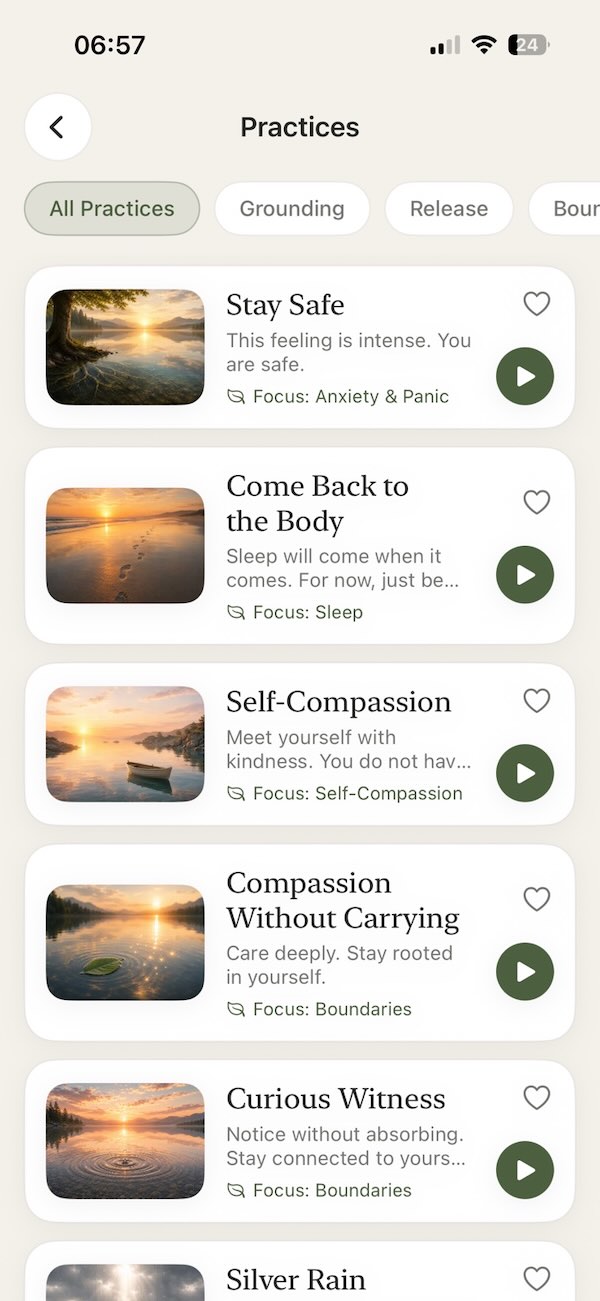
Ready for more support?
Continue your journey in Aira
Access the full library of guided practices, tools, and resources anytime, anywhere.
- 10+Guided Practices
- AnxietyRelief Tools
- SleepSupport
- TrackYour Progress
- OfflineAccess
Available on iPhone and iPad