Why Am I Anxious? Understanding Anxiety and the Nervous System
Anxiety isn't a flaw — it's the nervous system trying to protect you. A gentle look at what anxiety is, why it feels so physical, and what your body may actually need.

If you've ever asked yourself, "Why am I anxious?", you're far from alone. Many people experience anxiety without understanding where it comes from or why it seems to appear at unexpected moments. Sometimes there's an obvious reason — a stressful week, a difficult conversation, a major life transition. But sometimes anxiety appears when everything seems fine: you wake up feeling uneasy, your heart is racing, your chest feels tight, and your mind starts searching for explanations. And the question returns — "Why do I feel anxious when nothing is wrong?" To answer it, it helps to understand what anxiety is, how anxiety works, and the role of the nervous system.
What Is Anxiety?
At its core, anxiety is a survival response. It isn't a character flaw, it isn't weakness, and it isn't evidence that something is wrong with you — it's a natural function of the human nervous system, designed to keep you safe. Long before modern life existed, the brain evolved to detect danger and help us respond quickly. When the nervous system senses a threat, it activates protective systems inside the body, a process commonly known as the fight-or-flight response. In many situations that response is genuinely helpful. The challenge is that modern anxiety is often triggered by things that aren't physically dangerous — deadlines, conflict, uncertainty, pressure, social situations, financial concerns, worries about the future. As a result, the body can react as though danger is present even when no immediate threat exists.
Why Anxiety Feels So Real
Many people wonder why anxiety feels so real. The answer is simple: because it isn't imaginary — it's physical. When anxiety is activated, your nervous system creates real changes throughout the body. Your heart may beat faster, your breathing may become shallow, your muscles may tighten, your stomach may feel uncomfortable, and your attention narrows onto possible threats. These are genuine biological responses. Even when the threat exists only in anticipation or imagination, the body often responds as though the danger is happening right now. That's why anxiety can feel overwhelming. Your experience is real, the sensations are real, and the stress response is real.
Anxiety Lives in the Body
Many people assume anxiety begins with thoughts. In reality, it often begins with body sensations. You may notice a racing heart, muscle tension, shaky hands, dizziness, stomach discomfort, sweating, restlessness, difficulty relaxing, or a feeling of being constantly on edge. These are common anxiety symptoms, and many people first notice anxiety in the body before they notice it in their thoughts. The body senses danger, and the mind then tries to explain the sensation: the body says "something feels wrong," and the mind asks "what could be wrong?" This cycle helps explain why anxiety and physical symptoms are so closely connected.
How Anxiety Affects the Nervous System
The nervous system constantly scans the environment for signs of safety and danger, and it does this automatically, often outside conscious awareness. When it detects safety, you tend to feel calm, connected, present, and open. When it detects danger, you may feel anxious, tense, overwhelmed, restless, or hypervigilant. Hypervigilance is a state in which the brain becomes highly alert and constantly searches for possible problems, and it's a large part of why people with anxiety often feel unable to fully relax — their nervous system stays prepared for threats that may never appear. Understanding the connection between anxiety and the nervous system can make the whole experience feel much less mysterious.
What Causes Anxiety?
Many people ask what causes anxiety, and the honest answer is that there's rarely one single cause. Anxiety usually develops through a combination of factors — chronic stress, lack of sleep, emotional overwhelm, difficult relationships, major life changes, trauma, health concerns, perfectionism, uncertainty, and overstimulation among them. The nervous system responds to cumulative pressure. Sometimes anxiety appears after one major event; sometimes it develops gradually after months of carrying too much for too long. This is why understanding anxiety means looking at the whole picture rather than searching for one simple explanation.
Why Am I Anxious All the Time?
If you've been wondering "why am I anxious all the time?", it may be that your nervous system is spending extended periods in protection mode. When stress becomes chronic, the body can grow accustomed to operating with elevated alertness, and over time the nervous system may begin treating ordinary situations as potential threats. This doesn't mean you're broken. More often it means your system hasn't had enough opportunity to fully recover. Common contributors to chronic anxiety include prolonged stress, burnout, poor sleep, constant stimulation, unresolved emotional pressure, and a lack of genuine downtime. Sometimes the body simply needs more safety, rest, and recovery than it's been receiving.
Why Does My Body Feel Anxious?
Another common question is "why does my body feel anxious even when my mind feels okay?" It happens because anxiety isn't only a mental experience — the nervous system can activate before conscious thoughts catch up. You may feel tension, a rapid heartbeat, butterflies in your stomach, chest tightness, or restlessness before you can identify any specific reason. This is one more reason anxiety feels so physical: the body is responding to signals of danger before the thinking mind has fully processed what's happening.
Anxiety Regulation Begins With Safety
When anxiety appears, many people immediately try to eliminate it — they argue with it, analyze it, fight it, or judge themselves for feeling it. But anxiety regulation usually begins somewhere else: with helping the nervous system experience safety. You can support your nervous system through slower breathing, grounding exercises, adequate rest, gentle movement, less overstimulation, time in nature, and connection with people you trust. These practices don't force anxiety away. Instead, they help create the conditions in which calm can naturally return.
The fuller picture
The question in the title often hides a harsher one underneath: I feel anxious even when nothing is wrong — so something must be wrong with me. When there's no visible reason for the fear, the mind concludes the fault must be internal — some glitch in you.
But that conclusion skips past everything above. Anxiety with no obvious cause isn't a sign you're broken — it's a nervous system doing its protective job a little too well, reacting to anticipated threat rather than a present one. "Nothing is wrong" and "my body feels threatened" can both be true at the same time. So try swapping the question itself. Instead of "what's wrong with me?", ask "what might my nervous system need right now?" — rest, safety, recovery, support. That one shift trades self-judgment for care, and unlike "what's wrong with me," it actually points at something you can give yourself.
Final Thoughts
Understanding anxiety begins with understanding the nervous system. Your anxiety isn't evidence that you're weak, and it isn't proof that something is wrong with you. More often, it's the nervous system doing its best to protect you. The goal isn't to eliminate every anxious feeling — it's to build a different relationship with those feelings, one based on awareness, patience, understanding, and support. One breath, one moment, one gentle return to yourself at a time.
Frequently asked questions
Why am I anxious for no reason?
Usually "no reason" means there's no obvious trigger in front of you — not that there's no cause at all. Anxiety responds to anticipated threat and to a nervous system that's been running on alert, so it can switch on without anything visibly happening. It feels like it came from nowhere; far more often, it came from inside.
Is it normal to feel anxious every day?
Occasional anxiety is part of being human. But anxiety that shows up most days, hums in the background, or interferes with your sleep, work, or relationships is worth taking seriously — not because something is wrong with you, but because your nervous system is asking for support. If it's persistent, a doctor or therapist can genuinely help.
Can anxiety go away on its own?
Short-lived anxiety tied to a specific stress often eases once that stress passes. But anxiety that's settled into a daily pattern usually needs some active support to calm — rest, nervous-system care, and sometimes professional help — rather than simply waiting it out. The reassuring part is that anxiety responds well to support.
How do I calm my nervous system when I'm anxious?
Start with the body, not the argument in your head. A slow, long exhale, feeling your feet on the floor, and softening tense muscles all send your nervous system a signal of safety faster than reasoning can. It won't switch the anxiety off in one move, but it tells your body the alarm can come down a notch — and from there, calm has room to return.
Try a gentle practice
Your nervous system is trying to protect you, and sometimes the most helpful thing you can do is simply notice what it's doing — the thoughts, the sensations, the urge to worry, prepare, or stay alert. Observe is a gentle practice for moments when anxiety feels loud and all-consuming: a way to create a little space between yourself and what you're experiencing, and to be with it without needing to change it.

Try the practice
Observe
Let's step back and see more clearly
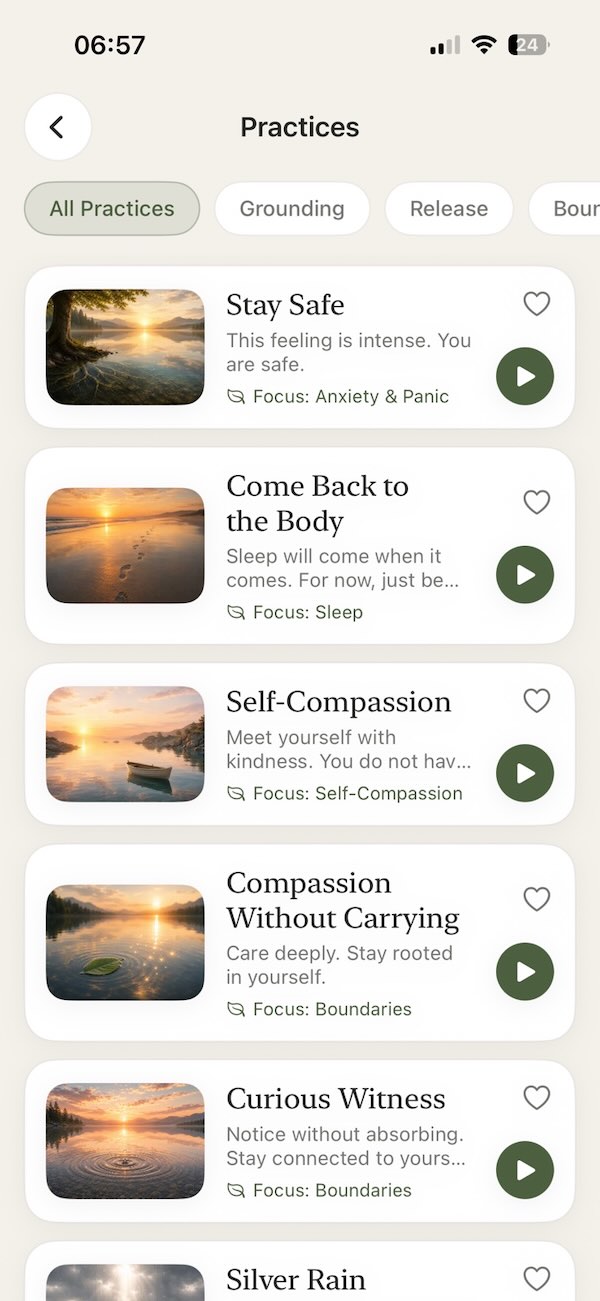
Ready for more support?
Continue your journey in Aira
Access the full library of guided practices, tools, and resources anytime, anywhere.
- 10+Guided Practices
- AnxietyRelief Tools
- SleepSupport
- TrackYour Progress
- OfflineAccess
Available on iPhone and iPad