Is My Grief Normal? What Grief Actually Feels Like
If you keep wondering whether what you're feeling is normal, you're not alone. Here's what grief actually feels like — and why there's no single right way to grieve.

When you're in the middle of grief, one question tends to circle back again and again: is this normal? Should you be crying more, or less? Should you feel further along by now? Is it strange that you laughed yesterday, or that today you feel almost nothing at all?
Here is the short answer, and it's worth holding onto: what you're feeling is almost certainly a normal response to loss — including the parts that feel strange, contradictory, or like too much. Grief is not tidy. It doesn't follow a schedule, and it rarely looks the way we expect it to.
You're probably not grieving "wrong"
Most of us carry a quiet picture of how grief is supposed to look: a steady sadness that slowly fades. So when our real experience doesn't match — when it's messier, more jagged, more numb, or more all-over-the-place — we assume something is wrong with us.
But there is no single correct way to grieve. People cry constantly or barely at all. They feel waves of sadness, then stretches of ordinary life, then guilt for those ordinary moments. They feel anger, relief, longing, and love, sometimes within the same hour. None of that means you're doing it wrong. It means you're human, and the loss mattered.
What grief actually feels like
Grief is so much more than sadness. It tends to show up across your emotions, your body, and even your sense of who you are.
The emotions
Grief can include shock and disbelief, deep sadness, anger, guilt, anxiety, loneliness, and yearning. It can also include relief — especially after a long illness — and then guilt about the relief. These feelings don't take turns politely. They overlap and contradict each other, and all of them can be part of normal grief.
The body
Grief lives in the body too. Many people find it hard to sleep, lose their appetite, feel exhausted, or notice aches, a tight chest, or a hollow feeling in the stomach. If your body feels wired and anxious, it can help to understand what anxiety really feels like in the body — grief and anxiety often share the same physical language.
The numbness
Sometimes grief doesn't feel like anything. You might feel flat, far away, or unable to cry, and then worry that means you didn't care enough. Numbness is one of the most misunderstood parts of grief — it's often the mind's way of protecting you from feelings that are too big to take in all at once. Feeling little or nothing for a while is a recognized part of grieving, not a sign of coldness. (This overlaps with emotional numbness after chronic stress, where the same protective shutdown happens.)
Why grief looks so different for everyone
The shape of your grief depends on who or what you lost, your relationship, your history, how the loss happened, and how much support you have. A loss that looks "smaller" from the outside can hit hard, and there's nothing to be ashamed of in that. Whatever the loss — a person, a relationship, a pet, a future you expected — if it mattered to you, your grief makes sense.
"Shouldn't I be over this by now?"
Grief has no deadline. There's no set number of weeks or months after which you're supposed to be finished. For most people the sharpest pain softens over time, but it tends to come in good days and bad days rather than a straight line down. Grief often arrives in waves that hit out of nowhere, and a hard day months later isn't a sign you've gone backwards.
You may also have heard of grief unfolding in stages. That model can be comforting, but real grief almost never moves through neat steps in order — and expecting it to can make you feel like you're failing at something that was never linear to begin with.
A gentler way to see what you're feeling
Here's a small shift that can change everything: instead of asking am I grieving correctly?, try asking what is my grief asking me for right now? Sometimes the answer is rest. Sometimes it's to cry, or to not cry. Sometimes it's company, and sometimes solitude.
Grief isn't a problem to solve or a test to pass. It's love with nowhere to go for a while. When you stop fighting the way it shows up — something we explore in self-compassion — it often becomes a little more bearable, not because the loss shrinks, but because you stop adding self-judgment on top of the pain.
The fuller picture
Circling underneath is this normal? is a firmer accusation: I'm grieving wrong — I should be crying more, or less, or be further along by now, and the fact that mine looks messy, numb, or contradictory means something's wrong with me. It feels true because almost all of us carry a quiet mental picture of "proper" grief — a steady sadness that slowly, tidily fades — and when your real experience doesn't match it, the mismatch looks like a fault in you.
But that picture is fiction, not a standard. There is no single correct way to grieve, so there's nothing to be doing wrong. Real grief laughs and aches within the same hour, goes numb to protect you from what's too big to feel at once, keeps no schedule, and arrives in waves rather than a straight line down. None of that is failure — it's the actual shape of loss. What you're really doing when you ask am I doing this right? is measuring your grief against a template that never existed, then adding self-judgment on top of pain that's already heavy enough. You can set the template down. Grief isn't a test to pass — it's love with nowhere to go for a while, and it's allowed to look like yours.
When to reach for more support
Grief is painful, but it shouldn't completely swallow your ability to function for a very long time. It's worth reaching out to a doctor, counselor, or grief support service if weeks pass with no relief at all, if you feel unable to get through daily life, or if you're using unhealthy ways to cope. Asking for support isn't a sign that you're grieving wrong — it's one of the kindest, most normal things you can do for yourself.
If you're carrying a loss right now: what you feel is allowed. You don't have to grieve on anyone's timeline but your own.
Try a gentle practice
Understanding your grief is helpful, but having somewhere to feel it can matter even more. Silver Rain is a gentle practice for the heavy, tearful moments of loss — a way to let sadness move through you, soften the ache, and be with your grief without having to fix it.

Try the practice
Silver Rain
Let everything be exactly as it is.
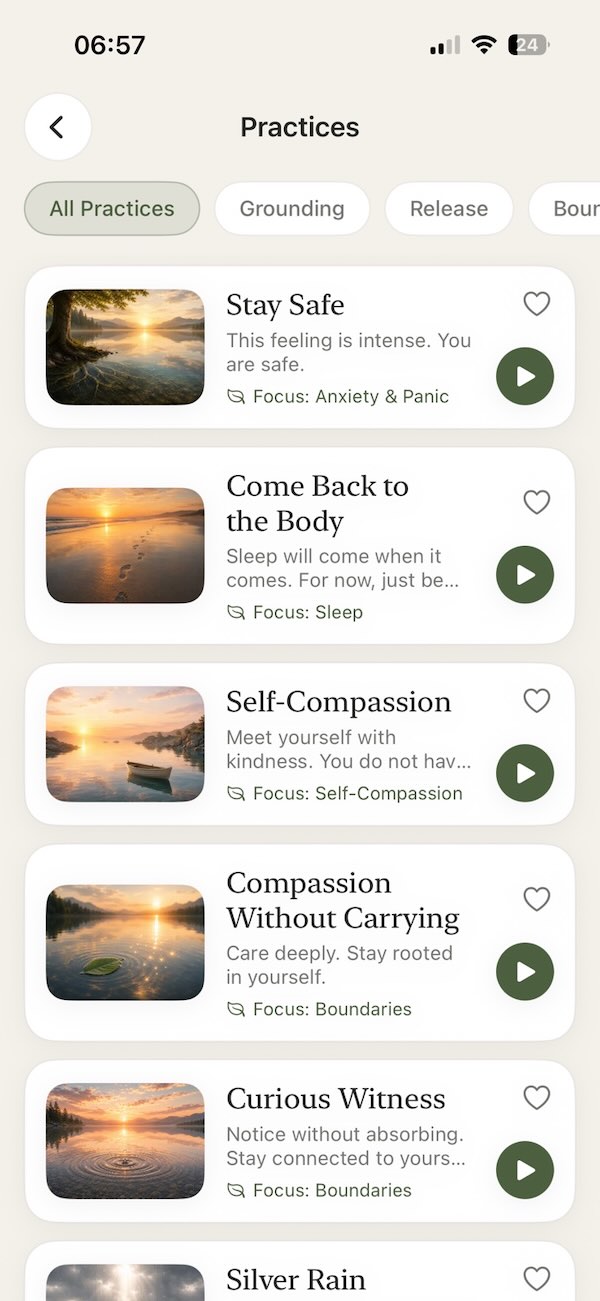
Ready for more support?
Continue your journey in Aira
Access the full library of guided practices, tools, and resources anytime, anywhere.
- 10+Guided Practices
- AnxietyRelief Tools
- SleepSupport
- TrackYour Progress
- OfflineAccess
Available on iPhone and iPad