Emotional Numbness After Chronic Stress: Why You Feel Nothing
Why chronic stress and burnout can leave you feeling numb and detached, what emotional numbness actually is, and how feeling gently returns as you recover.

After a long stretch of stress, some people don't feel overwhelmed — they feel nothing. The emotions that used to come easily are muted or gone; you watch your own life through glass, going through the motions without much feeling at all. This emotional numbness can be more unsettling than distress, because it feels like something essential has switched off. But it's a recognised response to chronic stress, and it usually isn't permanent.
This is a guide to emotional numbness after chronic stress: what it is, why it happens, and how feeling tends to return.
What is emotional numbness?
Emotional numbness is a muting or flattening of your emotional life — a sense of feeling little, whether good or bad. Joy is dimmed; so is sadness. You might feel detached from people, distant from your own experiences, or like you're observing yourself from the outside. It isn't coldness or not caring; it's a kind of protective shutting-down of feeling, often after a period when feeling became too much to bear.
Why chronic stress leads to numbness
Numbness is, paradoxically, often a response to overwhelm. When stress and emotion run too high for too long, the nervous system can down-regulate feeling as a way to protect you — turning the volume down when the input has been too loud for too long. In burnout, this shows up as the detachment and depersonalisation researchers describe: an emotional flatness that follows a stretch of being overstretched. The numbness isn't the absence of a problem; it's the system's way of coping with one.
Numbness as protection, not malfunction
It helps to understand numbness as a protective mechanism rather than something broken in you. When feeling everything became unsustainable, your mind found a way to stop feeling so much. That made sense as protection — but if it lingers, it can leave you disconnected from the good as well as the bad, and from the people and things that matter. The aim of recovery isn't to force feeling back, but to make it safe enough for feeling to return on its own.
When numbness is worth taking seriously
Some emotional numbness in burnout or after chronic stress is common and tends to lift as you recover. But persistent numbness, a lasting sense of unreality or detachment, or numbness alongside hopelessness can also be features of depression or dissociation, which deserve proper support. If the numbness is deep, ongoing, or frightening, or if it comes with thoughts that life isn't worth living, please treat that as a reason to reach out to a doctor or mental health professional — not something to wait out alone.
How feeling comes back
Feeling usually returns gradually, as the system that shut it down begins to feel safe again. That means easing the chronic stress underneath, allowing real rest and recovery, and gently reconnecting with the body and the present, where emotions actually live. You don't force numbness to lift by demanding feeling; you create the conditions — safety, rest, gentle presence — in which feeling can come back at its own pace. Small returns of feeling, even uncomfortable ones, are usually a sign of healing, not a setback.
The fuller picture
Numbness this complete can feel like a change in who you are: I don't feel anything anymore — I've gone cold, something in me is broken, or the part of me that felt has died. It feels true because the flatness is so total — joy muted, sadness muted, people held at a distance — that it seems like damage to your character rather than a passing state.
But numbness after chronic stress is rarely coldness or damage — it's protection. When feeling ran too high for too long, your system turned the volume down to keep you safe, the way it dims input that's become unbearable. That isn't something breaking; it's something working, maybe too well and for too long. And notice: a person who had truly gone cold wouldn't grieve their own numbness. The fact that the flatness unsettles you is itself evidence the feeling is still there — muffled, not gone. Feeling tends to return as safety returns, not on command but as the pressure eases and rest becomes real. You didn't lose the capacity to feel; it went quiet to protect you, and it comes back as it becomes safe to.
Final thoughts
Emotional numbness after chronic stress isn't a sign that you've become cold or broken — it's usually a sign that you felt too much, for too long, and your system turned the volume down to protect you. As the pressure eases and you begin to feel safe again, feeling tends to return, slowly and on its own. Be patient and gentle with a system that's been protecting you, and reach out for support if the numbness lingers. One safe, restful moment, one small returning feeling at a time.
Try a gentle practice
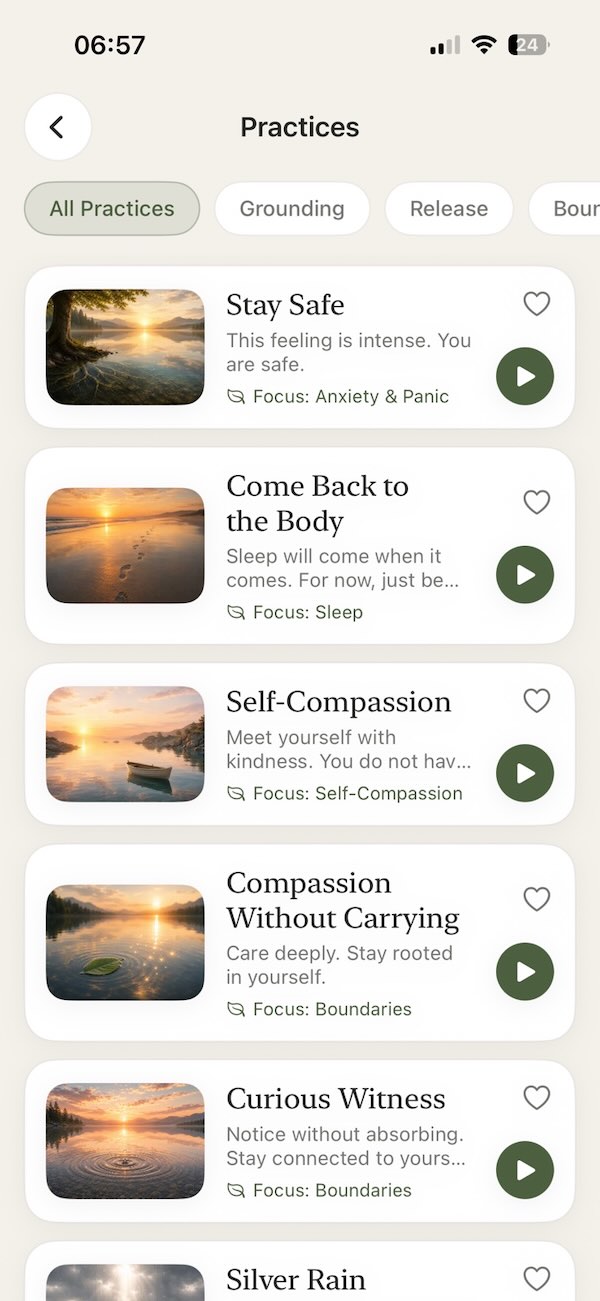
Numbness often comes with feeling disconnected from your body and the present. Come Back to the Body is a gentle practice for exactly that — a way to reconnect, very gently, with physical sensation and the here and now, without forcing anything, so that safety and feeling can slowly return at their own pace.

Try the practice
Come Back to the Body
Come back from thoughts to sensation.
Ready for more support?
Continue your journey in Aira
Access the full library of guided practices, tools, and resources anytime, anywhere.
- 10+Guided Practices
- AnxietyRelief Tools
- SleepSupport
- TrackYour Progress
- OfflineAccess
Available on iPhone and iPad