Why Stress Hits Your Stomach: Stress, Anxiety, and Digestion
Why stress and anxiety upset your stomach, the gut-brain connection behind it, how it shows up, and why calming your nervous system helps your digestion settle.

For something that's supposed to be "in your head," stress and anxiety have a remarkable habit of landing in your gut. A churning stomach before a hard day, nausea when you're anxious, cramps during a stressful stretch, appetite that vanishes or won't switch off, a digestive system that seems to react to everything — these aren't imagined or separate from your stress. Your gut and your brain are in constant, direct conversation, which is exactly why what troubles the mind so often shows up in the stomach.
This is a guide to stress and digestion: the gut-brain connection behind it, why stress disrupts your digestion, and how calming your nervous system helps your gut settle.
The gut-brain connection
Your gut and brain are linked by a genuine, two-way communication system — sometimes called the gut-brain axis — that includes a dedicated network of nerves in your digestive tract and a major nerve highway (the vagus nerve) running between gut and brain. Because the traffic goes both ways, your emotional state directly influences your digestion, and your digestion sends signals back that influence how you feel. This is why "butterflies" before something nerve-wracking, or a stomach that drops with bad news, are so universal. The gut is sometimes called a "second brain" for a reason: it's deeply wired into your nervous system, not sealed off from it.
Why stress disrupts digestion
When your body shifts into the stress response, it prioritises immediate survival over everything else — and digestion is one of the first things it dials down. In a real emergency, your body has no reason to spend energy digesting lunch, so blood flow and activity are redirected away from the gut toward the muscles and systems needed to fight or flee. The pace of digestion changes, the gut can become more sensitive, and the whole process is thrown off its normal rhythm. In a brief burst this is harmless and reverses quickly. But under chronic stress, when the system rarely fully switches off, digestion is left disrupted much of the time — which is how ongoing tension turns into ongoing stomach trouble.
Common ways it shows up
Stress and anxiety can affect digestion in many forms, and it varies from person to person. Common experiences include nausea, a churning or knotted stomach, cramps, changes in appetite (either loss of appetite or stress-eating), and looser or more irregular bowel habits. For some people, ongoing stress is linked to conditions like irritable bowel syndrome, where the gut becomes especially sensitive and reactive. Stress can also make you feel more reactive to certain foods, as a sensitised system responds more strongly to what you eat. These are real, physical experiences with a real, physical mechanism — not something you're inventing.
Why a sensitive gut can become its own stressor
There's a loop worth understanding. When stress upsets your digestion, the resulting symptoms — nausea, pain, unpredictability — can themselves become a source of worry, especially if you start anticipating or fearing them. That worry feeds more stress, which further disrupts the gut, which deepens the worry. For many people, this loop is a big part of why gut symptoms become persistent: it's not just the original stress, but the anxiety about the symptoms keeping the cycle turning. Recognising the loop is often the first step to loosening it.
How to help your gut settle
Because the gut takes its cues from your nervous system, the most powerful thing you can do for stress-related digestion is help your whole system come out of activation. Calming practices — slow breathing, relaxation, gentle movement, real rest — signal safety, which lets digestion return toward its normal rhythm. It also helps to slow down around eating itself: eating in a rushed, stressed state works against digestion, while eating calmly, when your system is settled, supports it. Reducing chronic stressors where you can lightens the ongoing load on the gut. And easing the worry about symptoms — treating them as uncomfortable but not dangerous — helps break the stress-gut loop. Over time, as your baseline settles, the gut usually settles with it.
When to seek support
Digestive symptoms should never simply be assumed to be "just stress." If you have persistent or severe gut problems, significant changes in your digestion or weight, pain, or any warning signs, please see a doctor to rule out physical causes first — that's important, and stress being a factor doesn't exclude other conditions. If your symptoms are tied up with anxiety, a doctor and a therapist can help with both ends of the gut-brain loop, and approaches that calm the nervous system are increasingly recognised as genuinely helpful for stress-related gut issues. Getting it properly checked is the sensible first step.
Final thoughts
Stress hits your stomach because your gut and brain are directly, physically connected — so a system braced for threat inevitably disrupts the digestion it deprioritises. That means the way to a calmer gut runs largely through a calmer nervous system: help your body feel safe enough to switch off, and digestion gets to return to its normal rhythm. Have anything persistent checked by a doctor, ease the worry about the symptoms, and give your system the recovery it needs. Your gut isn't betraying you; it's reflecting your state. One calm meal, one settled system at a time.
Try a gentle practice
Since digestion returns to normal when your body drops out of the stress response, giving it a genuine cue to settle can directly help your gut. Deep Settle is a gentle practice for exactly that — a slow, guided way to bring your whole system out of activation and into deep rest, the state in which digestion, and everything else, is finally free to work as it should.

Try the practice
Deep Settle
A slow descent for an over-activated nervous system — letting your body land and settle.
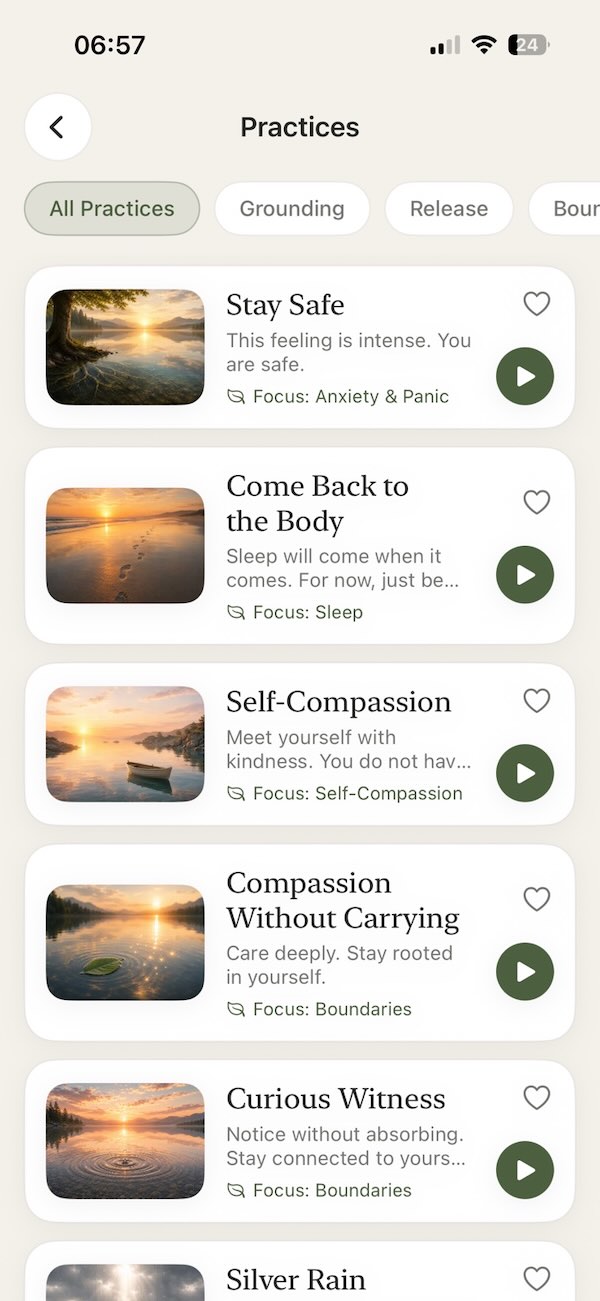
Ready for more support?
Continue your journey in Aira
Access the full library of guided practices, tools, and resources anytime, anywhere.
- 10+Guided Practices
- AnxietyRelief Tools
- SleepSupport
- TrackYour Progress
- OfflineAccess
Available on iPhone and iPad