Nervous System Dysregulation: Signs You're Stuck in Stress
What nervous system dysregulation is, the signs your body is stuck in stress mode, what causes it, and how to begin regulating back toward balance.

A healthy nervous system is flexible — it activates when you need it and settles when you don't. Dysregulation is when that flexibility breaks down, and your body gets stuck: stuck on high alert, or stuck in shutdown, unable to find its way back to calm. If you feel chronically wired, anxious, exhausted, or numb — like your body's settings are off — you may be experiencing nervous system dysregulation.
This is a guide to dysregulation: what it is, how to recognise it, and how to start coming back into balance.
What is nervous system dysregulation?
Dysregulation is the loss of your nervous system's natural flexibility to move between activation and calm. Instead of ramping up for a challenge and settling afterwards, the system gets stuck in one mode — either over-activated (the accelerator jammed on) or shut down (the system gone offline). It's less a disease than a state: your body's stress responses, meant to be temporary, have become a place you're living rather than a wave that passes.
The signs of an over-activated system
When the system is stuck 'on' (hyperarousal), the signs include feeling constantly anxious, wired, or on edge; a racing mind and racing heart; irritability and a short fuse; trouble sleeping or relaxing; feeling jumpy or easily startled; and a sense of being unable to switch off. This is the body braced for danger that never quite arrives — running its alarm system around the clock. (Being 'tired but wired' is a classic version of this.)
The signs of a shut-down system
At the other extreme, the system can get stuck 'off' (hypoarousal): numbness, exhaustion, flatness, disconnection, brain fog, low motivation, and a sense of going through the motions from behind glass. This isn't laziness or depression alone — it can be the nervous system's shutdown response, where overwhelm tips into collapse rather than activation. Many people swing between the two, wired and then crashed, neither of which feels like genuine calm.
What causes dysregulation?
Dysregulation builds when the system is overwhelmed beyond its capacity to recover — through chronic stress, burnout, trauma, too much demand with too little rest, or a long-term lack of safety. Over time, the system loses its ability to reset, and the stress state becomes the default. It's not a sign of weakness; it's what happens to any nervous system kept under too much load for too long — and, importantly, it can be changed.
How to begin regulating
Coming back into balance is about repeatedly offering the system cues of safety until flexibility returns. That means body-based regulation — slow exhales, orienting to your surroundings, feeling supported, gentle movement — rather than trying to think your way calm. It means reducing the load that's keeping you stuck, and building in genuine recovery. And it means patience: a dysregulated system re-regulates gradually, through small, repeated signals of safety, not in a single fix. The first step is often simply noticing your state — 'I'm activated right now' — without judgment. (Learning to regulate has its own fuller guide.)
Final thoughts
Nervous system dysregulation — the wired, the numb, the swinging between — isn't a personal failing or something permanently wrong with you. It's a system that's been pushed past its capacity and got stuck, and it can find its flexibility again with the right, repeated cues of safety. Begin by noticing which state you're in, treat it as information rather than failure, and gently offer your body the signals it needs to come back. Regulation returns in small steps. One noticed state, one signal of safety at a time.
Try a gentle practice
The first step out of dysregulation is simply noticing your state — wired or shut down — without judgment. Observe is a gentle practice for exactly that — a way to step back and watch what's happening in your body and mind with calm, non-judgmental attention, creating the small gap of awareness from which regulation can begin.

Try the practice
Observe
Let's step back and see more clearly
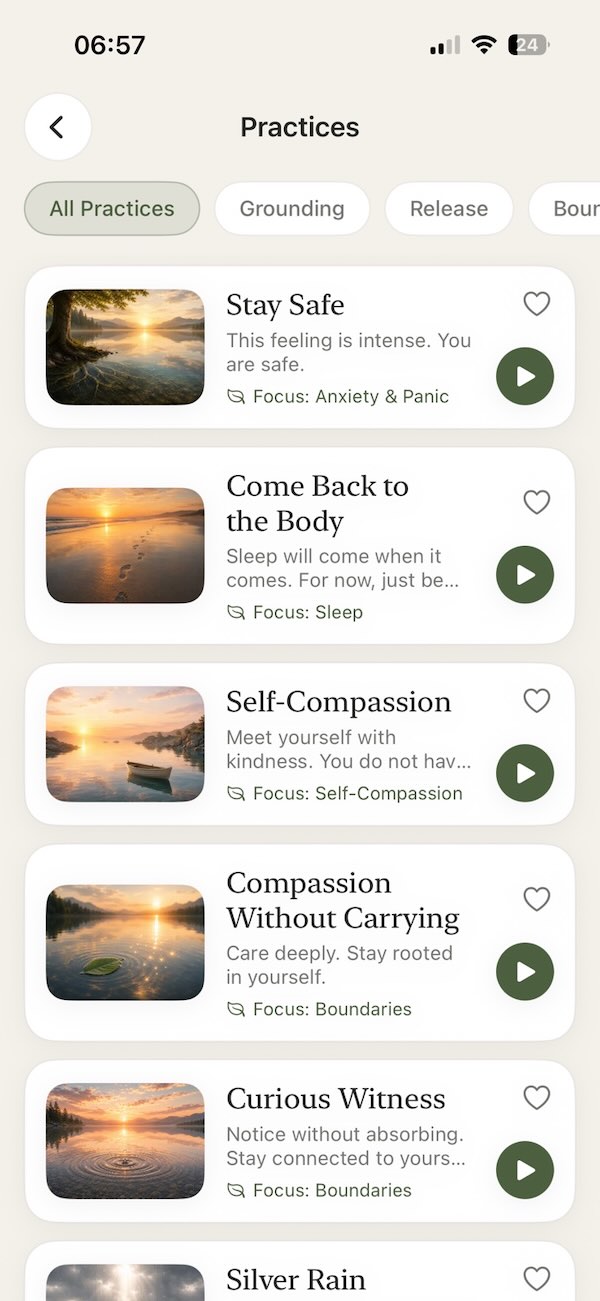
Ready for more support?
Continue your journey in Aira
Access the full library of guided practices, tools, and resources anytime, anywhere.
- 10+Guided Practices
- AnxietyRelief Tools
- SleepSupport
- TrackYour Progress
- OfflineAccess
Available on iPhone and iPad