
Hold the Line
Stay steady when you hold a boundary.
Duration
7:25
Category
Earth
Focus
Boundaries
Level
All levels
Listen to this practice
Hold the Line
Be the first to try new practices
Get notified when new guided practices, tools, and resources are released.
No spam. Unsubscribe anytime.
About this practice
Hold the Line is a gentle practice for the hardest part of a boundary — not setting it, but staying with it once someone is unhappy, pushing back, or pulling at you to take it back.
Most boundary advice focuses on the words. But the real difficulty is usually what comes after: the discomfort, the guilt, and the urge to apologise, explain, or soften the limit until it disappears. This practice meets that moment.
Instead of forcing or defending, it helps you stay rooted — feeling your feet on the ground, letting the other person have their feelings, and remembering that a boundary is simply the place where you end, and where your responsibility ends too. It is a practice in staying steady, and staying kind, while the discomfort passes.
Many people find Hold the Line helpful when setting boundaries with family, a partner, or at work, when someone doesn't respect a limit, or whenever guilt makes them want to undo a boundary they know is right.
How to practice
- Bring to mind a boundary you've set, and feel your feet on the ground as you breathe slowly.
- Notice the urge to apologise, explain, or take it back — and let it pass like a wave, without following it.
- Let the other person have their feelings; remind yourself you can care about them and still hold your line.
- Stay rooted as the discomfort passes, knowing the boundary can keep standing without harshness or defence.
Helpful for
- Setting boundaries
- Holding boundaries
- Boundary pushback
- Saying no
- Guilt after boundaries
- Fear of disappointing others
- People-pleasing
- Standing your ground
Frequently asked questions
Why is holding a boundary harder than setting one?
What if the other person gets upset?
Doesn't holding a boundary make me unkind?
How do I handle the guilt that comes after?
When should I use this practice?
What if I keep wanting to explain or justify myself?
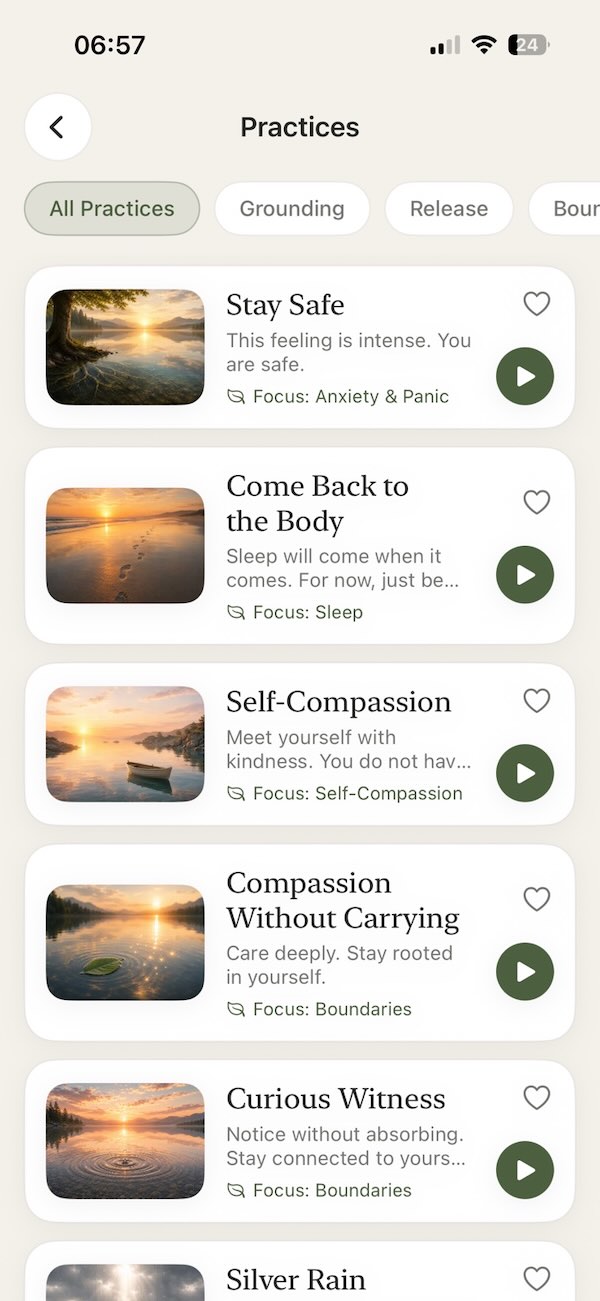
Ready for more support?
Continue your journey in Aira
Access the full library of guided practices, tools, and resources anytime, anywhere.
- 10+Guided Practices
- AnxietyRelief Tools
- SleepSupport
- TrackYour Progress
- OfflineAccess
Available on iPhone and iPad