People-Pleasing: Why You Put Everyone Else First
Why people-pleasing happens, its link to anxiety, approval-seeking, and self-worth, the traits to recognise, and how to stop people-pleasing and say no without guilt.

You say yes when you mean no. You apologise for things that aren't your fault. You can read the mood of a room in seconds and rearrange yourself to keep everyone comfortable — and by the end of the day, you've tended to everyone except yourself. If you've built a life around keeping other people happy, often at your own expense, you know how tiring and how invisible people-pleasing can be.
This is a guide to people-pleasing: why it happens, what it's really protecting, and how to begin putting yourself back into your own life without guilt.
What people-pleasing actually is
People-pleasing is the habit of prioritising others' needs, comfort, and approval over your own, often to the point of self-abandonment. It goes well beyond ordinary kindness or generosity — the defining feature is the cost. You're not choosing to give freely; you feel you have to, and saying no feels unsafe. Common people-pleasing traits include difficulty saying no, apologising constantly, hiding your real opinions, taking responsibility for others' feelings, avoiding conflict at any cost, and feeling personally responsible for keeping everyone happy.
Why do I need everyone to like me?
At the root of chronic people-pleasing is usually a need for approval that runs deeper than simply wanting to be liked. For many people it began as a genuine survival strategy: if love or safety once depended on keeping others happy — a parent who was easier when you were good, an environment where conflict felt dangerous — then pleasing became the way to stay secure. The child learned I'm safe when others are happy with me, and the adult is still following the rule. The need for approval isn't vanity; it's an old form of self-protection.
People-pleasing, self-worth, and anxiety
People-pleasing is tightly linked to self-worth. If, deep down, you're not sure you're enough as you are, others' approval becomes the thing that tells you you're okay — so you chase it, and you dread losing it. That's also why people-pleasing and anxiety travel together: the constant monitoring of everyone's mood, the fear of disappointing anyone, the replaying of conversations to check you didn't upset someone — it keeps the nervous system on permanent alert. People-pleasing anxiety is the exhausting background hum of trying to manage everyone's feelings at once.
The fear of disappointing others
Underneath the yeses is usually the fear of disappointing others — and the belief that someone's disappointment would be unbearable, or would mean you'd done something wrong. So you over-give to prevent it. But a life spent preventing all disappointment is impossible, because you cannot keep everyone happy and also be a real, finite person with limits. Somewhere along the way the choice becomes stark: disappoint others sometimes, or abandon yourself constantly.
The hidden cost
People-pleasing looks selfless, but it carries real costs — to you and, quietly, to your relationships. You end up resentful (giving you didn't freely choose breeds resentment), unknown (people can't really know you if you hide your true self), and depleted (there's nothing left for you). And relationships built on a curated, always-agreeable version of you can't be fully intimate, because the real you never quite shows up. Ironically, the pleasing meant to secure connection often prevents the deeper connection it was reaching for.
How to stop people-pleasing
Recovery isn't about becoming selfish or no longer caring — it's about including yourself in the circle of people whose needs matter.
Notice the automatic yes
Most people-pleasing is reflexive. Buying a pause — let me check and get back to you — creates room to notice what you actually want before the yes escapes.
Let others have their feelings
You are not responsible for managing everyone's emotions. Someone can be disappointed and still be okay, and so can you. (Learning to hold a boundary is its own skill, with its own guide.)
Practise saying no without guilt
The guilt that follows a boundary is usually a withdrawal symptom, not evidence you did something wrong. Saying no without over-explaining or over-apologising gets less uncomfortable with practice.
Build worth that isn't borrowed
The deeper work is letting your sense of being okay come from inside rather than from others' approval, so you no longer have to earn your place by pleasing.
The fuller picture
Under every reflexive yes is one rule: if I say no or let someone down, something bad will happen — their disappointment would be unbearable, or would mean I did something wrong. It feels true because it once was: somewhere you learned that safety or love depended on keeping others happy, and the child who learned I'm okay when they're okay with me is still running the rule.
But look at what the rule quietly costs and quietly assumes. It treats someone's disappointment as a catastrophe, when a person can be disappointed and still be completely okay — and so can you. It assumes you can keep everyone happy, but that isn't possible for any real, finite person with limits; the honest choice is to disappoint others sometimes or abandon yourself constantly. And the guilt that floods in after a boundary isn't proof you did wrong — it's a withdrawal symptom from an old habit, and it fades. Notice too: the pleasing meant to secure connection often blocks it, because people can't truly know a curated, always-agreeable version of you. You don't have to earn your place by disappearing. You're allowed to be one of the people whose needs count.
Final thoughts
If you're a people-pleaser, you're not weak or fake — you're usually someone who learned, early and well, that taking care of others was how to stay safe and loved. That care is a real strength; it's just been pointed everywhere except at you. Recovery isn't about caring less about people. It's about finally including yourself among the people you care for — letting yourself have needs, limits, and a no, and discovering that the relationships worth keeping survive the real you. One honest yes, one kind no, one self included at a time.
Try a gentle practice
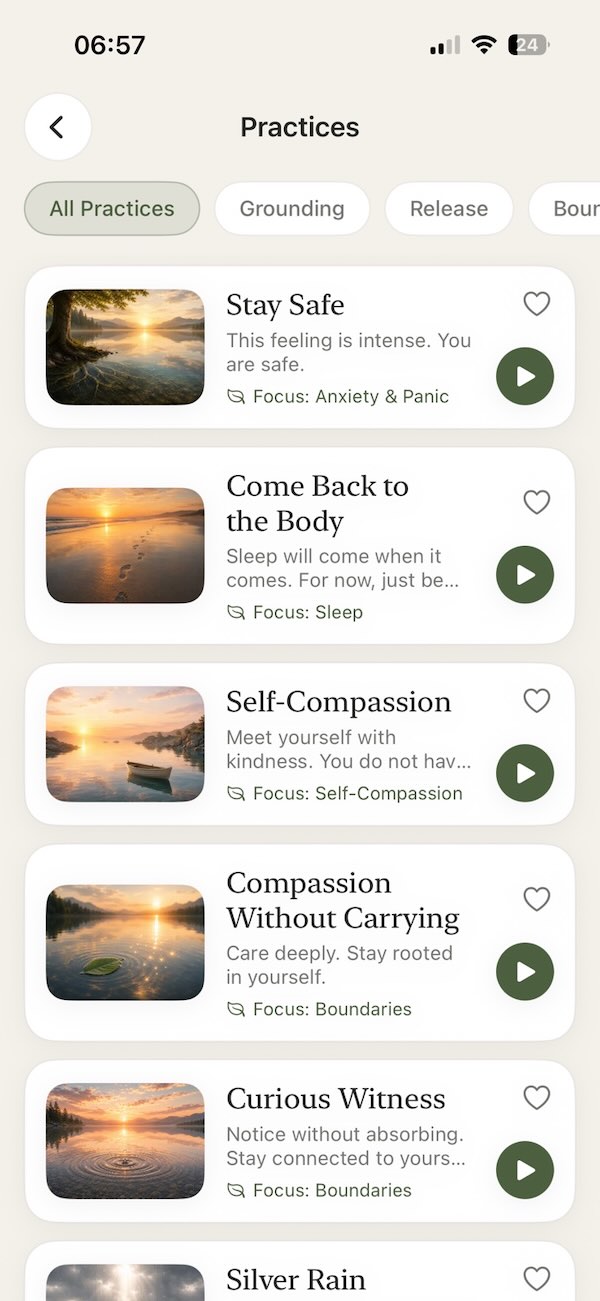
So much people-pleasing comes from carrying everyone else's feelings as if they were yours to fix. Compassion Without Carrying is a gentle practice for putting that weight down — a way to care about others without absorbing them, let their feelings be theirs and yours be yours, and stay with yourself even when someone is disappointed.

Try the practice
Compassion Without Carrying
Care without losing yourself.
Ready for more support?
Continue your journey in Aira
Access the full library of guided practices, tools, and resources anytime, anywhere.
- 10+Guided Practices
- AnxietyRelief Tools
- SleepSupport
- TrackYour Progress
- OfflineAccess
Available on iPhone and iPad