Anxiety in Men: Why It Often Looks Different
Anxiety in men often hides behind irritability, overwork, control, or a calm exterior. Why male anxiety is so easily missed, how it really shows up, and what helps.

Anxiety is often pictured as visible worry — someone who looks nervous, talks about their fears, asks for reassurance. For many men, it doesn't look like that at all. It can hide behind irritability, overwork, control, or a calm exterior that gives nothing away. Anxiety affects men just as it affects anyone, but it often shows up in ways that are easy to miss — including by the man experiencing it.
This is a look at why anxiety in men can feel and look different, and why recognising it is the first step toward relief.
Why anxiety in men often goes unseen
Many men grow up absorbing a quiet message: stay strong, stay in control, handle it yourself, don't make a fuss. That message can make it genuinely hard to recognise anxiety, name it, or admit it — even privately. So anxiety gets relabelled as stress, pressure, frustration, or simply "being busy," and the underlying feeling goes unaddressed. This is part of why anxiety in men is so often underestimated, both by others and by men themselves.
How anxiety tends to show up in men
Because the worry is often pushed down, it tends to surface in less obvious ways. In men, anxiety can look like:
- irritability, frustration, or a shorter temper
- throwing yourself into work or staying constantly busy
- a strong need for control
- physical symptoms — tension, headaches, gut problems, a racing heart
- trouble sleeping
- pulling away from people
- using alcohol, food, or other distractions to take the edge off
- risk-taking or restlessness
From the outside, these don't always read as anxiety. But underneath, the nervous system is doing exactly what anxiety does in anyone: bracing against a threat.
The mask of "I'm fine"
One of the most common features of male anxiety is the mask — appearing fine while feeling far from it. Many men become very good at functioning under pressure: showing up, performing, holding everything together, while the worry runs quietly underneath. The trouble is that a convincing mask can delay support for years, because no one around them — sometimes including themselves — realises how much is being carried.
Anger as a cover for anxiety
Anxiety and anger are more closely related than they look. Both are stress responses, and for men who find fear harder to express than frustration, anxiety often comes out as irritability or anger. A short fuse, tension over small things, or a sense of being constantly on edge can all be anxiety wearing a different face. Recognising this can be a turning point — it shifts the question from "why am I so angry?" to "what am I actually anxious about?"
The cost of holding it in
Carrying anxiety silently has a price. Unspoken anxiety doesn't disappear; it tends to build, draining energy, straining relationships, disrupting sleep, and sometimes deepening into burnout or low mood. Many men only recognise how much they were holding once it becomes too heavy to carry alone. None of this is a personal failing — it's the predictable result of a nervous system under sustained pressure with nowhere to put it.
It isn't weakness
It's worth saying plainly: anxiety is not a weakness, a character flaw, or a failure of manhood. It's a nervous system response, common and very human, and it has nothing to do with how strong or capable you are. Some of the most outwardly capable, reliable men carry significant anxiety. Strength isn't the absence of anxiety — it's being willing to face it honestly, which often takes more courage than hiding it.
What helps
The first step is often simply naming it — recognising that what you're feeling is anxiety, rather than just stress or frustration. From there, talking helps: with someone you trust, and ideally with a professional, because therapy is one of the most effective ways to work with anxiety. Alongside that, the same nervous-system basics matter for everyone — sleep, movement, time outdoors, slowing the breath, and easing up on the pressure to handle everything alone. And gentler self-talk goes a long way; the harsh inner voice that says "just deal with it" tends to make anxiety worse, not better.
The fuller picture
If you're a man carrying this, there's a thought that probably runs underneath it: if I just push through and handle it myself I'm fine — and admitting I'm anxious would only mean I'm weak. It makes total sense that you'd land there. It's the message a lot of guys got handed early and often: stay strong, don't make a fuss, deal with it on your own.
But notice what that thought quietly costs you. Pushing anxiety down doesn't make it leave — it just changes its clothes and shows up later as a short temper, a wired mind at 2am, another drink to take the edge off. "I'm fine" isn't really the truth here; it's the mask. The fuller version is kinder and a lot more useful: this is anxiety, not weakness, and naming it is the strong move, not the soft one. Facing it honestly takes more from you than hiding it ever did — and unlike the mask, it actually leads somewhere better.
When to seek support
If anxiety is persistent, affecting your relationships, work, sleep, or wellbeing, or if you're leaning on alcohol or other things to cope, it's worth speaking with a doctor or therapist. Reaching out isn't giving up control — it's taking it back. Asking for help is one of the most genuinely strong things a person can do.
Frequently asked questions
Does anxiety look different in men?
Often, yes. Because many men are taught to push worry down, anxiety frequently surfaces as irritability, anger, overwork, a need for control, physical symptoms, or withdrawal, rather than as visible nervousness. The underlying nervous-system response is the same; the outward signs just differ.
Why is anxiety in men often missed?
Many men absorb the message to stay strong and handle things alone, which makes anxiety hard to recognise or admit. It often gets relabelled as stress or frustration, so it goes unaddressed — by others and sometimes by the man himself.
Can anxiety show up as anger?
Yes. Anxiety and anger are both stress responses, and for men who find fear harder to express than frustration, anxiety often comes out as irritability or a short temper. A constant sense of being on edge can be anxiety wearing a different face.
Is anxiety a sign of weakness?
No. Anxiety is a common, very human nervous-system response and has nothing to do with how strong or capable someone is. Many highly capable men carry significant anxiety. Facing it honestly usually takes more courage than hiding it.
How can men start dealing with anxiety?
Often it begins with naming it as anxiety, then talking — with someone trusted and ideally a professional, since therapy is highly effective. The usual nervous-system supports help too: sleep, movement, slower breathing, time outdoors, and easing the pressure to cope alone.
Try a gentle practice
When anxiety is pushed down, it often runs in the background as tension, irritability, or a mind that won't switch off. Observe is a gentle practice for stepping back from that pressure: a way to notice what you're actually feeling, create a little space around it, and meet it with steadiness rather than having to push it away.

Try the practice
Observe
Let's step back and see more clearly
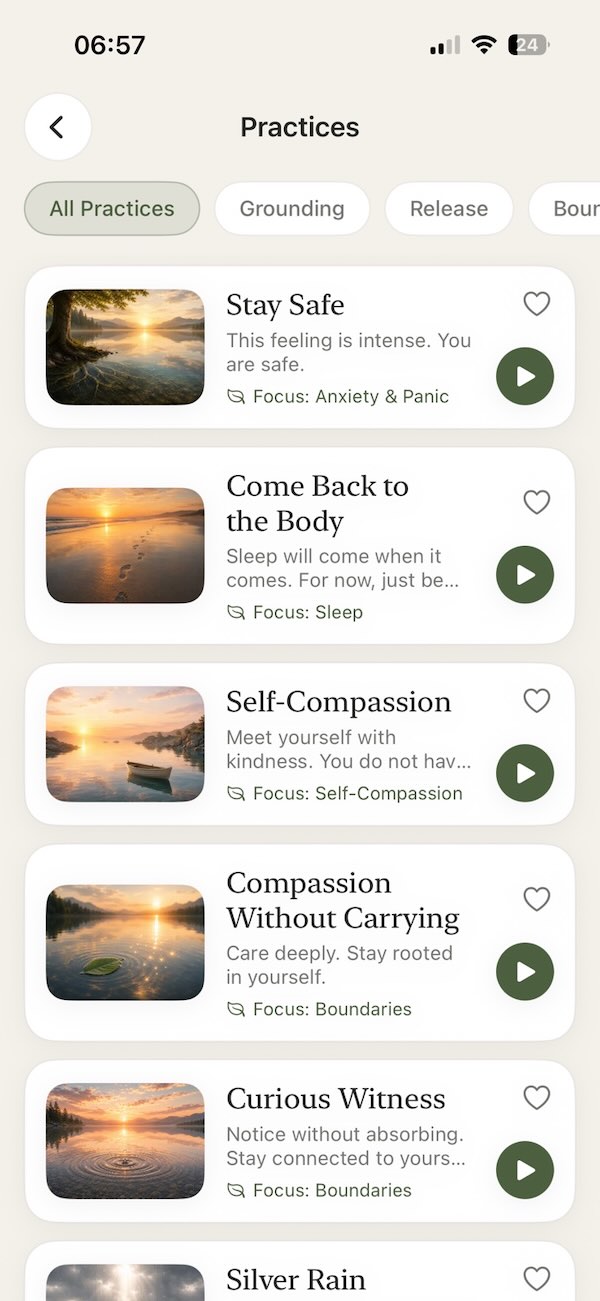
Ready for more support?
Continue your journey in Aira
Access the full library of guided practices, tools, and resources anytime, anywhere.
- 10+Guided Practices
- AnxietyRelief Tools
- SleepSupport
- TrackYour Progress
- OfflineAccess
Available on iPhone and iPad