Anxiety in Women: Why It Can Feel Different
Anxiety can feel uniquely intense for women, shaped by hormones, the menstrual cycle, perimenopause, motherhood, and caregiving. A compassionate look at why — and what helps.

Anxiety affects people of all genders, but many women experience it in ways that can feel uniquely intense, emotional, and difficult to explain. You may find yourself wondering why your anxiety suddenly spikes before your period, becomes stronger during major life transitions, or feels overwhelming when you're caring for everyone around you. If this sounds familiar, you're not alone. Women are more likely than men to experience anxiety disorders, and many factors can influence how anxiety shows up across different stages of life.
Understanding Anxiety in Women
Anxiety in women isn't simply worrying too much — it can affect your body, emotions, thoughts, relationships, and daily functioning. Many women describe it as constant overthinking, a sense of being responsible for everyone else's wellbeing, difficulty relaxing even during quiet moments, racing thoughts at night, emotional overwhelm, persistent self-doubt, and physical symptoms that seem to appear out of nowhere. While everyone experiences anxiety differently, female anxiety symptoms often include both emotional and physical reactions shaped by life circumstances and hormonal changes.
Common Anxiety Symptoms in Women
Anxiety symptoms in women vary widely. On the emotional side, they often include excessive worry, irritability, feeling on edge, mood swings, difficulty concentrating, a fear that something bad will happen, and emotional exhaustion. Physically, they can show up as a rapid heartbeat, chest tightness, digestive discomfort, muscle tension, headaches, fatigue, and trouble sleeping. Many women are surprised to learn that chronic anxiety can create physical symptoms even when no obvious threat is present.
Anxiety and Hormones
One reason anxiety can feel different for women is the influence of hormonal fluctuations. Hormones affect many of the systems involved in mood regulation, stress responses, and emotional processing, and changes in estrogen and progesterone can influence how sensitive the nervous system feels to stress. This doesn't mean hormones cause anxiety on their own — rather, hormonal changes can make existing anxiety feel stronger or more noticeable.
Anxiety and the Menstrual Cycle
Many women notice their anxiety shift across the menstrual cycle. For some, anxiety before a period becomes more intense in the days leading up to menstruation, bringing increased worry, greater emotional sensitivity, restlessness, irritability, trouble sleeping, and stronger physical anxiety symptoms. Tracking symptoms over several months can help reveal patterns between anxiety and the menstrual cycle, so if you often think "why is my anxiety suddenly worse this week?", your cycle may be one factor worth observing.
Anxiety During Perimenopause
Perimenopause is the transition period leading up to menopause, and during this stage hormone levels can fluctuate significantly. Some women experience anxiety for the first time during perimenopause, while others find that existing anxiety becomes more intense — often as sudden feelings of nervousness, increased sensitivity to stress, sleep disruption, racing thoughts, and a sense of being emotionally overwhelmed. These changes can feel confusing, especially when anxiety appears without a clear external cause.
Anxiety During Menopause
Menopause can bring its own emotional and physical changes that affect anxiety levels. Hot flashes, sleep disturbances, major life transitions, concerns about aging, and hormonal shifts can all place additional stress on the nervous system. Many women describe menopause-related anxiety as a sense of inner restlessness or an inability to fully relax. The encouraging part is that support, self-awareness, and nervous system regulation strategies can make a meaningful difference.
Anxiety and Motherhood
Motherhood often brings deep love and fulfillment, but it can also bring anxiety. Many mothers carry an invisible mental load — monitoring children's needs, managing schedules, planning ahead, worrying about safety, and balancing family with work — and this constant responsibility can keep the brain in a state of ongoing alertness. For some women, anxiety and motherhood become closely connected, because caring for others can make it hard to prioritize personal rest and recovery.
Anxiety and Caregiving
Not all caregiving involves parenting. Many women care for aging parents, partners, relatives, or family members facing health challenges. Caregiving asks for emotional energy, practical problem-solving, and ongoing vigilance, and over time this can contribute to chronic anxiety in women. You may become so focused on helping others that you stop noticing your own stress levels until anxiety becomes overwhelming.
Why Emotional Anxiety Can Feel So Strong
Emotional anxiety in women is sometimes misunderstood as being too sensitive. In reality, anxiety often reflects a nervous system that has been carrying stress for too long. Many women juggle multiple roles at once — professional, partner, mother, daughter, caregiver, friend — and the pressure to meet everyone's needs while staying calm and capable can create significant emotional strain. Anxiety isn't weakness; it's often a sign that your mind and body are asking for support.
What Helps?
There's no single solution for anxiety, but many women find relief through breathing exercises, grounding techniques, regular sleep routines, gentle movement, tracking anxiety patterns, limiting chronic stress where possible, practicing self-compassion, and seeking professional support when needed. Small, consistent steps tend to help more than trying to eliminate anxiety overnight.
The fuller picture
A thought many women carry sounds like this: I'm just too sensitive — I should be able to hold all of this together without falling apart. It's an easy conclusion to reach when you've been told you're "too emotional," all while quietly carrying the schedules, the worry, the caregiving, and everyone else's needs.
But that thought has the cause backwards. The anxiety usually isn't oversensitivity — it's an honest reading of a system that's been carrying too much, for too long, often without recovery, and sometimes with hormones turning the volume up. You're not failing to hold it together; you're holding more than any one nervous system is built to. "Too much feeling" almost always means "too much carried." The problem was never your sensitivity — it's the load, and a load is something that can be set down.
Final Thoughts
Anxiety as a woman can be shaped by many things — hormones, life transitions, caregiving, motherhood, and emotional stress. If your anxiety seems to change across different stages of life, it doesn't mean something is wrong with you. Your experience is valid. Understanding the connection between women and anxiety can help you respond with greater awareness, compassion, and support. Anxiety may feel overwhelming at times, but it doesn't define who you are — and with the right tools, it can become much more manageable.
Try a gentle practice
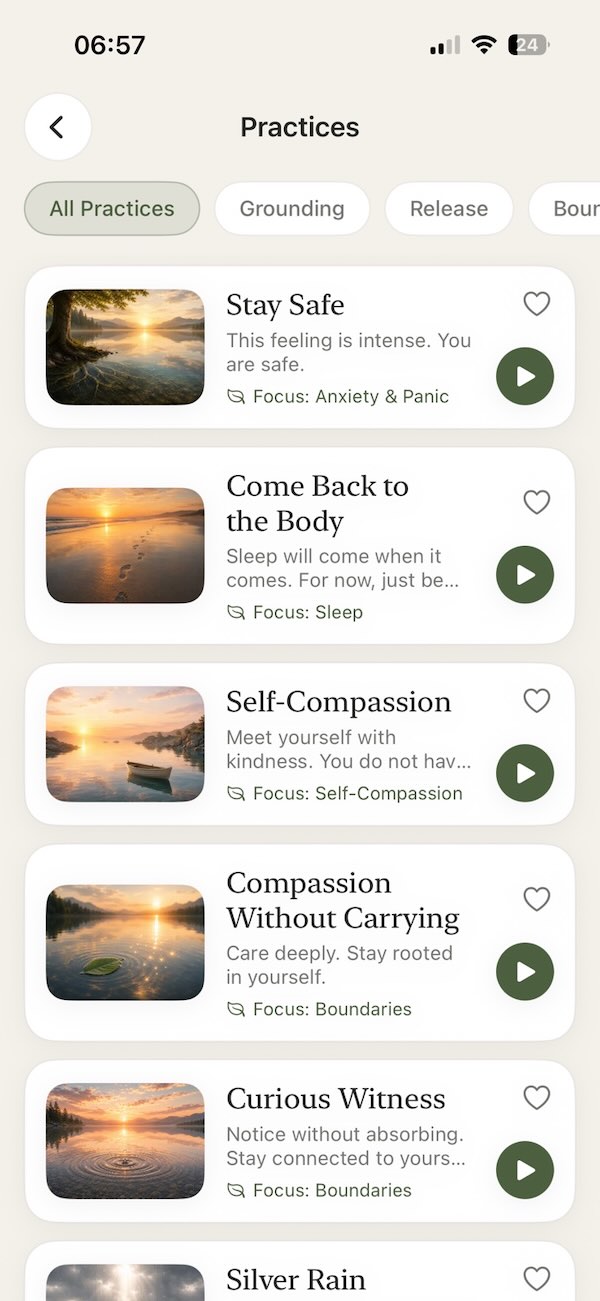
Anxiety can make it feel as though you should be coping better, doing more, or holding everything together. But you don't have to be perfect to deserve care. Self-Compassion is a gentle practice for the moments when anxiety, pressure, or emotional exhaustion feel heavy — a way to soften the inner critic and offer yourself the kindness you so readily give others.

Try the practice
Self-Compassion
Offer yourself the kindness you need.
Ready for more support?
Continue your journey in Aira
Access the full library of guided practices, tools, and resources anytime, anywhere.
- 10+Guided Practices
- AnxietyRelief Tools
- SleepSupport
- TrackYour Progress
- OfflineAccess
Available on iPhone and iPad