Building Nervous System Resilience: Widening Your Capacity
What nervous system resilience is, why a wider window of tolerance helps you handle stress, and how to build a steadier, more flexible system over time.

Regulating your nervous system in a hard moment is one thing; building a system that's steadier and harder to throw in the first place is another. This is nervous system resilience — the capacity to handle stress, recover from it, and stay regulated through more of what life brings. The encouraging part is that it's not fixed: like a muscle, it can be strengthened over time.
This is a guide to building nervous system resilience: what it is, and how to widen your capacity gradually.
What is nervous system resilience?
Nervous system resilience is your system's ability to handle stress and activation without becoming overwhelmed, and to return to calm afterward. It's closely tied to your window of tolerance — the range of arousal you can stay regulated within. A resilient system has a wide window: it can meet a lot of stress, flex with it, and recover quickly. A less resilient one has a narrow window, tipping into overwhelm or shutdown more easily. Resilience isn't about never being stressed; it's about how much you can hold and how well you bounce back.
Resilience is built, not fixed
Your nervous system's capacity isn't a fixed trait you're stuck with — it's shaped by experience and can change. Chronic stress, trauma, and burnout narrow it; rest, safety, and the right kind of practice widen it. This is genuinely hopeful: however reactive or easily overwhelmed your system feels now, it can become steadier with time and the right conditions. You're not building from nothing; you're training a capacity that's already there.
How regulation builds capacity
Resilience grows partly through the practice of regulation itself. Each time you get activated and then help yourself back to calm, you're training your system to do that more easily — a bit like a muscle that strengthens through use and recovery. This is why gentle, repeated practice matters more than any single technique: every small cycle of activation and return teaches your system that it can handle stress and come back. Even working at the edges of your window, gently, expands it over time.
The conditions that widen your window
Beyond practice, resilience is built by how you treat your system day to day. Enough rest and recovery, so the system isn't chronically depleted. Reducing chronic stress where you can, so it isn't constantly maxed out. Safe, co-regulating relationships, which steady the system. Good basics — sleep, movement, time in nature. And self-compassion rather than self-criticism, since a system under constant internal attack stays braced. These conditions don't just feel better; they physically widen the range your nervous system can handle.
Patience and the long view
Building resilience is gradual, and it isn't linear — there will be steadier stretches and harder ones, and capacity that grows slowly enough to be hard to notice day to day. Meeting that with patience matters, because pushing too hard or judging yourself for still getting overwhelmed only narrows the window. Think of it as long-term training: small, repeated, gentle, and cumulative. Over months, not days, the system genuinely becomes steadier.
Final thoughts
Nervous system resilience isn't a trait you either have or lack — it's a capacity you build, through regular regulation, good conditions, and patience. A wider window means more of life feels manageable, stress throws you less, and you recover faster when it does. You don't get there by force, but by repeatedly, gently helping your system settle and giving it what it needs to grow steadier. The capacity is trainable, and it's already beginning. One regulated cycle, one widened inch at a time.
Try a gentle practice
Building resilience starts with noticing your own state — catching activation early, before it overwhelms you. Observe is a gentle practice for exactly that — a way to watch your inner world with calm, non-judgmental attention, build the self-awareness that regulation depends on, and strengthen, little by little, your system's capacity to meet and recover from stress.

Try the practice
Observe
Let's step back and see more clearly
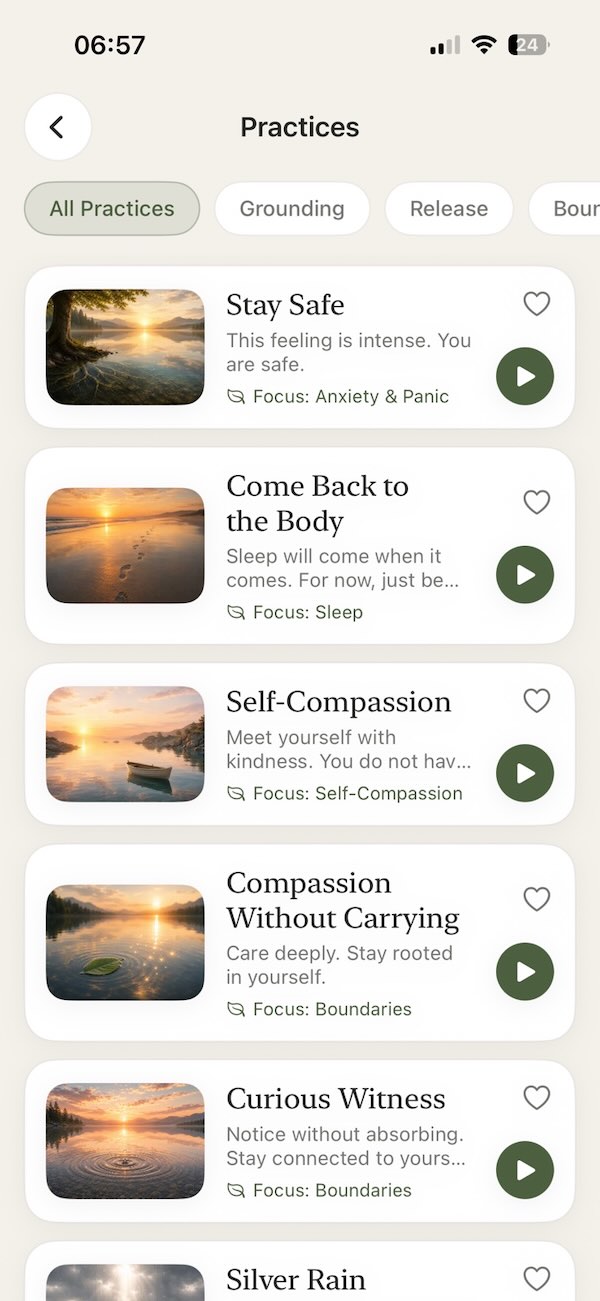
Ready for more support?
Continue your journey in Aira
Access the full library of guided practices, tools, and resources anytime, anywhere.
- 10+Guided Practices
- AnxietyRelief Tools
- SleepSupport
- TrackYour Progress
- OfflineAccess
Available on iPhone and iPad