How to Calm Your Nervous System: Practical Ways to Regulate
Practical, body-based ways to calm your nervous system in the moment and over time — from the long exhale to orienting, movement, and building calm.

When your nervous system is activated — anxious, wired, overwhelmed — what actually helps isn't talking yourself out of it; it's giving your body the signals it responds to. The good news is there are simple, practical, body-based ways to calm your nervous system, both in the heat of the moment and gradually over time. None of them are complicated, and most work better the more you practise them.
This is a practical guide to calming your nervous system — what to do when you're activated, and how to build a calmer baseline.
Why calming works through the body
Your nervous system responds to felt signals of safety far more than to logic, which is why 'just relax' rarely works. To calm it, you send it cues it can feel — through breath, the senses, weight, and movement — that tell it the threat has passed. Understanding this is freeing: you don't have to win an argument with your anxiety, you just have to speak to your body in its own language. (Why this works comes down largely to the vagus nerve, which has its own guide.)
The long exhale
The single most reliable tool is slow breathing with a long out-breath. Breathing in activates your system slightly; breathing out calms it — so making your exhale longer than your inhale directly engages the body's calming brake. A simple version: breathe in for a count of about four, out for about six or more, and repeat for a minute or two. This is the fastest, most portable way to begin shifting your system toward calm, available any time, anywhere.
Orienting to safety
When activated, your system is braced for a threat that's usually not actually present. Orienting helps it check: let your eyes move slowly around the space you're in, taking in that you are, right now, safe. This simple act of looking around and registering 'no danger here' helps the nervous system stand down. Pair it with feeling your feet on the floor and your weight supported, and you give the system solid evidence of safety.
Using the body and movement
The body offers several other levers. Gentle movement — a walk, shaking out your limbs, stretching — helps discharge stress energy and shift a stuck state. Cool water on your face or hands can reset an activated system. Softening physically — dropping your shoulders, unclenching your jaw, releasing held muscles — sends a signal of safety upward. Warmth, a hand on the chest, or gentle self-touch can be soothing too. Different things work for different people, so it's worth finding your own reliable few.
Building a calmer baseline
Beyond in-the-moment tools, you can raise your overall capacity for calm. Regular practice — breathing, grounding, or a settling practice done consistently — strengthens your system's ability to regulate, so you settle more easily over time. Reducing chronic stress, protecting sleep, gentle regular movement, and time in nature or with safe people all widen your window of tolerance. A calm nervous system isn't only about emergency tools; it's also about the conditions you give it day to day.
Final thoughts
Calming your nervous system isn't about forcing yourself to relax or thinking your way out of stress — it's about speaking to your body in the language it understands: the long exhale, the sense of safety, the steadying weight, the gentle movement. These simple tools genuinely work, and they work better the more you use them. You can meet activation with something concrete instead of just willpower, and help your system find its way back to calm. One long exhale, one signal of safety at a time.
Try a gentle practice
The most reliable way to calm your nervous system is the long, slow exhale. Breathe is a gentle practice for exactly that — a simple guided way to slow your breathing, lengthen your out-breath, and engage your body's natural calming response whenever you need to come back toward steady.

Try the practice
Breathe
Help me slow down and find calm.
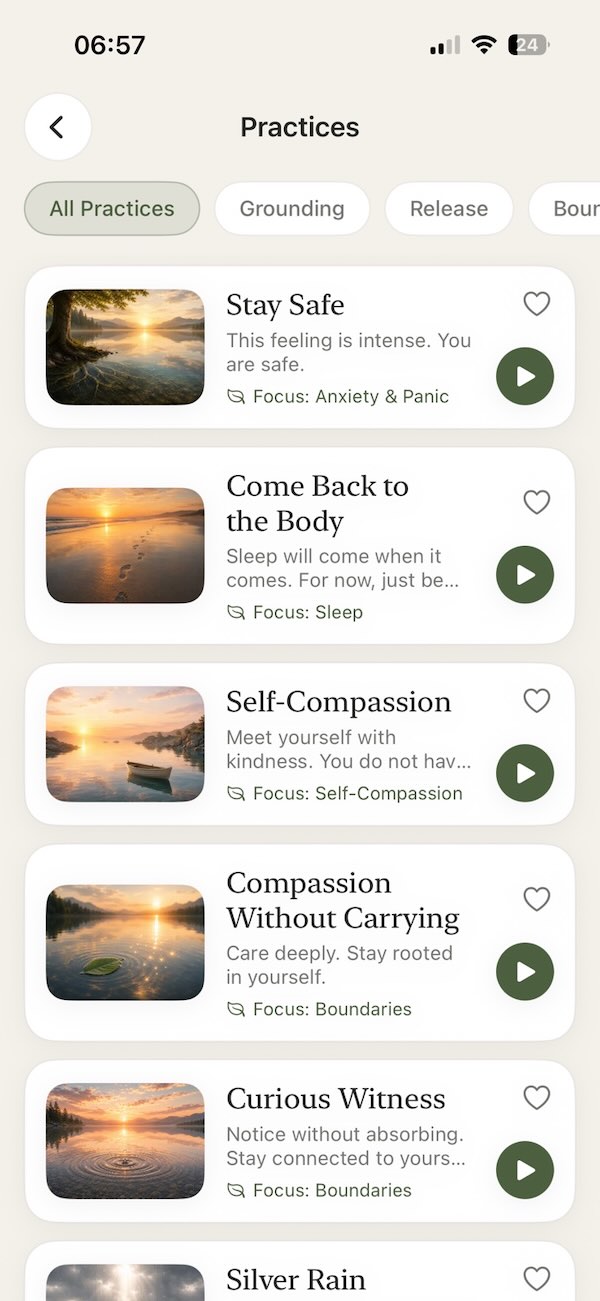
Ready for more support?
Continue your journey in Aira
Access the full library of guided practices, tools, and resources anytime, anywhere.
- 10+Guided Practices
- AnxietyRelief Tools
- SleepSupport
- TrackYour Progress
- OfflineAccess
Available on iPhone and iPad