How to Prevent Burnout Before It Starts
How to prevent burnout before it takes hold — the boundaries, rest, and early warning signs that keep chronic stress from tipping into burnout.

It's far easier to prevent burnout than to recover from it. Once you understand that burnout comes from chronic stress without enough recovery, prevention becomes clear in principle, if not always easy in practice: keep the load sustainable, protect real recovery, and catch the warning signs early.
This is a guide to preventing burnout before it takes hold — the habits and boundaries that keep ordinary stress from hardening into something worse.
Prevention starts with sustainable load
Burnout is, at its core, a problem of too much for too long without enough relief. So the foundation of prevention is keeping your load within what you can actually sustain — not heroically managing an impossible amount, but declining, delegating, and reducing so the demands don't chronically exceed your capacity. This is uncomfortable for people used to saying yes to everything, but it's the single most protective thing you can do.
Protect recovery, not just push through
Stress isn't the enemy; stress without recovery is. Short bursts of pressure followed by genuine recovery are sustainable indefinitely. Burnout sets in when the recovery never comes. Preventing it means building real rest into your normal rhythm — not as a reward for collapse, but as regular maintenance: protected downtime, proper sleep, breaks during the day, and time that genuinely replenishes you. Recovery isn't optional; it's what makes sustained effort possible.
Boundaries as burnout insurance
Many people burn out not from one big thing but from a thousand small yeses — the gradual accumulation of everything they didn't decline. Boundaries are what keep that accumulation in check. Protecting your time, your energy, and your limits, and being willing to disappoint people sometimes, is one of the most effective forms of burnout prevention there is. The discomfort of holding a line is far smaller than the cost of burning out. (Holding boundaries is its own skill, with its own guide.)
Catch the early warning signs
Burnout builds in stages, and the earlier you catch it, the easier it is to head off. Learn your own early warning signs — the creeping exhaustion, the irritability, the dread, the cynicism, the slipping sleep — and treat them as signals to adjust, not push harder. A boundary set or a rest taken at the first signs costs far less than the deep recovery a full burnout demands. (The stages of burnout have their own guide.)
Address the patterns that drive it
Prevention also means looking at the internal drivers — perfectionism, people-pleasing, over-responsibility, tying your worth to productivity — that push people to give more than is sustainable. These patterns will quietly recreate burnout no matter how many boundaries you set on the surface, so easing them is part of long-term prevention. Learning that you're allowed to do less, rest more, and be worth something beyond your output protects you at the root.
Final thoughts
Preventing burnout isn't about working less because you're weak — it's about working and living in a way that's actually sustainable, so you can keep going over the long term. Keep the load reasonable, protect your recovery, hold your boundaries, watch for the early signs, and ease the patterns that drive you past your limits. None of it requires you to care less; it just keeps your caring from costing you everything. One sustainable choice, one protected rest at a time.
Try a gentle practice
Preventing burnout depends on protecting your limits before they're overrun — which means being able to hold a boundary even when it's uncomfortable. Hold the Line is a gentle practice for exactly that — a way to stay steady when guilt or pressure pulls at you, keep the limits that protect your energy, and stop the slow accumulation that leads to burnout.

Try the practice
Hold the Line
Stay steady when you hold a boundary.
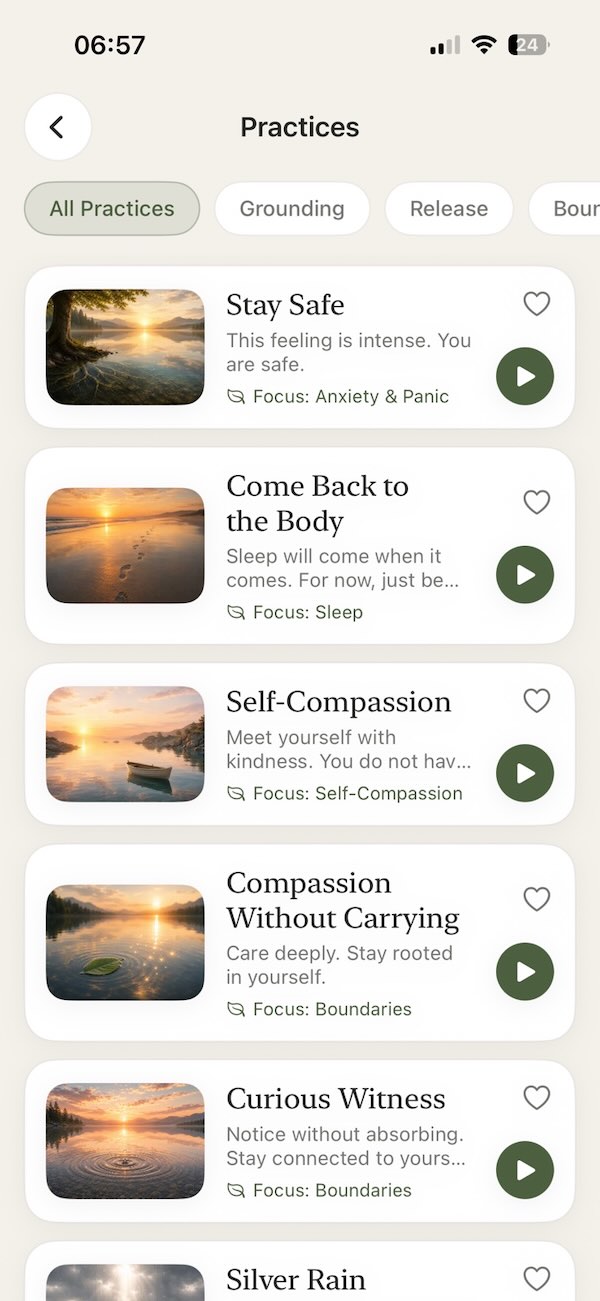
Ready for more support?
Continue your journey in Aira
Access the full library of guided practices, tools, and resources anytime, anywhere.
- 10+Guided Practices
- AnxietyRelief Tools
- SleepSupport
- TrackYour Progress
- OfflineAccess
Available on iPhone and iPad