Burnout vs Depression: How to Tell the Difference
Why burnout and depression get confused, what each tends to look like, the key differences, where they overlap, and when it's worth reaching out for help.

Burnout and depression can feel almost identical from the inside — the same exhaustion, the same loss of motivation, the same flat greyness. But they aren't the same thing, and telling them apart matters, because they sometimes call for different help. This is a guide to the difference, written to help you understand — not to diagnose, which is something only a professional can do.
Why burnout and depression get confused
They overlap heavily. Both can involve deep fatigue, low mood, loss of interest, difficulty concentrating, irritability, and a sense of hopelessness. Burnout can also lead into depression if it goes on long enough. So it's genuinely hard to tell them apart from symptoms alone — which is exactly why understanding the differences, and getting professional input when it's serious, is worth doing.
What burnout tends to look like
Burnout is usually tied to a context — most often work or caregiving. Its exhaustion and cynicism tend to cluster around that source: you might feel empty and detached at work but still able to enjoy a weekend away from it, at least early on. Burnout often eases, at least temporarily, when you're genuinely removed from the stressor. At its core is depletion from chronic, specific stress.
What depression tends to look like
Depression is more pervasive. Rather than being tied to one domain, it tends to colour everything — work, relationships, hobbies, rest — with low mood, loss of pleasure, and hopelessness that follow you even away from any particular stressor. It can include changes in sleep and appetite, deep feelings of worthlessness, and, at times, thoughts that life isn't worth living. Depression doesn't necessarily lift when circumstances change, because it isn't only about circumstances.
The key differences
A few distinctions help. Burnout is usually context-specific; depression is usually global. Burnout tends to ease when you're away from the stressor; depression often doesn't. Burnout centres on exhaustion and detachment; depression more often includes pervasive worthlessness and a loss of pleasure across all of life. But these are tendencies, not a reliable self-test — and the two frequently coexist.
Where they overlap, and when to seek help
Because burnout and depression overlap and can feed each other, the most important thing isn't getting the label exactly right on your own — it's getting support when you need it. It's worth talking to a doctor or therapist if low mood, exhaustion, or hopelessness have lasted more than a couple of weeks, if they're affecting your daily functioning, or if they don't lift even when you step away from the obvious stressors. There's no threshold of 'bad enough' you have to reach first; getting help early is always reasonable.
Final thoughts
Whether what you're feeling is burnout, depression, or some of both, it isn't a weakness or a failure — it's a sign that something has been too much for too long, and that you deserve care and support. Understanding the difference can help you make sense of your experience, but you don't have to diagnose yourself, and you don't have to carry it alone. Reaching out to a professional is a strong, sensible step, not a last resort. One honest conversation, one bit of support at a time.
This is a sensitive topic, and if any of it resonates personally, please consider talking with a doctor or mental health professional. If you're ever having thoughts of harming yourself, reach out to a local crisis line or someone you trust right away — you deserve support.
Try a gentle practice
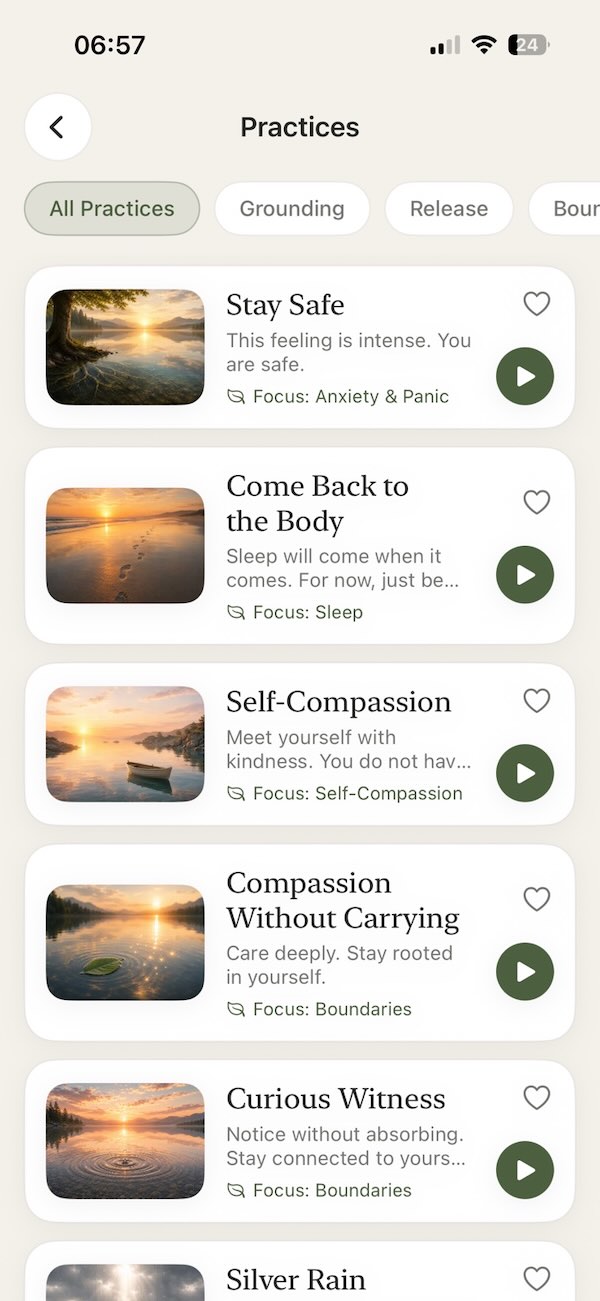
When you're exhausted and low, the inner voice often turns harsh, blaming you for not coping. Self-Compassion is a gentle practice for those moments — a way to meet your own exhaustion with kindness rather than criticism, and to treat yourself as someone worthy of care while you find the support you need.

Try the practice
Self-Compassion
Offer yourself the kindness you need.
Ready for more support?
Continue your journey in Aira
Access the full library of guided practices, tools, and resources anytime, anywhere.
- 10+Guided Practices
- AnxietyRelief Tools
- SleepSupport
- TrackYour Progress
- OfflineAccess
Available on iPhone and iPad