Emotional Signs of Burnout: Numbness, Cynicism, and Dread
The emotional signs of burnout — numbness, irritability, cynicism, dread, and loss of motivation — what they mean, and how to respond to them with kindness.

Burnout isn't only exhaustion — some of its clearest signs are emotional. Long before you might call it burnout, the feelings shift: things you used to care about leave you cold, small irritations feel huge, and a low background dread follows you around. These emotional changes are easy to dismiss or blame yourself for, but they're often burnout speaking.
This is a guide to the emotional signs of burnout: what they look like, why they happen, and how to meet them without making things worse by turning on yourself.
Why burnout shows up in your emotions
When you've been depleted for long enough, your emotional system starts to conserve and protect. Caring takes energy; so does patience, optimism, and engagement — and when the reserves are gone, those are some of the first things to go. The emotional signs of burnout aren't a character flaw or a sign you've become a worse person. They're what an overdrawn emotional account looks like.
Numbness and detachment
One of the most common — and most distressing — emotional signs of burnout is numbness. Things that used to move you feel flat. You go through the motions at work or at home without really feeling present. This detachment (sometimes described as depersonalisation or cynicism in burnout research) is the mind's way of protecting a depleted system by turning the volume down on feeling. It can be frightening, but it's usually reversible as you recover.
Irritability and a short fuse
When you're running on empty, you have less capacity to absorb the normal friction of life. Small things — a slow queue, a minor request, a noise — provoke a reaction out of proportion to their size. This isn't you becoming a bad-tempered person; it's a nervous system with no margin left. The irritability is a fuel gauge, not a personality change.
Cynicism and loss of meaning
Burnout often brings a creeping cynicism — about your work, the people around you, or the point of it all. Things that once felt meaningful start to feel pointless or absurd. This loss of meaning is a hallmark of burnout, and it's part of why it can feel so bleak. It usually reflects depletion and disillusionment, not the truth about your life, even though it can be very convincing from the inside.
Dread, anxiety, and low mood
A persistent sense of dread — Sunday-night anxiety that bleeds into the week, a heaviness about what's ahead — is another common emotional sign. Burnout frequently comes braided with anxiety and low mood, and over time can shade toward depression. If your emotional state has been low, flat, or fearful for a sustained stretch, it's worth taking seriously rather than pushing through.
Loss of motivation
When the emotional fuel is gone, so is the drive. Tasks that once felt manageable feel pointless or impossibly heavy, and you may judge yourself as lazy or failing. But burnout-related loss of motivation isn't a willpower problem — it's depletion. Trying to force motivation through self-criticism tends to deepen the burnout rather than lift it.
How to respond to the emotional signs
The most important shift is how you treat yourself when you notice these signs. The instinct is often to criticise — what's wrong with me, why can't I just cope — which adds a second layer of suffering on top of the burnout. Meeting the signs instead with recognition (this is burnout, not a character flaw) and kindness does two things: it stops the self-attack that worsens depletion, and it lets you respond to what the signs are actually telling you — that something needs to change and that you need care.
Final thoughts
The emotional signs of burnout — numbness, irritability, cynicism, dread, lost motivation — aren't evidence that you've become cold, weak, or broken. They're evidence that you've been depleted for too long, and they tend to lift as you recover. If you recognise these in yourself, the kindest and most useful response isn't to push harder; it's to take them seriously as signals and to treat yourself gently while you address what's draining you. One recognised sign, one kind word to yourself at a time.
Try a gentle practice
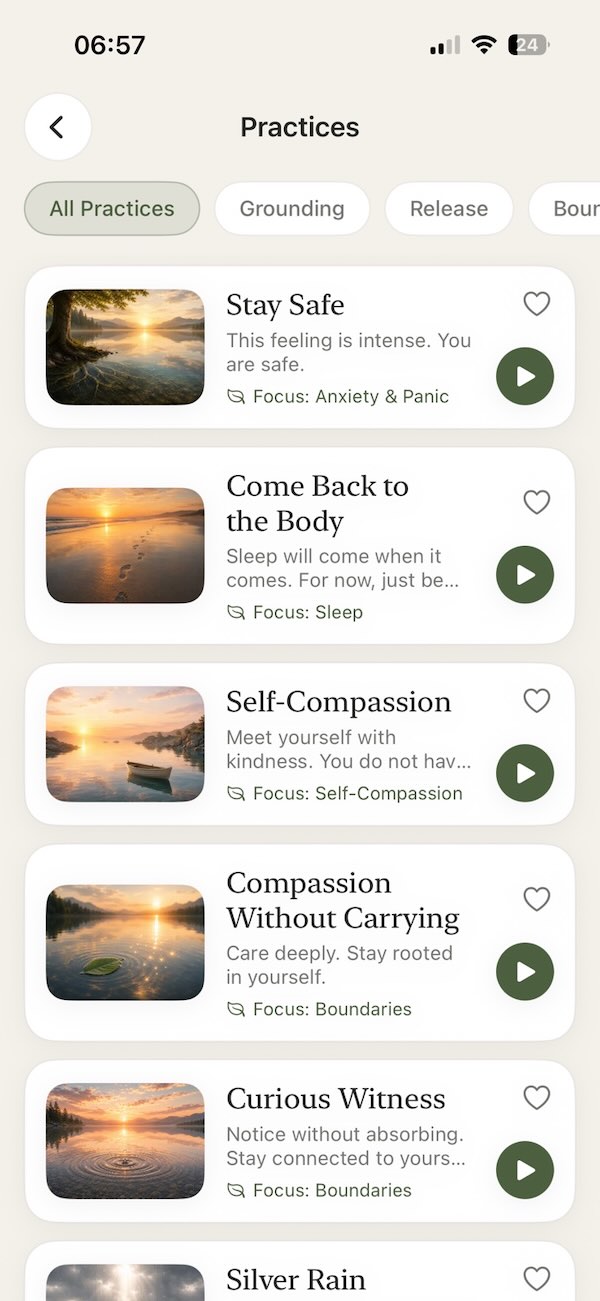
When burnout flattens your emotions, the inner voice often turns critical, blaming you for not coping. Self-Compassion is a gentle practice for exactly that — a way to meet your own numbness, irritability, or low motivation with warmth instead of judgment, so you can respond to burnout with care rather than another layer of self-attack.

Try the practice
Self-Compassion
Offer yourself the kindness you need.
Ready for more support?
Continue your journey in Aira
Access the full library of guided practices, tools, and resources anytime, anywhere.
- 10+Guided Practices
- AnxietyRelief Tools
- SleepSupport
- TrackYour Progress
- OfflineAccess
Available on iPhone and iPad