Co-regulation: How We Calm Each Other's Nervous Systems
What co-regulation is, why we calm our nervous systems through safe connection with others, and how to use it — and build self-regulation alongside it.

We don't regulate our nervous systems entirely on our own. From the moment we're born, we calm — and are calmed — through connection with others: a soothing voice, a steady presence, a calm face. This is co-regulation, and it remains one of the most powerful ways to settle a nervous system throughout life, not just in childhood.
This is a guide to co-regulation: what it is, why it works, and how to use connection to help your nervous system find calm.
What is co-regulation?
Co-regulation is the process of calming your nervous system through connection with another regulated person. When you're with someone who is calm and feels safe, your nervous system picks up on their state — their tone, expression, and steadiness — and begins to settle in response. It's how babies are soothed by a caregiver before they can regulate themselves, and it stays with us: adults co-regulate too, all the time, often without realising it.
Why it works
Human nervous systems are wired to read and respond to each other, constantly and below awareness. We pick up cues of safety or threat from other people's faces, voices, and body language, and our own state shifts to match. A calm, warm presence sends our system signals of safety — 'you're okay, you're not alone' — that help it stand down. This is why simply being with the right person can settle you faster than anything you could do alone, and why isolation can make dysregulation worse.
What co-regulation looks like
Co-regulation can be as simple as talking to someone calm and feeling your own tension ease; being held or sitting close to someone safe; a reassuring voice on the phone; or even the steadying presence of a pet. It's not about the other person fixing your problem — it's their regulated nervous system offering yours a kind of anchor, something steady to borrow calm from until you find your own. Co-regulation is one of the quiet reasons connection feels so necessary when we're distressed.
When co-regulation is hard
For some people, connection doesn't easily feel safe — especially if early relationships were a source of stress rather than comfort, or if hypervigilance makes it hard to relax around others. If being with people activates rather than soothes you, that's not a failing; it's a nervous system that learned to brace. Building safe co-regulating relationships can be slow, and it may take finding the right people and going gently. The capacity to be soothed by others can be rebuilt, even if it didn't come easily early on.
Co-regulation and self-regulation together
Co-regulation and self-regulation aren't opposites — they work together. We actually learn to self-regulate through being co-regulated: by repeatedly experiencing calm with safe others, we internalise that calm and become more able to find it alone. So leaning on connection isn't a weakness or a failure to cope independently; it's part of how regulation is built. A healthy life includes both — the ability to settle yourself, and the willingness to be settled by others. You're not meant to do it all alone.
Final thoughts
Co-regulation is a reminder that nervous systems aren't meant to operate in isolation — we are wired to calm and be calmed by each other. Reaching for a safe, steady presence when you're distressed isn't weakness; it's using one of the most natural and effective forms of regulation there is. Alongside learning to settle yourself, let yourself be settled by others, and offer that steadiness back. We come back to calm together. One safe connection at a time.
Try a gentle practice
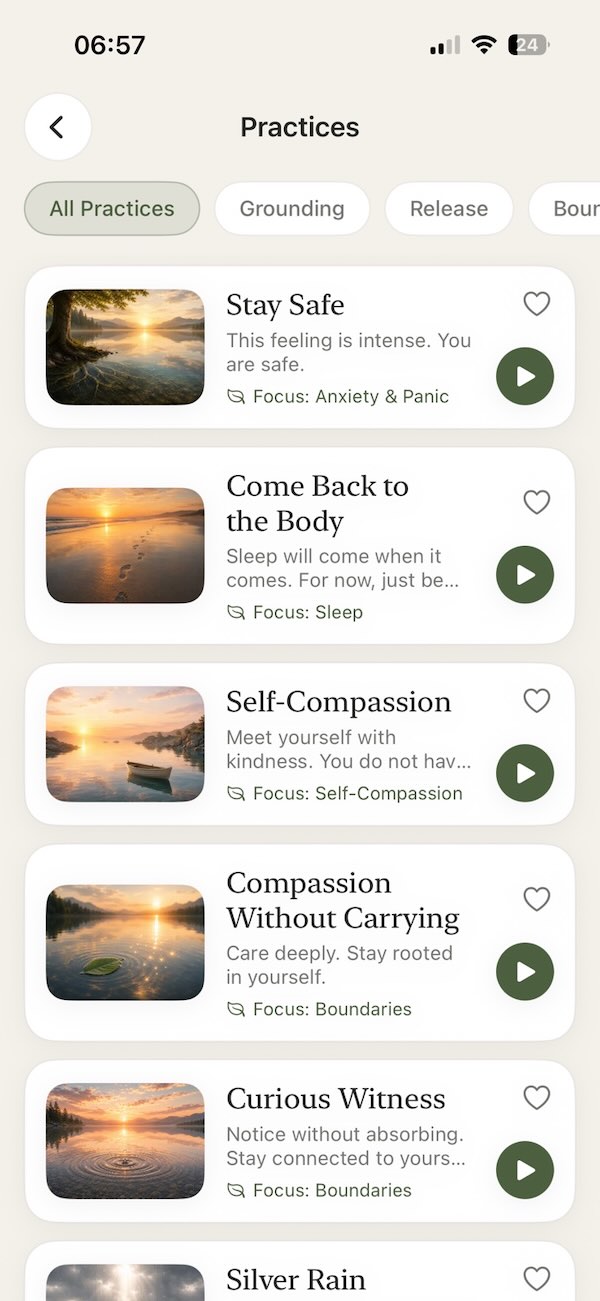
Co-regulation works by borrowing a sense of safety — and you can offer your own system that signal too. Stay Safe is a gentle practice for exactly that — a way to evoke a felt sense of safety and steadiness, the same cue a calm presence provides, helping your nervous system settle whether or not someone else is there.

Try the practice
Stay Safe
Find solid ground when panic feels overwhelming.
Ready for more support?
Continue your journey in Aira
Access the full library of guided practices, tools, and resources anytime, anywhere.
- 10+Guided Practices
- AnxietyRelief Tools
- SleepSupport
- TrackYour Progress
- OfflineAccess
Available on iPhone and iPad