Hypervigilance: When Your System Can't Stop Scanning for Danger
What hypervigilance is, why your nervous system stays constantly on alert, and how to help an over-alert system gradually feel safe enough to stand down.

Some people live with an alarm that never fully switches off. You scan rooms, read faces for the smallest shift, brace for what might go wrong, and stay on guard even when nothing is happening. This is hypervigilance — a state of constant, exhausting alertness — and while it can feel like just 'how you are,' it's usually a nervous system stuck in threat-detection mode.
This is a guide to hypervigilance: what it is, why it develops, and how to help an over-alert system stand down.
What is hypervigilance?
Hypervigilance is a state of heightened, continuous alertness in which your system is constantly scanning for danger. It's the nervous system's threat-detection turned up too high and left on, so that you're always watching, anticipating, and bracing — even in safe situations. It's more than ordinary caution; it's an exhausting, around-the-clock vigilance that doesn't switch off when the situation is calm.
What hypervigilance feels like
It can show up as constantly scanning your environment for threats; reading people intensely for signs of anger or danger; feeling on edge, jumpy, or easily startled; struggling to relax or feel safe even when nothing is wrong; difficulty sleeping because you can't drop your guard; and a mind always running through what could go wrong. It's mentally and physically draining, precisely because the system never gets to stand down and rest.
Why hypervigilance develops
Hypervigilance is the nervous system's response to having learned that the world isn't safe. It often develops after periods of real threat, stress, or trauma, where staying constantly alert genuinely was protective — and then the system doesn't switch back off once the danger has passed. In that sense it's not irrational; it's an old survival setting that's still running, scanning for threats that may no longer be there. It can also come with chronic anxiety and a nervous system stuck in hyperarousal.
Why it's so hard to switch off
The cruel logic of hypervigilance is that it feels necessary — letting your guard down can feel dangerous, even when you're objectively safe, because the system believes vigilance is keeping you safe. So you can't simply decide to relax; the alertness is being driven from below conscious control, by a system convinced that dropping watch is risky. This is why 'just relax' is useless advice, and why working with hypervigilance has to go through the body's sense of safety, not through logic alone.
How to help an over-alert system stand down
Easing hypervigilance is about slowly, repeatedly teaching your system that it's safe enough to lower its guard. That means actively signalling safety — orienting to your surroundings and letting your eyes confirm there's no threat, feeling your body supported, slowing the breath. It means building genuinely safe experiences where you can practise letting your guard down a little. And it takes patience and self-compassion: a hypervigilant system relaxes gradually, as it slowly gathers evidence that it no longer has to be on duty every second. (If hypervigilance follows trauma, working with a professional can help significantly.)
Final thoughts
Hypervigilance isn't paranoia or a personality flaw — it's a nervous system that learned, often for good reason, to stay on guard, and hasn't yet realised the danger has passed. The constant alertness is exhausting, and it isn't your fault. With repeated signals of safety and patience, an over-alert system can gradually learn to stand down, and you can begin to feel safe enough to rest. One signal of safety, one lowered guard at a time.
If your hypervigilance stems from trauma or feels overwhelming, please consider reaching out to a therapist — this is something support can really help with.
Try a gentle practice
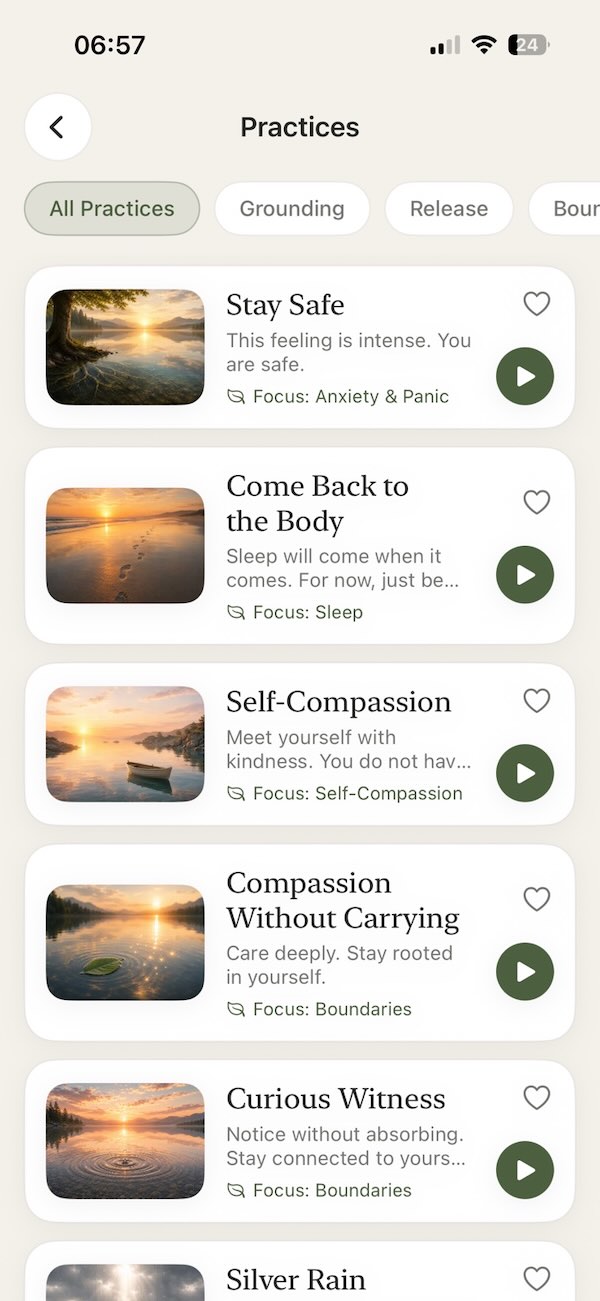
Hypervigilance keeps your system braced for a threat that often isn't there. Stay Safe is a gentle practice for exactly that — a way to signal genuine safety to an over-alert nervous system, let your guard down by degrees, and help a body stuck on watch begin to believe it can rest.

Try the practice
Stay Safe
Find solid ground when panic feels overwhelming.
Ready for more support?
Continue your journey in Aira
Access the full library of guided practices, tools, and resources anytime, anywhere.
- 10+Guided Practices
- AnxietyRelief Tools
- SleepSupport
- TrackYour Progress
- OfflineAccess
Available on iPhone and iPad