Cognitive Burnout: Brain Fog, Poor Focus, and Mental Fatigue
Why burnout causes brain fog, forgetfulness, and poor concentration, what mental fatigue really is, and how to ease cognitive burnout instead of forcing it.

You read the same sentence three times and it won't go in. You walk into a room and forget why. Decisions that should be simple feel impossible. If burnout has turned your once-reliable mind foggy and slow, you're experiencing one of its most frustrating effects: cognitive burnout, the mental side of being depleted.
This is a guide to cognitive burnout: why it scrambles your focus and memory, what mental fatigue actually is, and how to ease it rather than fight it.
What is cognitive burnout?
Cognitive burnout is the mental dimension of burnout — brain fog, poor concentration, forgetfulness, and difficulty making even small decisions. Your thinking feels slow, scattered, and effortful, as though your mental processor is running at half speed. It's sometimes called mental fatigue or mental exhaustion, and it's an extremely common, if under-discussed, part of burnout.
Why burnout causes brain fog
Your brain runs on energy and depends on a regulated nervous system, and chronic stress disrupts both. Sustained stress hormones, poor sleep, and a system stuck in survival mode all impair the brain regions responsible for focus, memory, and decision-making. In other words, brain fog isn't you 'losing your edge' or becoming less capable — it's a tired, over-stressed brain doing its best with depleted resources. It's a symptom, not a verdict on your intelligence.
How cognitive burnout shows up
It takes a few familiar forms: difficulty concentrating or staying on task; forgetfulness and losing your train of thought; trouble making decisions, even small ones; reduced creativity and problem-solving; and a sense that thinking itself is effortful. Tasks that used to be automatic now demand visible effort, which is both exhausting and demoralising. (Decision-making in particular can become its own struggle, which has its own guide.)
Why pushing harder makes it worse
The instinct with brain fog is to force it — more caffeine, longer hours, sheer willpower. But cognitive burnout is a sign the brain is depleted, and forcing a depleted brain deepens the depletion. It's like revving an engine that's low on oil. The counterintuitive truth is that the way out of mental fatigue is usually less pushing and more recovery, not more effort applied to a system that's already over-extended.
How to ease cognitive burnout
Rather than fighting the fog, you work with it. Reduce cognitive load where you can — fewer decisions, smaller tasks, less multitasking. Build in real mental rest, including time away from screens and constant input. Protect sleep, since the foggy brain recovers largely while you rest. And meet the fog without panic: noticing 'my mind is tired right now' with acceptance, rather than alarm, takes the secondary stress out of it. The fog lifts as the burnout recovers — it's a state, not a permanent loss.
Final thoughts
Cognitive burnout — the brain fog, the forgetfulness, the effortful thinking — isn't a sign that something is permanently wrong with your mind. It's a tired brain signalling that it's been asked to do too much for too long. The clearest thing it's telling you is that it needs rest and less load, not more pressure. Be patient with a foggy mind the way you would with a healing body; sharpness returns as the system recovers. One reduced demand, one real mental pause at a time.
Try a gentle practice
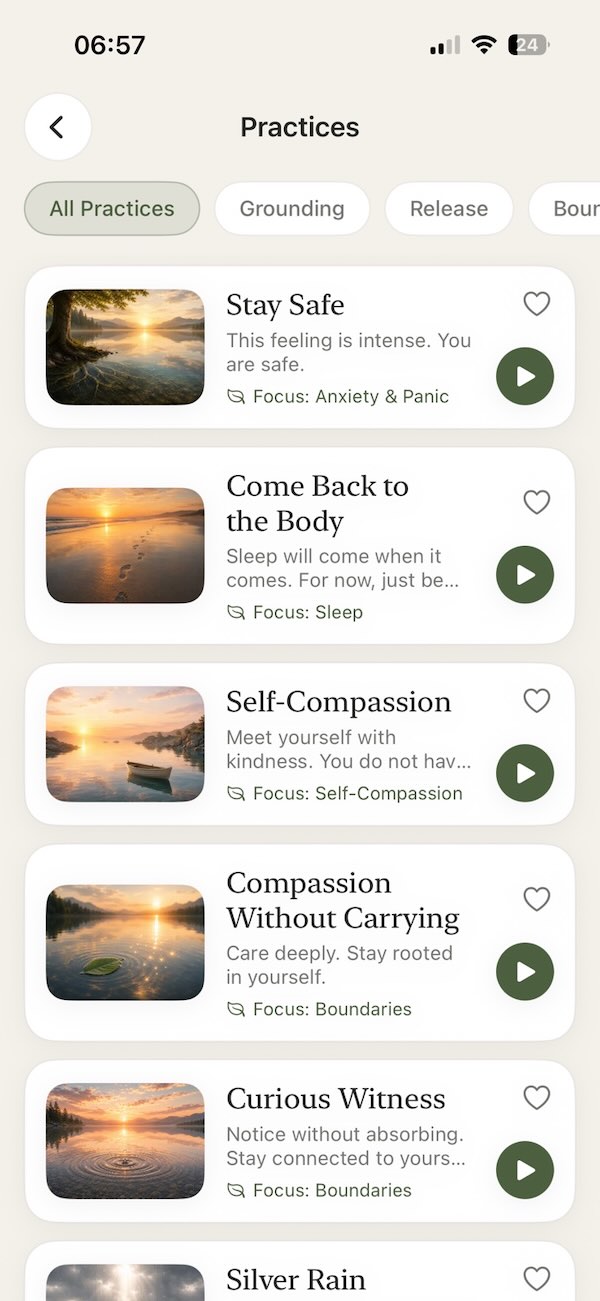
When your mind is foggy and scattered, fighting it only adds stress. Observe is a gentle practice for exactly that — a way to step back and notice your tired, busy mind with calm, non-judgmental attention, easing the panic about not thinking clearly and giving an over-stretched mind a little room to settle.

Try the practice
Observe
Let's step back and see more clearly
Ready for more support?
Continue your journey in Aira
Access the full library of guided practices, tools, and resources anytime, anywhere.
- 10+Guided Practices
- AnxietyRelief Tools
- SleepSupport
- TrackYour Progress
- OfflineAccess
Available on iPhone and iPad