Emotional Exhaustion: When You Have Nothing Left to Give
What emotional exhaustion is, why you feel drained and depleted with nothing left to give, what causes it, and how to begin refilling an empty reserve.

There's a particular kind of tiredness that sleep doesn't touch — the feeling of being emotionally wrung out, with nothing left to give. You go through the motions of caring, working, and responding, but the reserve you usually draw from is empty. If you feel hollowed out, depleted, and unable to summon energy for things that matter to you, you may be experiencing emotional exhaustion.
This is a guide to emotional exhaustion: what it is, why you end up with nothing left to give, and how to begin refilling.
What is emotional exhaustion?
Emotional exhaustion is a state of feeling emotionally drained and used up — the sense that you've given out more than you've taken in, for so long that the well has run dry. It's a core component of burnout, and it shows up as depletion, detachment, and a reduced capacity to feel or respond. Where physical tiredness is in the body, emotional exhaustion is in your capacity to care, cope, and connect — all of which feel like they're running on empty.
What it feels like
Emotional exhaustion has a recognisable texture: feeling drained no matter how much you rest; a sense of dread about everyday demands; reduced patience and a short fuse; numbness or detachment from people and things you care about; and a heavy reluctance to take on anything more, even small things. Many people describe it as having nothing left to give — still functioning, but scraping the bottom of an empty reserve to do it.
What causes it?
Emotional exhaustion builds when emotional output chronically exceeds emotional replenishment. Prolonged stress, caregiving, demanding work, relationship strain, or simply carrying too much for too long all drain the reserve. It's especially common in people who give a lot — who tend to others' needs, absorb others' emotions, or hold themselves to high standards — and who don't refill at the same rate they pour out. (For those who absorb others' feelings in particular, this is closely related to empath burnout, which has its own guide.)
Why rest alone doesn't refill you
A common frustration with emotional exhaustion is that ordinary rest doesn't seem to restore you. That's because what's depleted isn't only physical energy — it's emotional reserve, which refills differently. Sleep helps, but emotional replenishment also needs things like genuine downtime, connection that gives rather than takes, activities that restore meaning, and crucially, a reduction in what's draining you. You can't refill a reserve while it's still pouring out faster than it fills.
How to begin refilling
Recovering from emotional exhaustion starts with stemming the drain and gently restoring the reserve. Where you can, reduce the emotional load — fewer demands, firmer boundaries, less carrying of what isn't yours. Protect real recovery, not just collapse: rest that genuinely restores, and time in the things that replenish rather than deplete you. Lower the bar with yourself; an empty reserve can't perform like a full one, and pushing it deepens the exhaustion. And treat the depletion as information — a sign that the balance between giving and receiving needs to change, not a failing to push through.
The fuller picture
Emotional exhaustion tends to get read as a personal weakness: if I've got nothing left to give, that's a failing in me — other people keep going, so I should be able to push through this too. It feels true because you're still functioning next to people who look fine, and because willpower has carried you before, so its failing now looks like something lacking in you.
But an empty reserve isn't a lack of willpower — it's what happens when you pour out more than comes back in, for long enough that the well runs dry. Determination can't refill a reserve any more than it can refill an empty tank; pushing harder just burns the little that's left and digs the exhaustion deeper. The people who seem to 'keep going' are often running on reserves you can't see, or heading for the same wall a few steps behind you. And the emptiness isn't an indictment of your character — it's information, telling you the balance between giving and receiving has tipped too far, for too long. You're not failing to be strong enough; you're being asked to stop draining and start refilling. You're allowed to receive before you give again.
Final thoughts
Having nothing left to give isn't a character flaw or a lack of willpower — it's what happens when you pour out more than you take in for long enough that the reserve runs dry. The way back isn't to squeeze more from an empty well, but to stop the drain and let yourself slowly refill. You're allowed to receive as well as give, to rest before you collapse, and to let your reserve fill back up before you ask anything more of it. One reduced demand, one genuine refill at a time.
If the emptiness has felt deep or lasting, be gentle with yourself — and if it doesn't lift, consider reaching out to a doctor or therapist for support.
Try a gentle practice
When you're emotionally wrung out, even softening can feel like a relief. Soften is a gentle practice for exactly that — a way to release some of the tension and bracing that depletion builds up, ease the effort of holding yourself together, and give a worn-out system a moment of genuine rest.

Try the practice
Soften
Let's release what you are holding
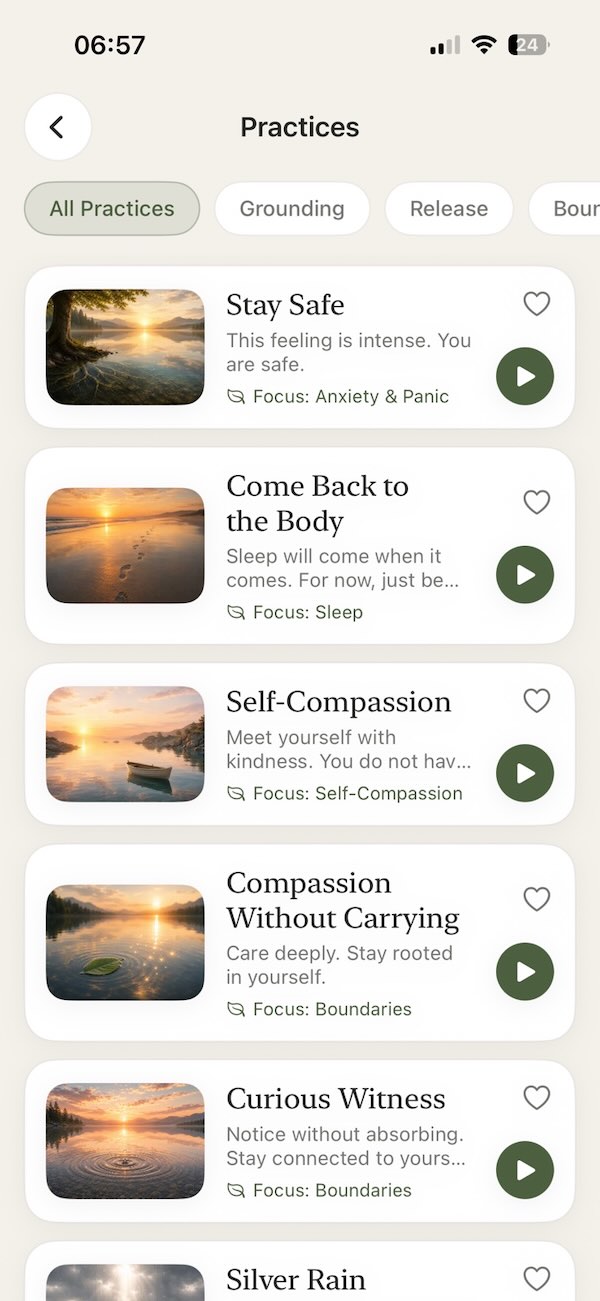
Ready for more support?
Continue your journey in Aira
Access the full library of guided practices, tools, and resources anytime, anywhere.
- 10+Guided Practices
- AnxietyRelief Tools
- SleepSupport
- TrackYour Progress
- OfflineAccess
Available on iPhone and iPad