Emotional Labor in Relationships: The Invisible Work of Caring
What emotional labor in relationships is, why carrying the emotional work for everyone drains you, and how to share the load without burning out.

In many relationships, one person quietly carries the emotional work — noticing how everyone's feeling, smoothing tensions, remembering what matters, managing moods, holding the relationship together. This is emotional labor, and while it's often invisible and unacknowledged, it's real work, and doing too much of it for too long is a quiet road to burnout.
This is a guide to emotional labor in relationships: what it is, why it's so draining, and how to share the load.
What is emotional labor?
Emotional labor, in everyday relationships, is the work of managing emotions — yours and other people's — to keep things running smoothly. It's anticipating needs, soothing upsets, remembering birthdays and worries, keeping the peace, and being the one who notices and tends to how everyone feels. Originally a term about jobs that require managing emotions, it's now widely used for this invisible relational and domestic work, which tends to fall heavily on one person.
Why it's so draining
Emotional labor is exhausting partly because it's constant and partly because it's invisible. The person carrying it is always 'on' — monitoring, anticipating, managing — with no clear off-switch and little recognition, because the work is largely unseen. Unlike visible tasks, no one thanks you for the tension you defused or the upset you headed off, so the cost accumulates silently. Over time, being the emotional manager for a relationship or family drains the reserve and breeds resentment and burnout.
The one-sided pattern
Emotional labor becomes a problem when it's chronically unequal — when one person does the noticing, caring, and managing while the other coasts on it. This often isn't malicious; the person not doing it frequently doesn't see it, precisely because it's invisible and because someone else has always handled it. But the imbalance is real, and the carrier slowly empties out, doing the emotional work of two people while it goes unnoticed by both.
Why it's hard to put down
If you're the emotional laborer, stopping can feel impossible — if you don't manage the moods, remember the things, and smooth the tensions, who will? Often the honest answer is that things would wobble for a while, because the other person hasn't had to develop the habit. The carrier keeps carrying because letting go feels like letting the relationship fall apart. But continuing to do all of it isn't sustainable, and it quietly prevents the balance from ever shifting.
How to share the load
Easing emotional labor starts with making the invisible visible — naming the work that's being done, to yourself and to the other person, since they often genuinely haven't seen it. From there, it's about letting go of some of it: not managing every mood, not remembering for everyone, not rushing to smooth every tension. Let others carry their own emotional weight and develop their own capacity, even if it's bumpy at first. You can care about the people in your life without doing all the emotional work of the relationship for them.
The fuller picture
What keeps the emotional laborer trapped is a single conviction: if I stop managing everyone's feelings and holding this together, it will all fall apart — no one else will do it, so I have no choice but to carry it. It feels true because you've never seen the alternative: you've always caught the tension before it broke, so there's no evidence the relationship could hold without you doing that.
But look closely at the evidence you do have. "No one else will" is almost always really "no one else has had to" — the other person never built the habit precisely because you've always covered it, not because they're incapable. And "it'll fall apart" mistakes a wobble for a collapse: if you set something down, things may go bumpy for a while as the load redistributes, but bumpy is the system finding a new balance, not the relationship ending. Here's the part the fear hides — carrying all of it doesn't actually hold the relationship together; it holds the imbalance together, and quietly guarantees the other person never grows the capacity to share it. So putting some of it down isn't caring less, and it isn't risking everything. It's the one move that lets the work stop being yours alone — which is the only version of this that was ever sustainable.
Final thoughts
Emotional labor is real work, and if you've been carrying it alone, the exhaustion you feel makes complete sense — you've been doing the emotional running of a relationship single-handed, with little recognition. You're allowed to put some of it down, to let others feel and manage their own emotions, and to stop being the sole keeper of everyone's wellbeing. Sharing the load isn't caring less; it's refusing to disappear under work that was never meant to be one person's alone. One named task, one set-down responsibility at a time.
Try a gentle practice
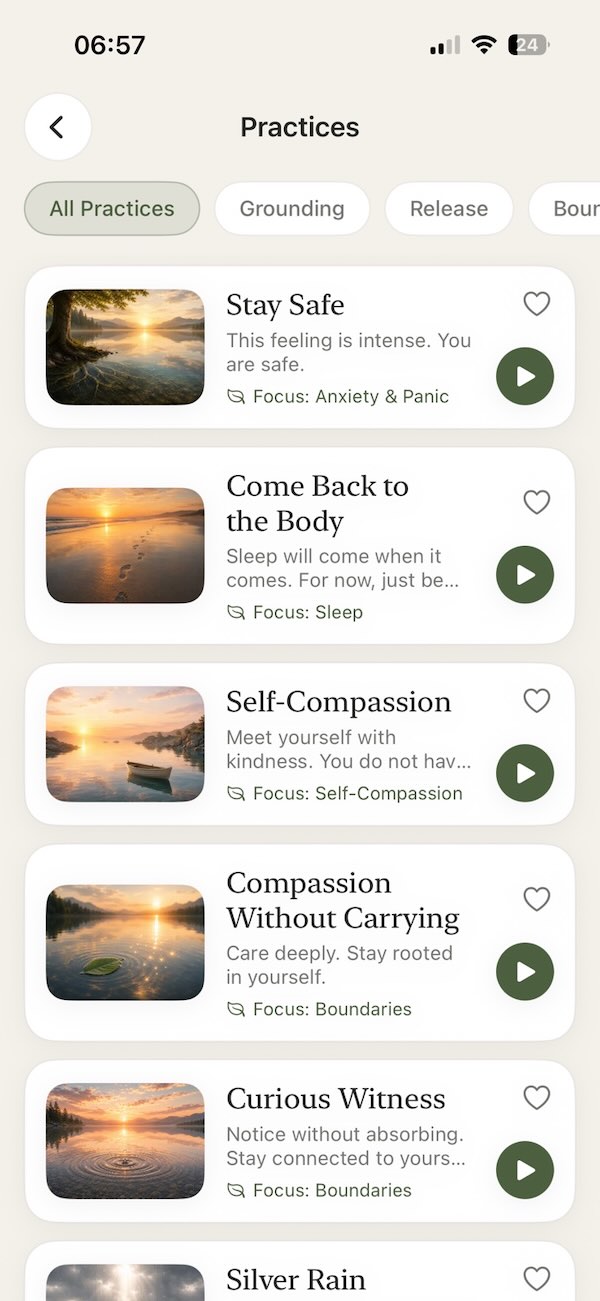
Carrying the emotional weight of a relationship means holding feelings that aren't yours to hold. Compassion Without Carrying is a gentle practice for exactly that — a way to stay warm and caring toward the people in your life while letting their emotions remain theirs, so you can love them without managing them.

Try the practice
Compassion Without Carrying
Care without losing yourself.
Ready for more support?
Continue your journey in Aira
Access the full library of guided practices, tools, and resources anytime, anywhere.
- 10+Guided Practices
- AnxietyRelief Tools
- SleepSupport
- TrackYour Progress
- OfflineAccess
Available on iPhone and iPad