Mistakes and Shame: Why Getting It Wrong Can Feel So Painful
Why mistakes can trigger shame, the difference between guilt and toxic shame, what a shame spiral is, and how to stop feeling ashamed and be gentler with yourself.

You make a mistake — maybe a small one, maybe a real one — and the feeling that follows is out of all proportion to what happened. Not just I did something wrong, but something is wrong with me. Your face gets hot, you replay it on a loop, you want to disappear. If a mistake can leave you feeling exposed and unworthy for hours or days, what you're meeting isn't only regret — it's shame.
This is a guide to mistakes and shame: why getting it wrong can feel so painful, the difference between healthy and toxic shame, and how to begin loosening shame's grip. Shame is one of the most universal human emotions and one of the most isolating, precisely because it convinces you that you're the only one who feels it.
Why mistakes feel so painful
On paper, a mistake is just information — something to learn from and move past. But for many people a mistake doesn't feel like information; it feels like evidence. The mind takes a single event and quietly turns it into a statement about your character: I messed up becomes I'm a mess. That leap, from behaviour to identity, is what makes mistakes hurt far more than the situation warrants. The pain isn't really about the error — it's about what you fear the error means about you.
Guilt vs shame
It helps to separate two feelings that often arrive together. Guilt says I did something bad. Shame says I am bad. Guilt is about behaviour, and it can actually be useful — it points to a value you care about and nudges you to repair or do better. Shame is about the self, and it tends to do the opposite of motivate: it makes you want to hide, shrink, and avoid. You can feel guilt and still feel fundamentally okay; shame removes the okay-ness itself. Most of the suffering after a mistake comes from shame, not guilt.
What toxic shame is
Healthy shame is occasional and proportionate — a brief, uncomfortable signal that fades once the moment passes. Toxic shame is different: it's chronic and global, a background belief that you are flawed, not enough, or fundamentally unworthy, regardless of what you've actually done. Toxic shame doesn't wait for a real mistake; it colours everything, turning small slips into proof of a deep defect. It usually isn't born in adulthood — it's learned, often early, in environments where love felt conditional or where mistakes met harshness instead of understanding.
The shame spiral
Shame rarely stays still. A single mistake triggers a harsh thought, the thought triggers more shame, the shame drags up every other time you got it wrong, and within minutes one small error has become a sweeping case against your whole self. This is the shame spiral — and what fuels it isn't the original mistake but the self-attack stacked on top of it. The spiral feels like honesty, as though you're finally seeing the truth about yourself, but it's really just momentum: each pass adds heat, not accuracy.
Shame, anxiety, and perfectionism
Shame and anxiety feed each other closely. The fear of feeling ashamed can become its own anxiety — a constant, low-level dread of making mistakes, being judged, or being exposed. This is where shame and perfectionism meet: if any error might trigger that unbearable feeling, the mind concludes the only safety is to never get anything wrong. So perfectionism is often less about high standards and more about shame-avoidance — an exhausting attempt to outrun a feeling. (The deeper link between perfectionism, pressure, and anxiety has its own article.)
Why hiding makes shame worse
Shame's instruction is always the same: hide this, tell no one. And that instruction is exactly what keeps it alive. Shame survives in secrecy and shrinks in the light — said aloud to someone safe, the thing you were sure proved your unworthiness usually turns out to be deeply human and far more common than you imagined. The isolation isn't a side effect of shame; it's the mechanism. Which means connection, not concealment, is one of its most direct antidotes.
How to stop feeling ashamed
You don't dissolve shame by arguing yourself into worthiness — you loosen it by changing how you meet it.
Name it
Simply recognising this is shame creates distance. Shame works best when it's invisible and feels like fact; naming it turns it back into an emotion you're having rather than a truth about who you are.
Separate the act from the self
Try restating it accurately: I made a mistake — not I am a mistake. One is a correctable event; the other is a verdict you don't have to accept.
Bring in self-compassion
Ask what you'd say to a friend who'd done the same thing. The warmth you'd extend to them isn't something they earned and you didn't — it's simply easier to see from the outside. Turning it inward is the practice.
Let yourself be seen
Where it's safe, say the thing out loud. Shame rarely survives being met with understanding.
The fuller picture
Underneath the heat and the urge to disappear is one leap: getting this wrong proves something is wrong with me. It feels true because shame arrives as a whole-body certainty, and a spiral of and that other time, and that one feels like finally seeing yourself clearly.
But watch the move the mind actually makes: it takes I did something wrong and quietly rewrites it as I am wrong — a jump from behaviour to identity that nothing in the event justifies. Guilt says I did something bad and can point you toward repair; shame says I am bad and just makes you want to hide. And the spiral that feels like honesty isn't accuracy — it's momentum: each pass adds heat, not truth, dragging up unrelated failures to build a case that was never fair. Notice, too, what shame instructs — hide this, tell no one — because that secrecy is the exact thing that keeps it alive. Said aloud to someone safe, the thing you were sure proved your unworthiness almost always turns out to be ordinary and human. A mistake is a correctable event, not a verdict on who you are. You can take responsibility for it without taking on shame.
Final thoughts
If mistakes leave you drowning in shame, it doesn't mean you're weak, broken, or worse than other people. It usually means you learned, somewhere along the way, that errors were dangerous and that your worth was on the line every time you got something wrong. But a mistake is an event, not an identity, and your worth was never actually up for negotiation. You can take responsibility without taking on shame; you can learn from what happened without making it mean something about who you are. One mistake, one breath, one act of self-kindness at a time.
Try a gentle practice
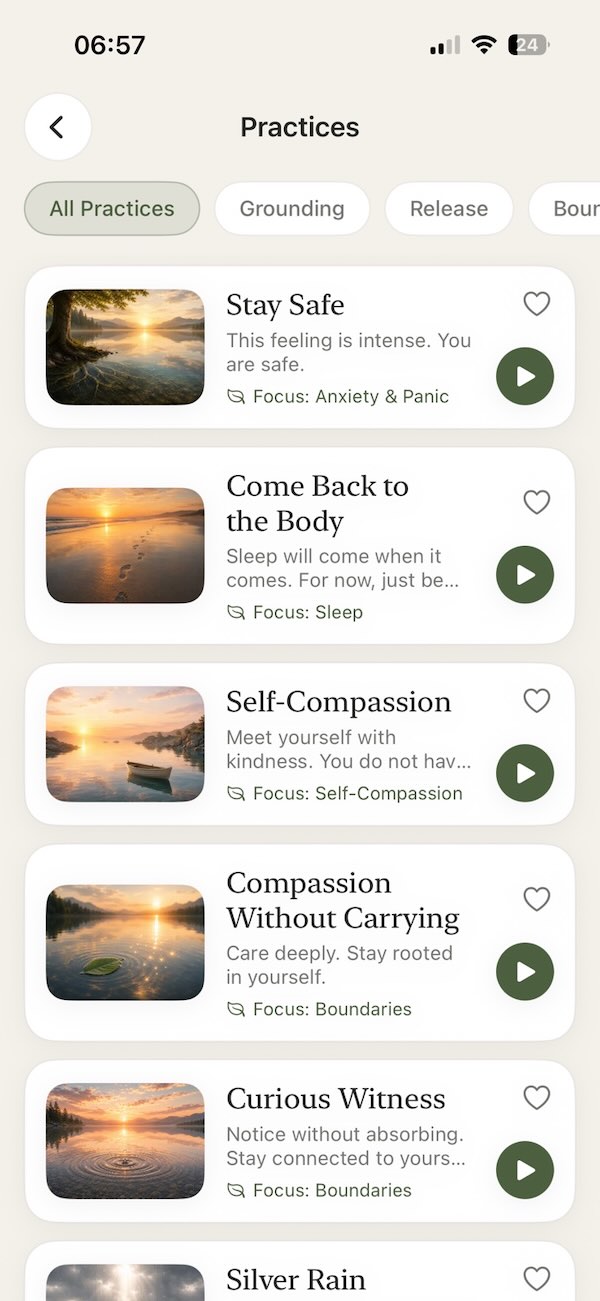
Shame tells you to hide and attack yourself; it rarely responds to argument, but it does soften in the presence of warmth. Self-Compassion is a gentle practice for the moments after a mistake, when the inner voice turns harsh — a way to step out of the shame spiral, separate what you did from who you are, and offer yourself the understanding you'd give someone you love.

Try the practice
Self-Compassion
Offer yourself the kindness you need.
Ready for more support?
Continue your journey in Aira
Access the full library of guided practices, tools, and resources anytime, anywhere.
- 10+Guided Practices
- AnxietyRelief Tools
- SleepSupport
- TrackYour Progress
- OfflineAccess
Available on iPhone and iPad