The Freeze Response and Shutdown: When Your Body Goes Still
What the freeze response and shutdown are, why your body goes still and numb under threat, and how to gently thaw and come back online.

Not all stress responses speed you up. Sometimes, faced with too much, the body does the opposite — it stops. You go still, blank, heavy; you can't move, speak, decide, or feel much at all. This is the freeze response, and the deeper shutdown it can become, and it's one of the most misunderstood ways a nervous system protects itself.
This is a guide to freeze and shutdown: what they are, why your body chooses them, and how to gently come back online.
What is the freeze response?
Freeze is a survival response in which the nervous system, sensing threat, neither fights nor flees but stalls. In its milder form it's the 'deer in headlights' moment — going blank, unable to think or act. In a deeper form it becomes shutdown: a collapse into numbness, heaviness, disconnection, and immobility, where the system powers down to protect you. Both are automatic and involuntary — not choices, and not something you can simply snap out of.
Why the body freezes
Freeze tends to happen when the system perceives that neither fighting nor fleeing will work — when a threat feels inescapable, overwhelming, or too big to act on. Faced with that, the oldest part of the nervous system applies the brake hard, dropping you into immobility or shutdown as a last-resort protection. It's the same instinct that makes an animal go still or 'play dead.' In humans it can fire at emotional threats too — overwhelming situations, conflict, or reminders of past overwhelm — not just physical danger.
What freeze and shutdown feel like
Freeze and shutdown can feel like being stuck or paralysed; going blank and unable to think or speak; numbness and disconnection, as if watching from outside yourself; heaviness, exhaustion, and an inability to move or act; and a sense of having 'checked out.' It often comes with shame afterwards — why didn't I do something, say something? — but freeze isn't a failure of courage or will. It's an automatic state your body entered to protect you, below the level of choice.
Why you can't just 'snap out of it'
Because freeze is a deep, involuntary nervous-system state, telling yourself (or being told) to just move or cheer up rarely works — the system is in its brace position, and force doesn't release it. What helps instead is gently signalling safety and slowly bringing the system back online, rather than demanding it switch on. Pushing hard against shutdown often deepens it; gentleness is what coaxes it to lift.
How to come back from freeze
Thawing from freeze is about gradual, gentle reactivation — the opposite of the long exhale you'd use for an over-activated state. Small movements help: wiggling fingers and toes, shifting in your seat, standing, gently stretching. So does sensory input — something to touch, a temperature change, looking around the room. Naming what's happening ('this is freeze, I'm safe, it will pass') can help too. The aim is to reconnect slowly with your body and the present, letting movement and sensation bring the system back, at its own pace.
Final thoughts
The freeze response and shutdown aren't weakness, passivity, or failure — they're among the nervous system's oldest ways of protecting you when everything else feels impossible. If you go still, blank, or numb under stress, it's not a character flaw; it's your body applying its deepest brake. You can't force your way out, but you can gently thaw — through small movement, sensation, and signals of safety — and let yourself come back online in your own time. One small movement, one returning sensation at a time.
Try a gentle practice
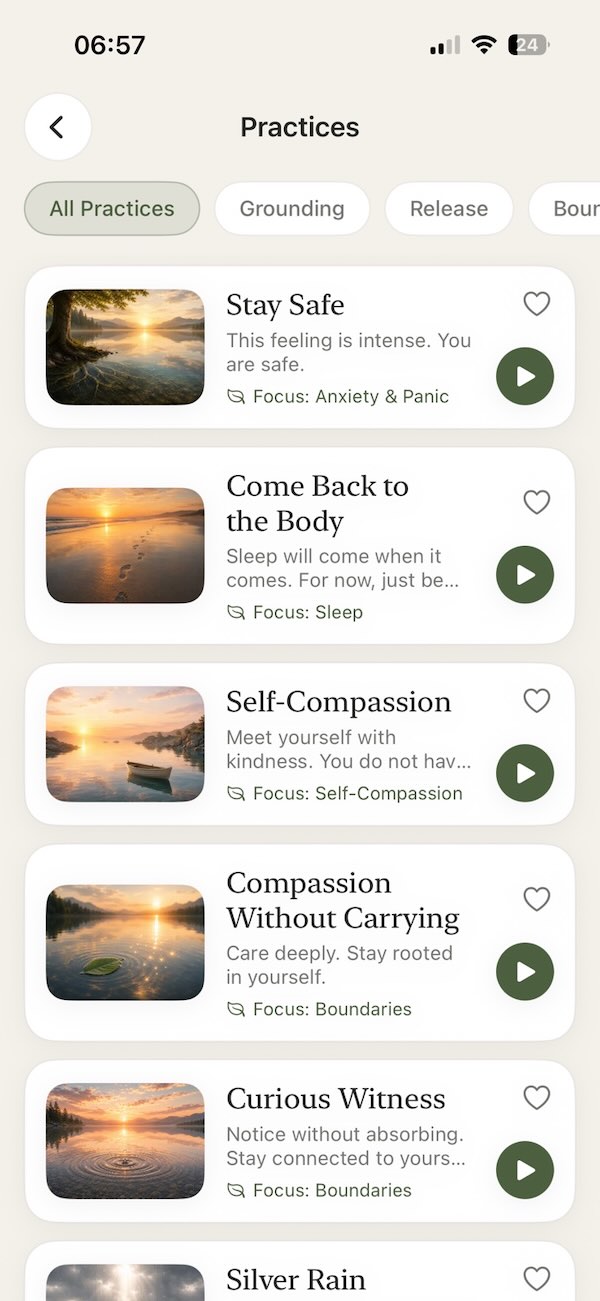
Coming back from freeze means gently reconnecting with a body that's gone still and distant. Come Back to the Body is a gentle practice for exactly that — a way to slowly re-inhabit physical sensation and the present moment, without force, helping a frozen or shut-down system thaw and come back online at its own pace.

Try the practice
Come Back to the Body
Come back from thoughts to sensation.
Ready for more support?
Continue your journey in Aira
Access the full library of guided practices, tools, and resources anytime, anywhere.
- 10+Guided Practices
- AnxietyRelief Tools
- SleepSupport
- TrackYour Progress
- OfflineAccess
Available on iPhone and iPad