Grief on Holidays, Birthdays and Anniversaries
The empty chair, their birthday on the calendar, the first holiday without them. Here's why special days hit so hard — and gentle ways to get through them.

The date is circled on the calendar before you even realize you've been dreading it. The first birthday without them. The empty chair at the holiday table. The anniversary of the day they died. Or sometimes it ambushes you with no date at all — a Christmas song in a shop, a seat at a wedding, the instinct to set one more place.
If special occasions bring your grief flooding back, you're not regressing and you're not being dramatic. Holidays and anniversaries are some of the most reliably hard moments in grief, and there are real reasons for it.
Why holidays and anniversaries amplify grief
Grief researchers sometimes call it the anniversary effect — the very common experience of grief intensifying around meaningful dates. It makes sense. Holidays and milestones are built around togetherness, ritual, and memory, so an absence that you can carry on an ordinary Tuesday becomes impossible to ignore when everyone is gathering and someone is missing.
These days are also dense with grief triggers — the foods, songs, traditions, and places most tangled up with the person you lost. Even joyful occasions like graduations or weddings can ache, because the person you most want there isn't.
The build-up is often worse than the day
Here's something many grieving people discover: the dread leading up to the day is frequently harder than the day itself. Anticipation lets your mind rehearse every painful possibility in advance.
That anticipatory dread can feel a lot like anxiety — a tight chest, trouble sleeping, a sense of bracing. If that's happening, it can help to recognize it for what it is; we cover that overlap in grief and anxiety. Naming "this is anticipatory grief, not a sign the day will be unbearable" can take a little of the edge off.
You're allowed to do it differently
Here's permission you may not have given yourself: you do not have to do the occasion the way you always have. You're allowed to change traditions, skip events, leave early, or mark the day in a completely new way. You're also allowed to keep traditions exactly as they were, if that comforts you. There is no rule.
Some people find it helps to decide in advance, gently: what they'll do, who they'll be with, and what their exit plan is if it becomes too much. Having a plan you can change is often steadier than bracing to "get through" it.
Ways to get through the day
There's no formula, but a few things tend to help:
- Lower the bar. Survival is enough. You don't have to host, perform cheer, or make it nice for everyone.
- Make room for them. Lighting a candle, sharing a story, cooking their dish, or visiting a meaningful place can turn raw absence into intentional remembrance.
- Tell someone. Letting one person know the day is hard means you don't have to hold it alone.
- Plan an exit. Permission to leave early removes a surprising amount of pressure.
- Have a way to steady yourself. When a wave hits in the middle of a gathering, simple grounding can bring you back without anyone noticing.
A gentler way to meet the day
Here's a shift that changes how these days feel. We often approach an anniversary as something to survive — to grit through and get past. But you can also meet it as a day to remember: not a test of how okay you are, but a chance to honor someone who mattered.
The ache you feel on their birthday isn't a malfunction. It's love keeping their day important. When you stop bracing against the grief and let the day hold both sorrow and love, it often becomes a little less frightening — still sad, but sad in a way that means something. That doesn't make it painless. It makes it bearable, and even tender.
When to reach for more support
Intensified grief around special dates is normal, and it usually eases as the day passes. But if the dread becomes constant, if these periods pull you into a low you can't climb out of, or if you're coping in ways that worry you, please reach out to a doctor or grief counselor. You don't have to white-knuckle every anniversary alone.
Try a gentle practice
Before a hard day, steadying your body can be worth more than any plan. Deep Settle is a gentle practice for the build-up to anniversaries and holidays — a way to calm the anticipatory dread, settle your nervous system, and meet the day from a steadier place.

Try the practice
Deep Settle
A slow descent for an over-activated nervous system — letting your body land and settle.
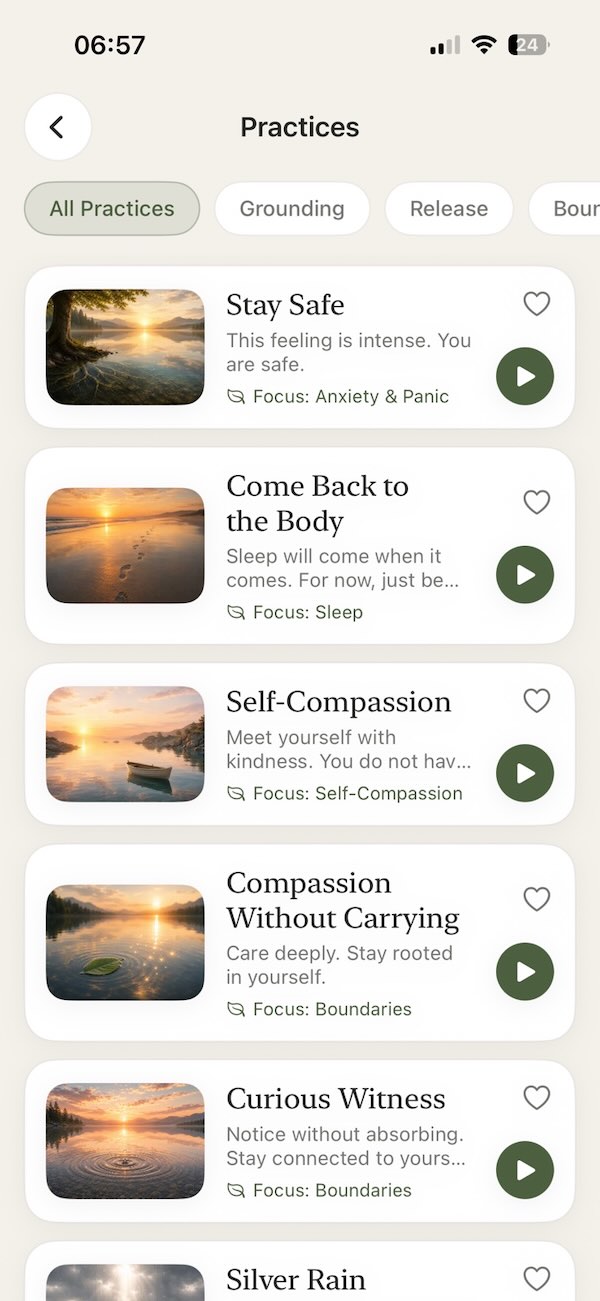
Ready for more support?
Continue your journey in Aira
Access the full library of guided practices, tools, and resources anytime, anywhere.
- 10+Guided Practices
- AnxietyRelief Tools
- SleepSupport
- TrackYour Progress
- OfflineAccess
Available on iPhone and iPad