The Physical Symptoms of Grief
Bone-tired, achy, can't eat, can't sleep, a heaviness in your chest? Grief isn't only in your heart — it lives in the body too. Here's why, and what helps.

You expected grief to hurt your heart. You didn't expect it to hurt your body — the bone-deep exhaustion, the appetite that vanished, the nights you can't sleep, the strange aches, the heaviness in your chest. If grief has left you feeling physically unwell, you're not imagining it. Grief is not only an emotional experience. It lives in the body, and it can hit hard.
Why grief shows up in the body
Loss is a profound stress, and your body responds to it the way it responds to any major stress — by flooding your system with stress hormones and shifting your nervous system into a state of high alert or, sometimes, shutdown. That physiological storm has real, physical effects. In other words, the symptoms aren't "in your head." They're your body carrying the weight of something enormous.
This is the same machinery behind how stress shows up physically, which we cover in how stress affects your body — grief simply turns the volume all the way up.
Common physical symptoms of grief
Grief can show up in the body in many ways. Among the most common:
- Exhaustion and fatigue — a tiredness that sleep doesn't fix, because grieving is genuinely depleting work.
- Sleep problems — trouble falling asleep, waking through the night, or sleeping far too much. Grief and sleeplessness feed each other, much like anxiety keeps you awake.
- Appetite changes — no hunger at all, or eating for comfort. Both are normal.
- Aches and physical pain — headaches, muscle tension, a heavy or hollow feeling in the body.
- Chest tightness — a real heaviness or ache in the chest, sometimes called "the physical weight of grief."
- Getting sick more easily — prolonged stress can wear down the immune system, so colds and bugs find you more often.
- Brain fog — forgetfulness, trouble concentrating, a mind that feels slow or scattered.
If your body also feels jittery and anxious, that overlaps with what anxiety really feels like in the body — grief and anxiety share much of the same physical vocabulary.
"Broken heart" is partly real
The phrase isn't only poetic. Intense grief genuinely affects the heart and cardiovascular system in the short term, and the chest heaviness so many grieving people describe is a real, felt sensation. Your body isn't betraying you. It's responding, honestly and physically, to a real loss.
Caring for your body while you grieve
When you're grieving, the goal isn't to optimize your health — it's simply to be gentle with a body that's carrying a lot. A few soft basics help more than they seem to: drinking some water, eating something even when you're not hungry, resting when you can, getting outside for a little air, and letting your body move gently when it wants to. None of this has to be done well. It just has to be done kindly.
Grief is genuinely tiring, so rest isn't indulgence — it's maintenance. We say more about why depletion this deep needs real rest in emotional exhaustion.
A gentler way to listen to your body
Here's a small shift: instead of treating the physical symptoms as something else to fix, try hearing them as messages. The exhaustion is your body saying this is heavy, slow down. The lost appetite, the aching chest — these are your body grieving alongside your heart. When you meet the symptoms with care instead of frustration, you stop fighting your own body on top of everything else.
When to reach for more support
This one matters especially here: physical symptoms deserve real attention. While most of grief's physical effects ease over time, your body can't tell you on its own whether a symptom is grief or something medical. Please see a doctor if you have chest pain, trouble breathing, a symptom that worries you, or physical problems that persist — grief is real, and so are medical conditions, and you deserve to have the physical side checked properly. Looking after your body isn't a distraction from grieving. It's part of it.
Try a gentle practice
Grief asks an enormous amount of your body, and rest is how you give a little back. Permission to Rest is a gentle practice for the bone-tired days — a way to let your body stop bracing, ease the exhaustion, and rest without guilt while you carry something heavy.

Try the practice
Permission to Rest
You've done enough. You're allowed to rest.
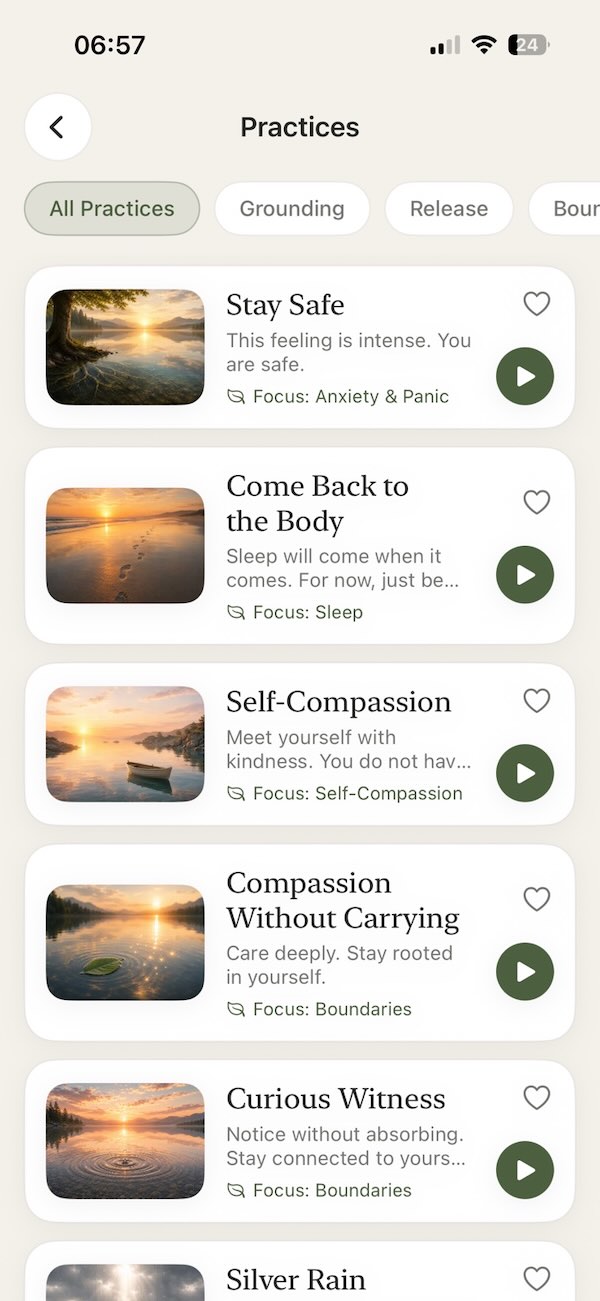
Ready for more support?
Continue your journey in Aira
Access the full library of guided practices, tools, and resources anytime, anywhere.
- 10+Guided Practices
- AnxietyRelief Tools
- SleepSupport
- TrackYour Progress
- OfflineAccess
Available on iPhone and iPad