Grief and Anxiety: When Loss Brings Panic and Fear
Grief doesn't only make you sad — it can make you anxious, panicky, and braced for the next bad thing. Here's why loss brings fear, and what helps when it spikes.

Grief is supposed to make you sad. Nobody warns you that it can also make you anxious — on edge, jumpy, bracing for the next bad thing, sometimes gripped by full panic. If loss has left you not just heartbroken but frightened, you're not losing your mind, and you're not grieving wrong. Anxiety is one of the most common companions of grief, and there are real reasons for it.
Why loss makes you anxious
When someone or something is taken from you, more than your heart takes the hit. Your sense that the world is safe and predictable takes one too. Often, underneath grief sits a quiet, shaken realization: if that could happen, anything could.
Your nervous system hears that and responds the only way it knows how — by going on alert. It starts scanning for the next threat, bracing for the next loss. That's not weakness or overreaction. It's a frightened system trying to protect you from being blindsided again. If you want to understand the machinery behind it, why am I anxious and how the nervous system works explains exactly why this happens.
What grief-anxiety actually feels like
It can show up in several ways, and they're all common:
- In the body — a racing heart, tight chest, shallow breath, restlessness, a stomach in knots. Grief and anxiety speak almost the same physical language, which is why it helps to know what anxiety really feels like in the body.
- Fear for others — a sudden, intense worry that something will happen to the other people you love. Once loss feels possible, the mind starts guarding everyone.
- Health anxiety — especially after losing someone to illness, you may start watching your own body for signs of danger. This is common enough to have its own pattern: when anxiety focuses on your health.
- Panic — grief can tip into full panic attacks, which feel terrifying but are not dangerous. If that happens, how to stop a panic attack right now can walk you through it.
This is grief, not you falling apart
It's easy to layer a second fear on top of the first: why am I anxious on top of everything else — am I broken? You're not. Anxiety after loss is your nervous system doing its job a little too loudly, in a moment when the ground genuinely did shift. Naming it as grief-anxiety — rather than evidence that something is wrong with you — takes some of its power away.
What helps when the anxiety spikes
You can't think your way out of a frightened nervous system, but you can speak to it through the body:
- Lengthen your exhale. Slow breathing is one of the fastest ways to tell your body it's safe. Breathing exercises for anxiety give you a few simple ones.
- Come back to your senses. When fear pulls you into worst-case futures, the 5-4-3-2-1 grounding method anchors you to the present, where, in this exact moment, you are usually okay.
- Steady the system over time. Beyond the spikes, gentle daily regulation helps your baseline settle. More in how to calm your nervous system.
A gentler way to see the fear
Here's a shift that helps many grieving people: grief-anxiety is, at its root, love that has learned how much there is to lose. The fear isn't a flaw in you — it's the flip side of how deeply you care. You don't have to make it disappear to begin loosening its grip. You only have to stop treating it as proof that you're failing.
And it does ease. As the rawness of grief softens, the nervous system slowly relearns that not every quiet moment is the calm before disaster. If you keep wondering whether any of this is normal, it is — the same way the rest of grief is, which we cover in is my grief normal.
When to reach for more support
Some anxiety after loss is expected. But if panic, dread, or fear become constant, stop you from functioning, or don't ease at all over time, that's worth taking to a doctor or therapist — grief and anxiety together are very treatable, and you don't have to white-knuckle through it alone. Reaching out isn't weakness. It's giving a frightened, grieving nervous system the support it's asking for.
Try a gentle practice
When grief tips into anxiety or panic, you can't reason with a frightened nervous system — but you can breathe with it. Breathe is a gentle breathing practice for the moments fear spikes — a way to slow your body, lengthen your exhale, and tell your system it's safe enough, right now.

Try the practice
Breathe
Help me slow down and find calm.
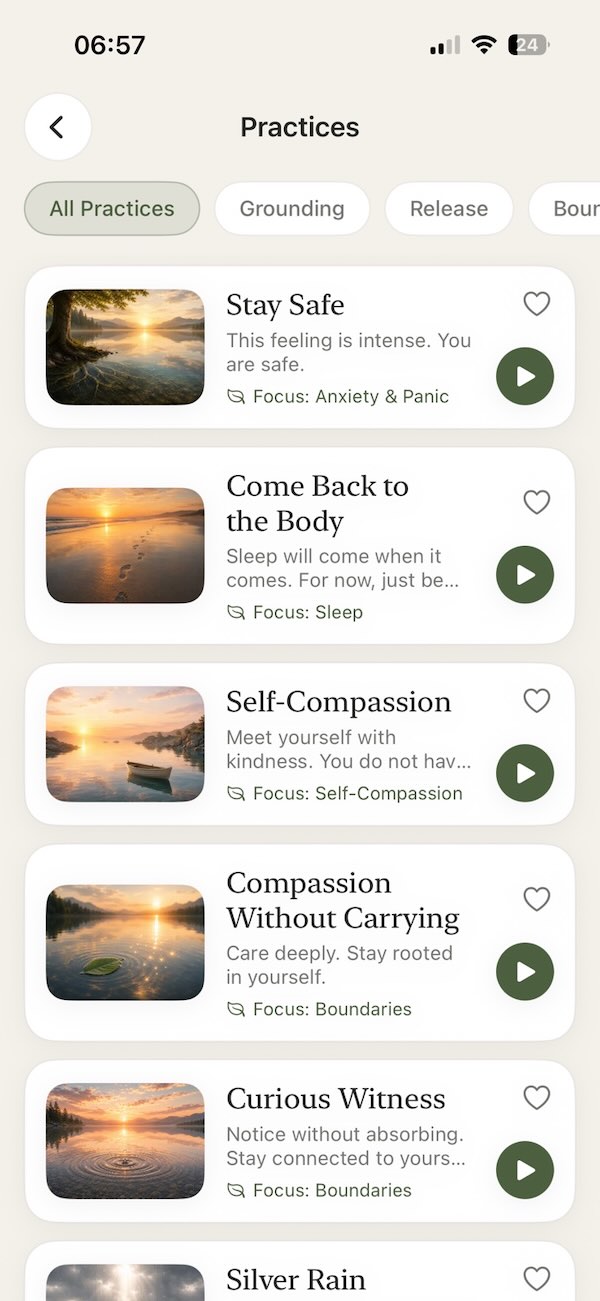
Ready for more support?
Continue your journey in Aira
Access the full library of guided practices, tools, and resources anytime, anywhere.
- 10+Guided Practices
- AnxietyRelief Tools
- SleepSupport
- TrackYour Progress
- OfflineAccess
Available on iPhone and iPad