Recovering from Burnout: The First Steps Out
How to start recovering from burnout — the first steps that actually help, why recovery is more than rest, and how to begin when you have no energy.

When you're burnt out, even the idea of recovering can feel like one more impossible task. You have no energy, and now you're supposed to find some to fix yourself? The good news is that recovery doesn't start with a huge effort — it starts with small, specific first steps, most of which involve doing less, not more.
This is a guide to the first steps out of burnout: where to begin when you're depleted, and why recovery is more than just resting.
Recovery starts with stopping the drain
The first step out of burnout isn't adding self-care — it's reducing what's depleting you. Before you can refill, you have to slow the outflow: lighten the load where you can, set down what isn't essential, and stop pouring energy into the things that have been emptying you. You can't recover while you're still being drained at the same rate. This often means doing less, saying no, and letting some things drop, which can feel uncomfortable but is where recovery genuinely begins.
Let yourself rest — and rest first
Early recovery needs real rest, not as a reward but as a necessity. If you're severely depleted, this might mean a genuine break, more sleep, and permission to do far less for a while. The bracing, guilty part of you will resist; it helps to remember that rest is the foundation everything else is built on, and that you can't think clearly or rebuild from an empty tank. (If rest alone doesn't seem to help, that's expected — there's a separate guide on why.)
Ask for help and lower the bar
You don't have to recover alone or perfectly. Tell someone what's going on, accept help where it's offered, and where the burnout is serious, involve a doctor or therapist. At the same time, drastically lower your standards for this period: an empty system can't perform like a full one, and demanding that it does only deepens the burnout. 'Good enough,' for now, is exactly right.
Begin to rebuild, gently
Once the drain has slowed and you've rested a little, recovery becomes about slowly refilling — reintroducing the things that genuinely restore you, in small doses. This isn't a sudden return to full capacity; it's a gentle, gradual rebuilding of energy, meaning, and connection. Early on, even tiny restorative steps count. (Rebuilding energy after burnout has its own guide.)
Address what caused it
For recovery to last, the conditions that caused the burnout have to change — otherwise you'll simply burn out again. That might mean rebuilding boundaries, renegotiating your workload, addressing perfectionism or over-responsibility, or, sometimes, bigger changes to a situation that isn't survivable as it is. Recovery isn't only about refilling; it's about making sure the well stops being drained dry in the first place.
Final thoughts
The first steps out of burnout aren't grand — they're small, and many of them are about subtracting rather than adding: less load, more rest, lower standards, some help, and honest attention to what caused it. You don't need energy you don't have to begin; you need permission to stop, slow down, and let recovery start from there. It's slow, and it isn't linear, but burnout does ease, one reduced demand and one real rest at a time.
If burnout has left you feeling unable to cope, please don't carry it alone — a doctor or therapist can genuinely help.
Try a gentle practice
The first step out of burnout is often simply letting yourself stop — which, when you're wired to keep going, is harder than it sounds. Permission to Rest is a gentle practice for exactly that — a way to put down the weight, quiet the part of you that says you haven't earned a break, and let recovery begin from a moment of genuine rest.

Try the practice
Permission to Rest
You've done enough. You're allowed to rest.
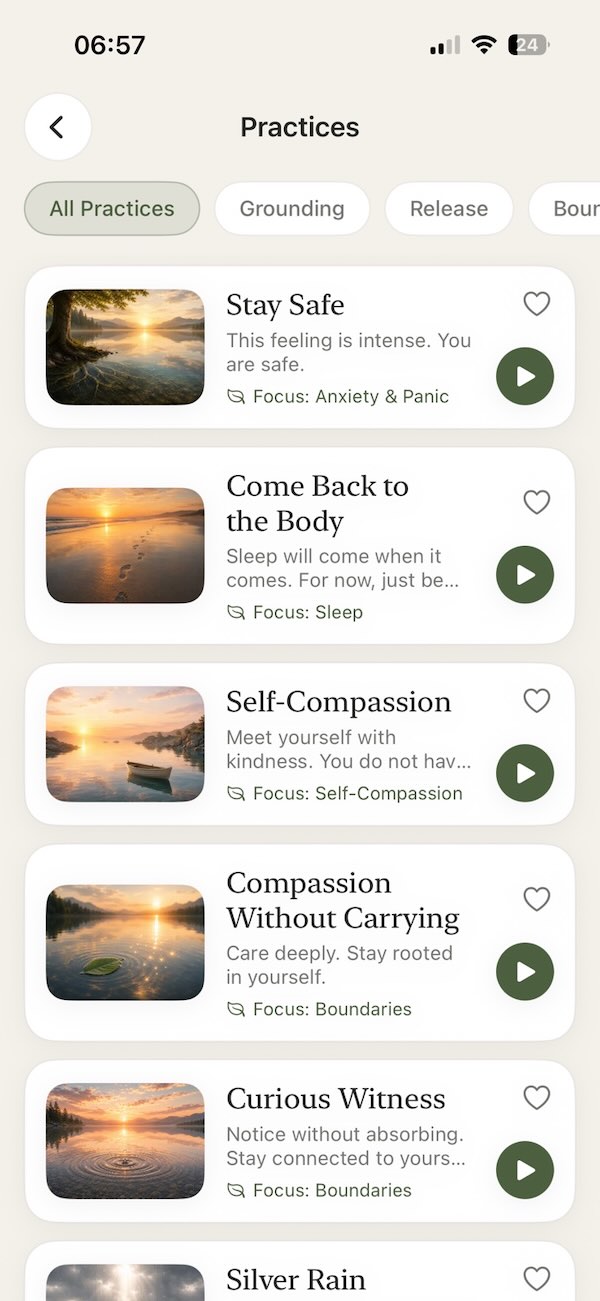
Ready for more support?
Continue your journey in Aira
Access the full library of guided practices, tools, and resources anytime, anywhere.
- 10+Guided Practices
- AnxietyRelief Tools
- SleepSupport
- TrackYour Progress
- OfflineAccess
Available on iPhone and iPad