Impostor Syndrome: Why You Feel Like a Fraud Even When You're Not
Why impostor syndrome makes capable people and high achievers feel like frauds, the impostor cycle, its link to perfectionism and self-worth, and how to overcome it.

You did the work. You earned the role, passed the exam, got the praise. And yet a voice insists it doesn't count — that you got lucky, fooled everyone, and any moment now they'll realise you don't actually belong. The more you achieve, the louder it gets. If success makes you feel like a fraud rather than capable, you're experiencing impostor syndrome — and, fittingly, it tends to strike the people who least deserve to feel that way.
This is a guide to impostor syndrome: why competent, hardworking people feel like frauds, how the cycle keeps itself going, and how to begin trusting that you belong where you are.
What impostor syndrome is
Impostor syndrome is the persistent feeling of being a fraud despite real evidence of competence — the conviction that your success is undeserved and that you're somehow fooling everyone around you. Common symptoms include chronic self-doubt, attributing your achievements to luck or timing rather than ability, a fear of being exposed as not good enough, downplaying your successes, and feeling as though you don't belong among your peers. The defining feature is the gap between reality and feeling: by every external measure you're doing fine, and internally you're braced to be found out.
Why do I feel like a fraud?
The cruel logic of impostor syndrome is that achievement doesn't fix it — it often feeds it. Each success raises the stakes (now there's more to lose, more to live up to), and because you credit the success to luck rather than to yourself, the evidence of competence never gets internalised. So the more you accomplish, the more there is to protect and the more you fear exposure. This is why impostor feelings are so common in high achievers and capable people: it isn't a lack of ability that drives it, but a disconnect between ability and self-perception.
The impostor cycle
Impostor syndrome runs on a self-perpetuating loop. A task appears, and self-doubt and anxiety spike. You respond in one of two ways: by over-preparing and overworking, or by procrastinating and then scrambling. The task goes well — but because you either over-worked or got lucky under pressure, you don't credit your actual ability; you credit the effort or the luck. The success therefore proves nothing, the self-doubt stays intact, and the next task restarts the cycle. Round and round it goes, achievement never quite converting into confidence.
Impostor syndrome, perfectionism, and self-worth
Impostor syndrome rarely travels alone. It's closely tied to perfectionism: if your standard is flawlessness, then any gap between perfect and actual feels like proof of fraudulence. And underneath both sits self-worth — if you don't fundamentally believe you're enough, no amount of external success can convince you that you deserve it. The achievements land on the outside; the not enough belief lives on the inside, and the two never quite meet. That's why impostor feelings can coexist with an impressive résumé without the slightest contradiction.
Self-doubt at work
Impostor syndrome shows up most sharply at work, where competence is constantly on display and comparison is built in. It can look like staying quiet in meetings for fear of saying something foolish, over-preparing far beyond what's needed, not applying for roles you're clearly qualified for, or feeling that everyone else got a manual you somehow missed. It's worth knowing how common this is: a large share of successful people — across fields and levels of seniority — quietly feel the same way. The colleague who seems entirely sure of themselves may well be managing the identical doubt.
How to overcome impostor syndrome
You don't beat impostor syndrome by achieving more — you've seen that doesn't work. You loosen it by changing how you hold the doubt.
Name it
Simply recognising this is impostor syndrome, not the truth separates the feeling from reality. It's a known pattern, not a private verdict on you.
Let achievements count
Deliberately credit your part. When something goes well, resist I got lucky and practise I did that — internalising the evidence is the exact step the cycle skips.
Separate feeling from fact
Feeling like a fraud is not the same as being one. You can carry the doubt and act anyway; confidence often follows action rather than arriving before it.
Talk about it
Impostor feelings shrink when spoken. Naming them to a trusted colleague or friend almost always reveals you're in very good, and very crowded, company.
The fuller picture
At the core is one conviction: my success is luck or timing — I've fooled everyone, and any moment now they'll see I'm not really good enough. It feels true because the doubt is so persistent, and because the stakes rise with every win; surely a feeling this durable must be reporting something real.
But notice the trick the mind is playing with the evidence. Every time something goes well, you file it under luck or I just over-prepared — never under I'm capable. So the proof of competence arrives constantly and never gets counted; the achievements land on the outside while the not enough belief sits untouched on the inside. That's not a sign you're a fraud — it's a sign the doubt has been walled off from disproof, which is exactly why more success can't reach it. And feeling like a fraud simply isn't the same as being one; a feeling is not a verdict. The step the cycle skips is the one that frees you: when something goes well, let it count — I did that — and let the doubt be just a doubt you carry while you act, rather than the truth about whether you belong.
Final thoughts
If you feel like a fraud, here's the irony worth sitting with: frauds rarely worry about being frauds. The very fact that you care this much about being competent and not deceiving anyone is evidence of the conscientiousness you're afraid you lack. The doubt isn't proof you don't belong — it's a feeling, and feelings aren't verdicts. You can let your achievements be yours, let the doubt be just a doubt, and keep showing up as the capable person you already are, even on the days you can't feel it. One claimed success, one breath, one act of self-trust at a time.
Try a gentle practice
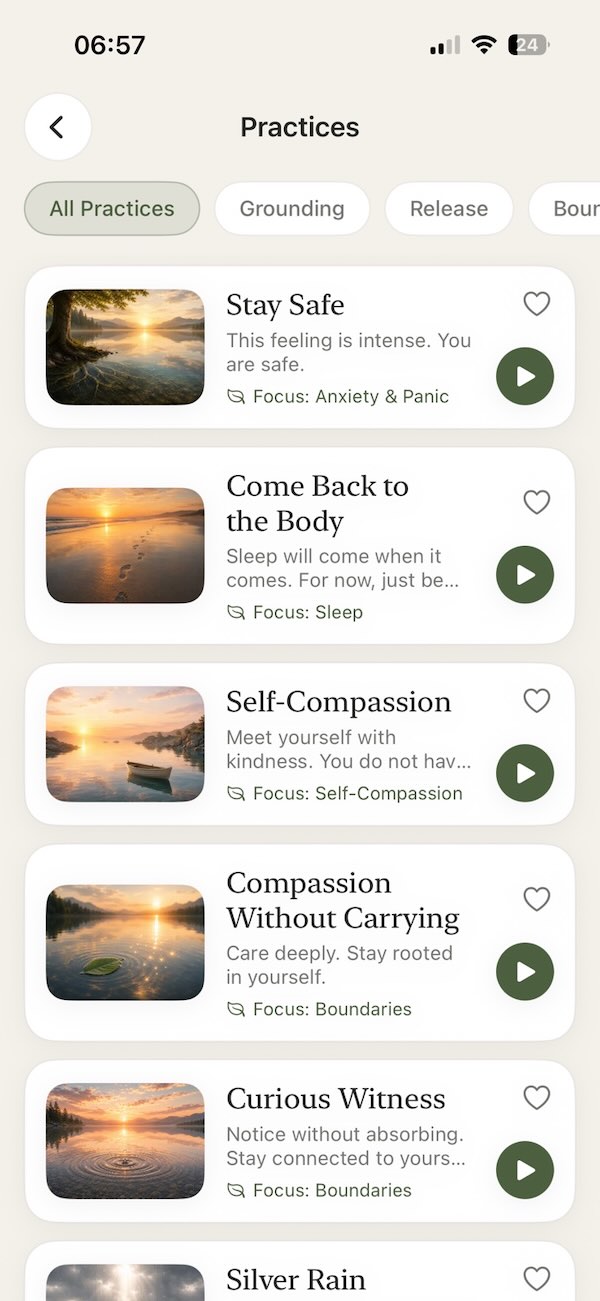
Impostor syndrome keeps the inner critic loud and the self-doubt close, insisting you don't measure up. Self-Compassion is a gentle practice for those moments — a way to soften the harsh inner voice, hold the doubt with warmth instead of fear, and remind yourself that feeling like a fraud doesn't make you one.

Try the practice
Self-Compassion
Offer yourself the kindness you need.
Ready for more support?
Continue your journey in Aira
Access the full library of guided practices, tools, and resources anytime, anywhere.
- 10+Guided Practices
- AnxietyRelief Tools
- SleepSupport
- TrackYour Progress
- OfflineAccess
Available on iPhone and iPad