Self-Doubt: Why You Question Yourself and How to Trust Yourself More
Where chronic self-doubt comes from, how it differs from impostor feelings, its link to anxiety and overthinking, and how to stop doubting yourself and build self-trust.

A decision needs making and you freeze, second-guessing every option. You finish something and immediately wonder if it's any good. You have an opinion and swallow it, certain you must be missing something. Self-doubt is the persistent questioning of your own judgment, ability, and decisions — and while a little of it is healthy, too much can quietly run your life. This is a look at where chronic self-doubt comes from and how to trust yourself more.
What is self-doubt?
Self-doubt is uncertainty about your own abilities, decisions, and worth — a habit of questioning yourself even when there's no good reason to. Some doubt is useful: it keeps you humble, open, and careful. It becomes a problem when it's chronic and indiscriminate, undermining you regardless of the evidence, so that you distrust your own judgment as a default rather than only when it's genuinely warranted.
What causes self-doubt?
Chronic self-doubt usually isn't about the present decision — it's a learned pattern. Early criticism, having your perceptions dismissed, comparison, high or shifting standards, or environments where you rarely felt trusted to get things right can all teach a person to distrust themselves. Later failures or harsh feedback reinforce it. The doubt becomes a reflex: not a response to real uncertainty, but a default setting that fires regardless of the situation.
Self-doubt vs impostor feelings
Self-doubt and impostor syndrome overlap but aren't the same. Impostor syndrome is specifically the feeling that your success is undeserved and you'll be exposed as a fraud. Self-doubt is broader — it's questioning your judgment, choices, and abilities across the board, whether or not any achievement is involved. Many people have both: a general distrust of themselves, with a sharper impostor flavour around success and work.
Self-doubt and anxiety
Self-doubt and anxiety amplify each other. Doubt makes decisions feel dangerous (what if I get it wrong?), which raises anxiety; anxiety then makes everything feel less certain, which deepens the doubt. The result is often indecision, over-checking, reassurance-seeking, and overthinking — all attempts to reach a certainty the doubt insists you must have before you can act.
Why you can't wait for the doubt to disappear
Many people wait to feel confident before acting — but with chronic self-doubt that day rarely comes, because confidence isn't the thing that precedes action; it's largely the thing that results from it. Waiting to feel sure keeps you stuck, while acting despite the doubt is exactly what slowly builds the self-trust the doubt was asking for. You don't have to silence the doubt to move; you only have to stop letting it have the final word.
How to trust yourself more
Self-trust is rebuilt in small, repeated steps.
Act before certainty
Make decisions and take action while the doubt is still present. Each time you do, you gather evidence that you can be trusted to handle things.
Keep small promises to yourself
Following through on little commitments rebuilds the inner track record that doubt erodes.
Notice when doubt is a reflex, not information
Ask whether your uncertainty reflects a genuine reason or just the old habit firing. Naming it as the pattern loosens its grip.
Stop chasing certainty before you decide
Much self-doubt is really the demand to be completely sure first. Letting good enough be enough breaks the cycle of endless second-guessing.
The fuller picture
Underneath the second-guessing is one conclusion: if I doubt myself this much, my judgment must actually be poor — and I can't act until I finally feel sure. It feels true because the doubt is constant and convincing; surely a feeling this loud must be reporting something real about your abilities.
But notice what the doubt actually is. Chronic self-doubt isn't a live read on this decision — it's a reflex, learned somewhere long ago, that fires regardless of the evidence in front of you. It shows up whether or not there's a real reason, which is exactly what marks it as a pattern rather than information. And the belief hidden inside it — feel confident first, then act — has the order backwards. Confidence isn't what comes before action; it's largely what results from it. Waiting to feel sure keeps you stuck, while acting while the doubt is still there is precisely how the self-trust it's asking for gets built. So the loudness of the doubt says nothing about the quality of your judgment. You don't have to silence the questioning voice to move. You only have to stop letting it have the final word.
Final thoughts
If you doubt yourself constantly, it doesn't mean your judgment is actually poor — it usually means you learned, somewhere, to distrust yourself by default. But confidence isn't something you wait to feel before acting; it's something that grows from acting despite the doubt. You don't have to silence the questioning voice to move forward — you only have to stop letting it have the final word. One decision, one kept promise, one act of self-trust at a time.
Try a gentle practice
Self-doubt feels like the truth, but it's really just a stream of thoughts you've learned to believe. Observe is a gentle practice for stepping back from them — a way to notice the doubting mind without being run by it, let the what ifs come and go, and return to what you were doing instead of following every doubt.

Try the practice
Observe
Let's step back and see more clearly
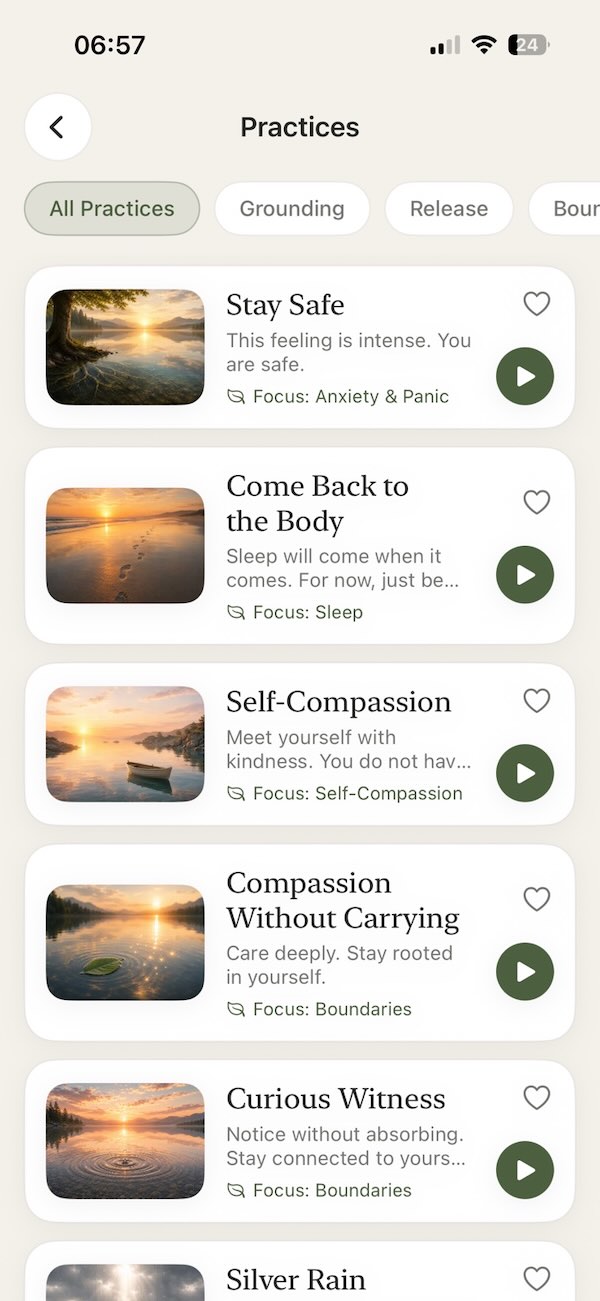
Ready for more support?
Continue your journey in Aira
Access the full library of guided practices, tools, and resources anytime, anywhere.
- 10+Guided Practices
- AnxietyRelief Tools
- SleepSupport
- TrackYour Progress
- OfflineAccess
Available on iPhone and iPad