Living in Your Head: Why You Overthink Instead of Living
What 'living in your head' means, why we get stuck in constant thinking, what it costs, and how to drop out of thought and back into your actual life.

Some people live almost entirely in their heads. The real world — the room, the conversation, the meal, the walk — happens at a distance, while most of your attention is busy thinking: analysing, planning, narrating, worrying. If you often feel like you're observing your life through a pane of thought rather than living it, you know the particular tiredness of being stuck up in your own mind.
This is a guide to living in your head: why it happens, what it costs, and how to drop down out of thought and back into your actual life.
What does 'living in your head' mean?
Living in your head means spending most of your attention in thought rather than in direct experience. Instead of fully being in the moment — sensing, doing, connecting — you're up in a running commentary: analysing situations, rehearsing conversations, planning, replaying, judging. The thinking can be so constant that it feels like where you actually live, with the physical, present world reduced to a faint background. It's a very common pattern, especially for thoughtful, anxious, or self-aware people.
Why we get stuck in our heads
There are a few reasons the mind becomes home. Thinking can feel safer than feeling — staying in analysis keeps you at arm's length from emotions or vulnerability. Anxiety pulls you into your head, where worry tries to think its way to safety. Overthinking becomes a habit, a default the mind runs automatically. And for some, retreating into thought was once a way to cope or stay in control. So living in your head usually isn't a flaw — it's often a strategy that became a habit, a place the mind learned to hide or to try to manage life from.
What it costs
Living in your head has real downsides. You miss your actual life — experiences, people, the present — because you're not really in them. It tends to fuel anxiety and overthinking, since the more you live in thought, the more the thoughts proliferate. It can leave you feeling disconnected — from your body, your feelings, other people, the world. And it's exhausting, because the mind never rests. Much of what makes life feel rich — presence, connection, sensation — happens outside the head, which is exactly where you're not. (When the thinking is relentless, that overlaps with overthinking, which has its own guides.)
How to get out of your head
The way down out of your head is through the body and the senses — because they live in the present, where thought doesn't. Drop your attention into what you can physically feel: your feet, your breath, the texture of what you're touching. Engage your senses deliberately — really see, hear, taste what's around you. Do something physical — move, walk, use your hands — which naturally pulls you out of abstraction. And practise noticing when you've floated up into thought, then gently lowering your attention back down into the moment. You're not trying to stop thinking; you're shifting the centre of gravity from your head into your direct experience.
Living a little more outside your head
Getting out of your head isn't a one-time fix — it's a gentle, ongoing shift of where you spend your attention. The mind will keep pulling you back up into thought, and each time, you simply come back down to the present and the body. Over time, you can build a different default: a bit more time in your senses, your body, the room, the people in front of you — and a bit less marooned in commentary. It's about visiting the head when thinking is useful, rather than living there full-time.
The fuller picture
Underneath the constant commentary is a quiet bargain: staying up in my head is safer than living down in it — if I analyse, plan, and rehearse enough, I'll stay in control, and being fully present would leave me exposed. It feels true because thinking really does create distance from feeling, and distance can pass for safety when emotion or vulnerability feels risky.
But look at what the bargain actually delivers. The commentary doesn't protect you from anything — rehearsing a conversation doesn't control how it goes, replaying a moment doesn't change it, and worry has never once thought its way to genuine safety. What the thinking reliably does is keep you out of your own life, while the mind stays tired and the worries multiply. And presence isn't the exposure it's feared to be. Dropping into your body and senses doesn't hand you over to danger; it hands you the one place life is actually happening — the room, the person, the meal, the walk. The vulnerability the head is hiding you from is survivable, and it's also where connection and richness live. You don't have to stop thinking or win an argument with your mind. You just lower the centre of gravity, again and again, out of the commentary and back down into the moment — which was never as unsafe as it looked.
Final thoughts
If you live in your head, it doesn't mean you're broken or hopelessly overthinking — it's usually a thoughtful mind that drifted up into thought and made a home there, often to feel safe or in control. But your life isn't happening up in the commentary; it's happening here, in your body, your senses, the present moment. Coming back down, again and again, is how you start to actually live it rather than think about it. One drop back into the body, one present moment at a time.
Try a gentle practice
Getting out of your head starts with noticing you're up there — and gently coming back. Observe is a gentle practice for exactly that — a way to step back from the running commentary, see your thinking for what it is, and lower your attention out of your head and back into the present, where your life is actually happening.

Try the practice
Observe
Let's step back and see more clearly
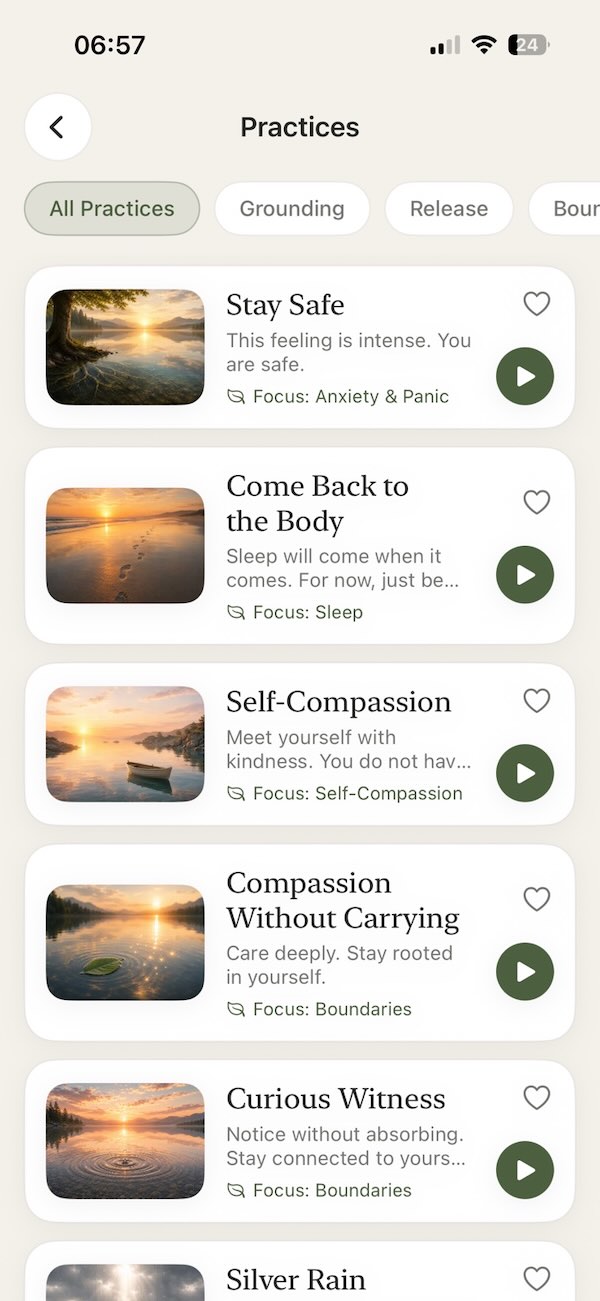
Ready for more support?
Continue your journey in Aira
Access the full library of guided practices, tools, and resources anytime, anywhere.
- 10+Guided Practices
- AnxietyRelief Tools
- SleepSupport
- TrackYour Progress
- OfflineAccess
Available on iPhone and iPad