How to Be More Present: Coming Back to the Moment
What being present really means, why the mind wanders so easily, and simple ways to come back to the present moment instead of living in your head.

So much of life passes while we're somewhere else — lost in thought, rehearsing the future, replaying the past, scrolling through a screen. Being present means actually being here, in the moment you're living, rather than in your head. It sounds simple, but for most of us it takes practice, because the mind's default is to wander almost anywhere but now.
This is a guide to being present: what it means, why it's so hard, and how to come back to the moment you're actually in.
What does it mean to be present?
Being present means having your attention in the here and now — aware of what you're doing, sensing, and feeling in this moment, rather than lost in thoughts about other times and places. It's the difference between eating a meal and actually tasting it, between a conversation and truly listening. Presence isn't a mystical state; it's simply attention resting in the present moment instead of running off elsewhere. Most of the time we're only half here, with the rest of us caught up in thinking.
Why is it so hard to stay present?
The human mind is built to wander — to plan, remember, anticipate, and problem-solve, which constantly pulls attention out of the present. On top of that, anxiety drags us into the future (worry) and the past (rumination), and modern life fills every gap with input and distraction. So being unpresent isn't a personal failing; it's the mind's natural default, amplified by stress and screens. Presence takes a little effort precisely because drifting off is so automatic.
Why presence matters
Living in your head has a cost. Much of anxiety and overthinking happens because we're somewhere other than now — in an imagined future or a replayed past, neither of which is actually here. The present moment, by contrast, is usually far more manageable than the stories the mind tells about it. Presence tends to bring more calm, more genuine enjoyment, and less anxiety, because the right-now is rarely as threatening as the mind's projections. It's also, simply, where your life is actually happening.
How to be more present
You become more present not by forcing your mind to stop, but by gently and repeatedly bringing your attention back. A few ways in: use your senses — what you can see, hear, feel right now — as an anchor to the moment. Do one thing at a time, with your full attention, rather than half-doing several. Notice when you've drifted into thought, and kindly return to what's in front of you. Use your breath or your body as a steady home base to come back to. The skill isn't never wandering; it's noticing you've wandered and returning, again and again.
Presence is a practice, not a destination
It helps to know that being present is a practice, not a state you achieve once and keep. Your mind will wander — thousands of times — and each time, the act of noticing and gently coming back is the practice. You're not failing when your attention drifts; returning is the whole point, and it's how the capacity for presence grows. Over time, with repetition, you spend a little more of your life actually in it, rather than watching it go by from inside your head.
Final thoughts
Being present is one of the simplest and most quietly transformative skills there is — not a special state to chase, but the ordinary act of bringing your attention back to the life in front of you. Your mind will keep wandering, and that's fine; the practice is in the returning. Each time you come back to now, you step out of the anxious future and the heavy past, into the one moment that's actually here. One gentle return at a time.
Try a gentle practice
Being present begins with noticing where your attention is — and gently bringing it back. Observe is a gentle practice for exactly that — a way to watch your wandering mind with calm, friendly attention and return, again and again, to the present moment, building the quiet skill of simply being here.

Try the practice
Observe
Let's step back and see more clearly
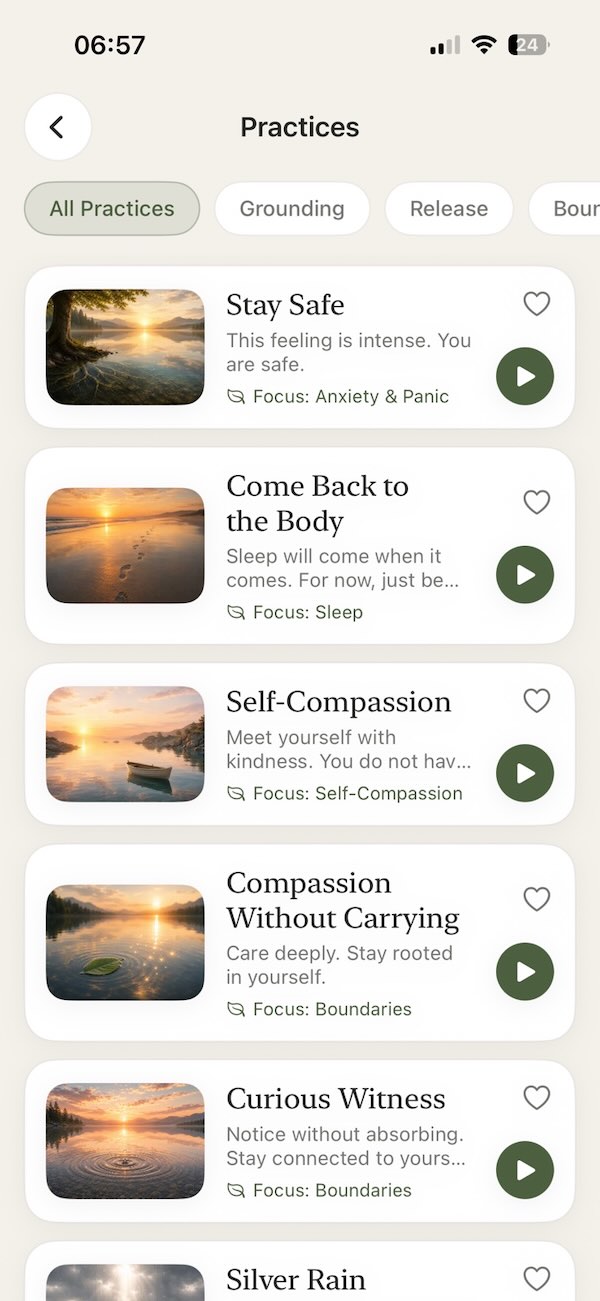
Ready for more support?
Continue your journey in Aira
Access the full library of guided practices, tools, and resources anytime, anywhere.
- 10+Guided Practices
- AnxietyRelief Tools
- SleepSupport
- TrackYour Progress
- OfflineAccess
Available on iPhone and iPad