
Breathe
Help me slow down and find calm.
Duration
4:27
Category
Air
Focus
Calm
Level
All levels
Listen to this practice
Breathe
Be the first to try new practices
Get notified when new guided practices, tools, and resources are released.
No spam. Unsubscribe anytime.
About this practice
When anxiety rises, the breath often becomes shallow, quick, and high in the chest. This can make stress, racing thoughts, and feelings of overwhelm even stronger.
Breathe is a gentle guided breathing practice designed to help calm the nervous system, slow mental activity, and bring attention back to the present moment.
Rather than trying to stop thoughts, this practice helps you reconnect with a steady rhythm through the breath, creating a sense of space, grounding, and calm. The breath is one of the few parts of the nervous system you can guide directly, which is why slowing it is such a reliable way to signal safety to the body.
How to practice
- Settle into a comfortable position and let your shoulders soften.
- Begin the audio and let your breathing follow its gentle, unhurried rhythm.
- Keep each breath slow and easy, letting the exhale be a little longer than the inhale.
- When your mind wanders, gently return your attention to the next breath, as often as you need to.
Helpful for
- Anxiety and overwhelm
- Racing thoughts
- Stress and tension
- Overthinking
- Feeling disconnected from the present moment
- Nervous system regulation
- Waking up anxious
- Everyday emotional resets
Frequently asked questions
How long should I do this?
I felt a little lightheaded — is that normal?
Can breathing help with anxiety?
What is box breathing?
What is the 4-7-8 breathing technique?
Is this practice good for panic attacks?
When should I use this practice?
Can I use this practice every day?
What if my mind keeps wandering?
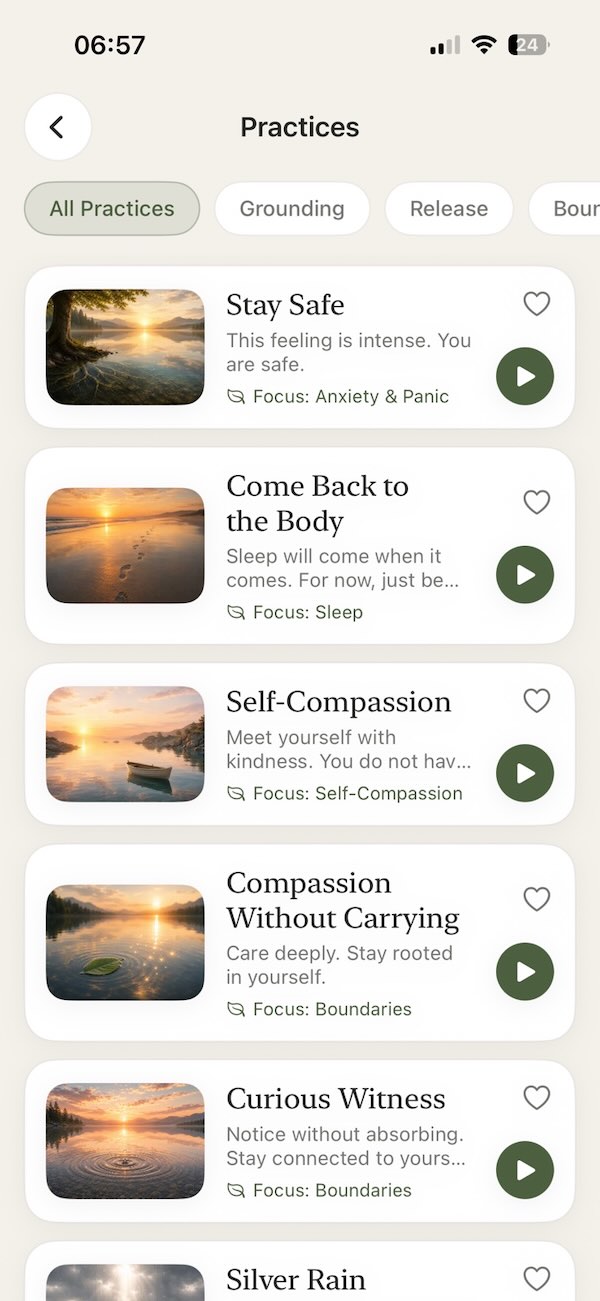
Ready for more support?
Continue your journey in Aira
Access the full library of guided practices, tools, and resources anytime, anywhere.
- 10+Guided Practices
- AnxietyRelief Tools
- SleepSupport
- TrackYour Progress
- OfflineAccess
Available on iPhone and iPad