Morning Anxiety: What It Is and How to Ease It
What morning anxiety is, what it feels like in the mind and body, and a practical toolkit for easing it — from the first phone-free minutes to calmer mornings over time.

If you wake up anxious — nervous before the day has started, tense for no reason you can name, already braced for what's ahead — this is a practical guide to what morning anxiety is and how to ease it. It's one of the most common ways anxiety shows up, and there's a lot you can do to meet it gently.
What is morning anxiety?
Morning anxiety is anxiety that appears shortly after waking. For some people it's there every day; for others it comes during stressful stretches of life. It can feel like nervousness, dread, restlessness, or simply waking up "off" — a sense that something is wrong before there's any thought to attach it to. (If you're curious about the mechanism behind why anxiety tends to peak in the morning, that has its own article; here the focus is on what it feels like and what helps.)
What morning anxiety feels like
Morning anxiety shows up in the mind and the body together. In the mind, it often looks like immediate worry about the day, a sense of overwhelm, or racing thoughts the moment you wake. In the body, it can feel like chest tightness, a knot or butterflies in the stomach, a faster heartbeat, tense shoulders, restlessness, or a general edginess. Many people describe it as waking already wound up, before they've even decided to think about anything. None of these sensations are dangerous — they're signs of a nervous system that's switched on a little too strongly for the moment it's in.
How to ease morning anxiety
The aim isn't to force calm — pressure tends to add to morning activation rather than reduce it. It's to give your nervous system gentler conditions to wake into.
Don't reach for your phone first
The first minutes after waking are when the nervous system is most sensitive. Email, news, messages, and social media all pour stimulation into an already-activated system. Give yourself a few phone-free minutes before letting the outside world in.
Start with the body
Before engaging the day, drop your attention into something physical: your breath, your feet on the floor, a slow stretch, the temperature of the room. The body lives in the present, and anxiety usually doesn't — so coming back to it gently interrupts the spin.
Move, gently
A short walk, a few minutes of stretching, or simply opening a window and stepping outside helps the nervous system discharge some of the early surge. Movement often settles morning anxiety faster than analysis does.
Go easy on caffeine at first
Coffee on an empty, already-activated system can amplify the racing heart and jitteriness that morning anxiety brings. You don't have to give it up — just consider a little food first, or waiting until the initial edge has passed.
Don't try to solve the whole day at once
An anxious mind wants certainty about everything before getting out of bed. The nervous system responds far better to one small step. Ask "what's the next thing?" rather than "how do I handle all of it?"
Speak to yourself kindly
Swapping "why am I like this?" for "my nervous system is having a hard morning" sounds small, but self-criticism is its own stressor. A kinder inner tone removes a layer of pressure the morning didn't need.
Building calmer mornings over time
Beyond the moment, mornings get easier when the days and evenings around them are steadier. Daylight early in the day helps regulate your internal clock; a consistent wake time steadies the rhythm; and a calmer wind-down the night before means you wake from more settled sleep. None of this has to be perfect — small, repeated signals of safety add up.
The fuller picture
There's a quiet logic that kicks in the moment you wake on edge: I already feel this anxious — so today is going to be bad. It feels true because the dread is real and it's right there before you've even moved, which makes it seem like a preview of the day rather than a passing state.
But the timing gives it away. In the early morning your body runs its sharpest natural surge of cortisol to lift you into the day — and on an already-sensitive system, that surge can land as dread instead of energy. That's physiology, not prophecy: a chemical wave that peaks soon after waking and eases over the next hour, not a forecast of how the day will go. The feeling is real; its message isn't reliable. Plenty of good days begin with a wound-up morning, because the morning is when the body is loudest — not when your life is being decided. You don't have to believe the 7am version of events. Let the surge pass first, then see what's actually true.
When morning anxiety needs more support
If morning anxiety is intense, persistent, or making it hard to function, it's worth talking with a doctor or therapist. That isn't a sign things have gone too far — it's a reasonable step toward more personalized support, and morning anxiety responds well to help.
Try a gentle practice
Morning anxiety can make it feel as though your body is already rushing ahead before the day has begun. Before following that momentum, slow down and reconnect with your breath. Breathe is a gentle practice for morning anxiety and waking up on edge — a way to ease the body out of its early surge and meet the day with a little more calm.

Try the practice
Breathe
Help me slow down and find calm.
Ready for more support?
Continue your journey in Aira
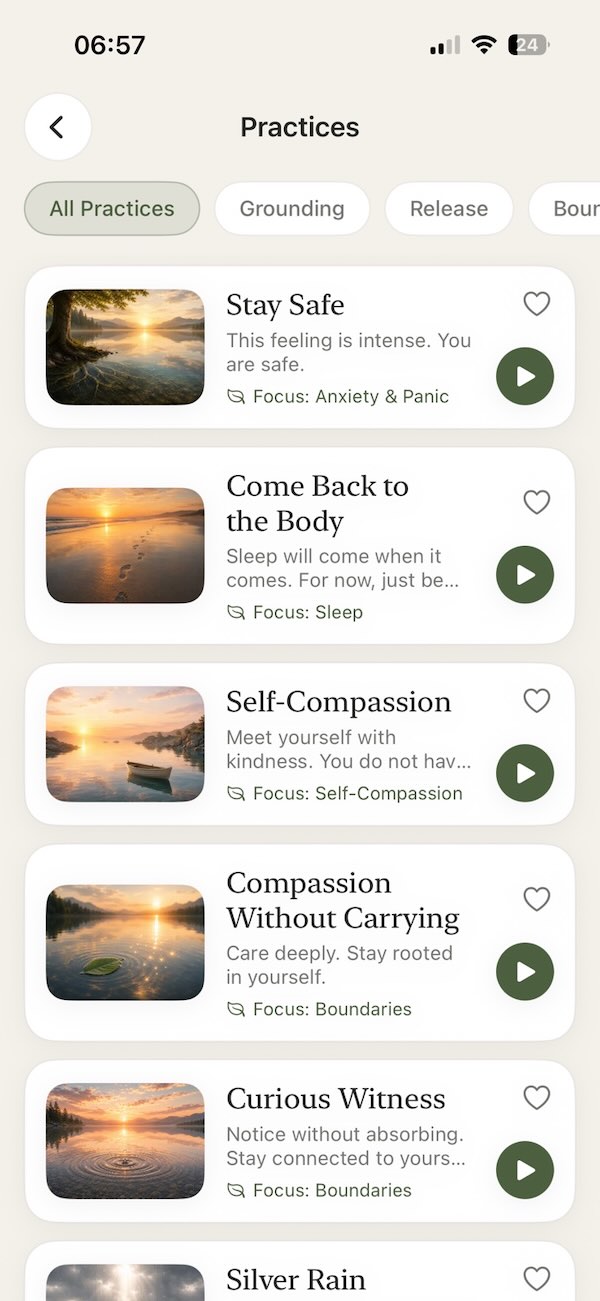
Access the full library of guided practices, tools, and resources anytime, anywhere.
- 10+Guided Practices
- AnxietyRelief Tools
- SleepSupport
- TrackYour Progress
- OfflineAccess
Available on iPhone and iPad