Breathing for Panic Attacks: How to Use Your Breath to Calm Panic
How to use your breath to move through a panic attack — why breathing changes, the mistake that makes it worse, and gentle techniques like extended exhale and box breathing.

When panic arrives, breathing is often one of the first things that changes. Your breath becomes faster, shallower, more urgent. You may feel as though you can't get enough air, and find yourself taking deep breaths repeatedly trying to feel relief — and the harder you try to breathe normally, the more difficult it sometimes feels.
If you've ever wondered "How should I breathe during a panic attack?" or "Can breathing really stop a panic attack?", the answer begins with understanding what panic does to the body.
Why breathing changes during panic
During a panic attack, the nervous system activates the body's survival response. The brain believes danger may be present, so breathing speeds up, muscles tighten, heart rate increases, and attention narrows. These changes are designed to help you respond to a threat. The problem is that during panic there's usually no actual danger — the body is preparing for something that isn't happening. This is why panic breathing often feels strange or uncomfortable.
Why breathing helps calm panic
Breathing is unique because it connects the body and the nervous system. You can't instantly slow your heart or stop adrenaline, but you can influence your breathing. When breathing becomes slower and gentler, the nervous system often receives an important message: "The emergency may be over." This is why breathing is one of the most widely recommended tools for managing panic. The goal isn't to force yourself to relax — it's to create conditions where calm can return naturally.
A common mistake: trying to take huge breaths
When panic begins, many people try to fix it by taking very large breaths. Unfortunately, this often makes symptoms worse — you may become more aware of chest tightness, dizziness, lightheadedness, or air hunger. Instead of bigger breaths, focus on gentler ones. Panic recovery often begins with softness rather than force.
How to breathe during a panic attack
If panic is present right now, try this:
1. Relax your shoulders
Allow your shoulders to drop. You don't need perfect posture — just a little softness.
2. Breathe through your nose if possible
Nasal breathing often feels slower and calmer. If it feels difficult, don't force it.
3. Lengthen the exhale
Try inhaling for 4 seconds and exhaling for 6. The longer exhale helps activate the body's calming systems.
4. Repeat gently
Don't chase relaxation or monitor every breath. Simply continue. The goal isn't perfection — it's safety.
Breathing to stop a panic attack
Many people search for "How do I stop a panic attack with breathing?" Breathing can be incredibly helpful, but it helps to have realistic expectations. It's not an emergency off-switch or a magic button. Instead, breathing helps regulate the nervous system and reduce escalation — think of it as guiding a wave rather than instantly erasing it. The panic may still rise, but it often becomes easier to move through.
Deep breathing — with a caveat
Deep breathing is often recommended for anxiety and panic, but the word "deep" can be misleading. Helpful breathing is usually slow, gentle, comfortable, and sustainable — not forced, exaggerated, or effortful. Your nervous system responds better to calm breathing than to dramatic breathing.
Box breathing
One popular technique is box breathing, which uses four equal phases: inhale for 4 seconds, hold for 4, exhale for 4, hold for 4, then repeat. Many people find it helpful because it gives the mind something simple to focus on. If holding your breath feels uncomfortable during panic, choose a different technique — there's no single exercise that works for everyone.
Extended exhale breathing
Many therapists and nervous system experts recommend extended exhale breathing: inhale for 4 seconds and exhale for 6, or inhale for 4 and exhale for 8. A longer exhale often creates stronger signals of safety, and for many people this becomes one of the most effective breathing exercises for panic.
Counting breaths
Sometimes panic makes the mind race, and counting can help create focus. Silently count: inhale — 1, exhale — 1, inhale — 2, exhale — 2, continuing to 10, then begin again. This simple exercise combines breathing and grounding.
When breathing feels difficult
Some people get frustrated because breathing exercises don't immediately stop panic. This doesn't mean you're doing anything wrong. During intense panic, breathing may feel uncomfortable, your chest may feel tight, and your mind may stay anxious. The goal isn't to eliminate every symptom — it's to support your nervous system while the wave moves through. Even imperfect breathing can help.
Breathing and the fear of panic
Many people begin to fear panic itself — the physical sensations, the increased heart rate, the changes in breathing. Over time, breathing exercises can become more than a coping tool; they can become a way of rebuilding trust in your body. Each time you breathe through panic, you teach your nervous system: "I can stay with this. I can move through this. I am safe enough right now."
Practicing before panic happens
One of the best times to practice breathing techniques is when you're not panicking. Daily practice helps your nervous system become familiar with the pattern, so when anxiety rises the technique feels more natural. Even two or three minutes a day can make a difference.
Final thoughts
When panic arrives, breathing may feel like the last thing you can trust. But your breath can become an anchor — not because it instantly removes fear, but because it helps reconnect you with the present moment. You don't need perfect breathing or perfect calm. You only need one gentle breath. Then another. Then another. One exhale at a time. One moment at a time.
Try a gentle practice
When panic feels overwhelming, you don't have to manage everything at once — sometimes it helps to return to the next breath. Breathe is a gentle guided practice for moments of panic, anxiety, and overwhelm, helping you slow down, find steadiness, and reconnect with the present moment one breath at a time.

Try the practice
Breathe
Help me slow down and find calm.
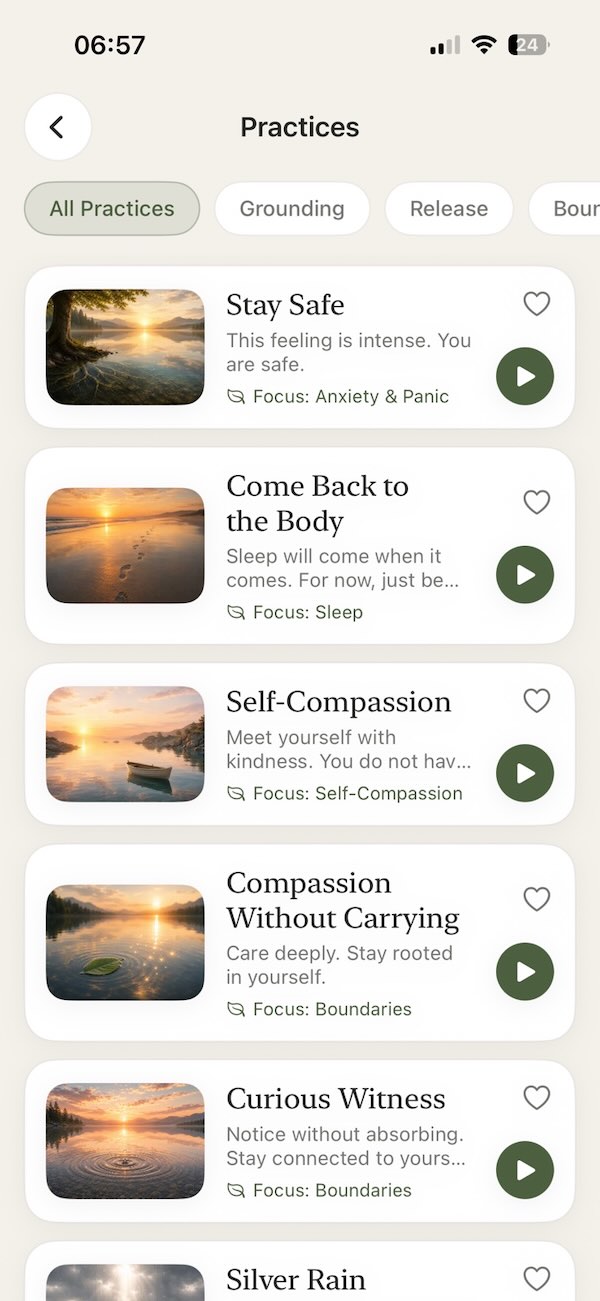
Ready for more support?
Continue your journey in Aira
Access the full library of guided practices, tools, and resources anytime, anywhere.
- 10+Guided Practices
- AnxietyRelief Tools
- SleepSupport
- TrackYour Progress
- OfflineAccess
Available on iPhone and iPad