Anxiety About Sleep: When Worrying About Sleep Becomes the Problem
What happens when worrying about sleep — the hours, the consequences, the performance of it — becomes the real problem, and how to ease the pressure so rest can return.

Sleep is one of the most important ways the body and mind recover, so it makes sense that we care about it. But sometimes that care tips into something else — worry, monitoring, pressure. And before long the problem is no longer sleep itself. The problem becomes the worrying about sleep.
If you've found yourself thinking "what if I can't sleep tonight? what if I'm exhausted tomorrow? what if I never get back to normal?", you're not alone. This is anxiety about sleep — not a fear of sleep itself, but a churning worry about whether it will come, how much you'll get, and what happens if you don't. And, frustratingly, the more you worry about sleep, the more elusive it tends to become.
What is anxiety about sleep?
Anxiety about sleep is when sleep becomes a source of worry and pressure rather than rest. Instead of bedtime being a time to let go, it turns into something to get right. You might catch yourself monitoring how tired you feel, calculating how many hours you could still get, checking the clock, or mentally rehearsing tomorrow before you've even fallen asleep. Sleep starts to feel fragile — like something that has to go perfectly, and might not. This is sometimes called sleep anticipation anxiety or sleep performance anxiety.
Why sleep feels so important
Sleep genuinely matters — it supports focus, mood, memory, energy, and resilience to stress. But anxiety has a way of turning something important into something urgent. "Sleep is helpful" quietly becomes "I absolutely must sleep," and the pressure that follows is exactly what makes sleep harder to reach.
The fear of not sleeping
At the center of anxiety about sleep is usually the fear of not sleeping — and, more precisely, of its consequences. The mind runs ahead: what if I only get a few hours? what if I'm useless tomorrow? what if this keeps happening? These thoughts feel protective, as though enough worrying will prevent the bad night. In reality they raise alertness, and alertness is the opposite of the state sleep needs. The worry meant to protect your sleep is often what disturbs it.
Anxiety about insomnia
For many people this starts with a genuinely rough patch of sleep. Then the mind begins to track it — evaluating each night, treating every awakening as evidence and every tired morning as a warning sign. Sleep becomes a test you sit each night and fear failing. Over time, the fear of insomnia can become more disruptive than the original poor sleep ever was.
Sleep performance anxiety
Most things in life respond to effort — work, study, exercise. Sleep is the rare exception: the harder you try, the further it retreats. When you find yourself trying to sleep, trying to relax, trying not to think, the nervous system feels watched and evaluated, and it stays switched on. Sleep doesn't arrive on command, and treating it like a task to perform keeps it at arm's length.
Why the worrying starts before bed
Often the anxiety begins long before you lie down. As evening approaches, the mind starts preparing: I hope tonight goes better. I hope I can fall asleep. I hope I don't wake at 3 a.m. again. This anticipation is itself a form of activation — so by the time your head reaches the pillow, the worrying has already nudged your system away from rest. (The way anxiety and sleep feed each other in a self-reinforcing loop is worth understanding in its own right; here the focus is specifically on the worrying.)
What helps when you're stressed about sleep
Stop grading every night
One difficult night doesn't predict the next. The nervous system does better with flexibility than with constant evaluation — so try to loosen the scorekeeping.
Aim for rest, not performance
Rest has value even when sleep is slow to come. Lying calmly in the dark is not nothing. Taking the pressure off "achieving" sleep often lets it arrive on its own.
Keep problem-solving out of bed
The mind may want to plan tomorrow or replay today. Bedtime isn't the place for it. If thoughts pile up, jot them down earlier in the evening so they're not waiting for you at midnight.
Trust that your body knows how to sleep
Humans slept for millennia without tracking, calculating, or optimizing a single night. Your body still holds that capacity; anxiety just gets in the way of it.
What if I don't sleep well tonight?
This question sits at the heart of sleep anxiety, and the honest answer is gentler than the worry suggests: you'll most likely still cope. You may feel tired, you may not be at your best — but one imperfect night rarely brings the disaster the mind predicts. Many people find that loosening the fear of a bad night does more for their sleep than any technique.
The fuller picture
Underneath all the monitoring sits one belief: I can't relax until I know tonight will go well. It feels true because sleep matters so much — so making sure of it seems like the responsible thing to do.
But look at what the worry actually delivers. There's no way to secure sleep in advance; it isn't something you can check, confirm, or guarantee before it happens. So the mind's attempt to make sure — the grading, the calculating, the hoping — never buys certainty; it only adds alertness, which is the one thing that reliably keeps sleep away. The worry meant to protect your sleep is what disturbs it. Which means the move isn't to win the guarantee but to drop the demand for one: to swap "how do I make sure I sleep?" for "how do I help myself feel safe and unpressured tonight?" — from control to care, from performance to permission. You don't need to know how the night will go in order to let it begin.
Final thoughts
Anxiety about sleep is exhausting because it turns something natural into something effortful. The more sleep matters, the more pressure builds; the more pressure builds, the harder sleep becomes. But sleep isn't a test, a performance, or something you have to earn. It returns most easily when the pressure around it eases. You don't have to get tonight perfect. One night, one breath, one gentle loosening of the grip at a time.
Try a gentle practice
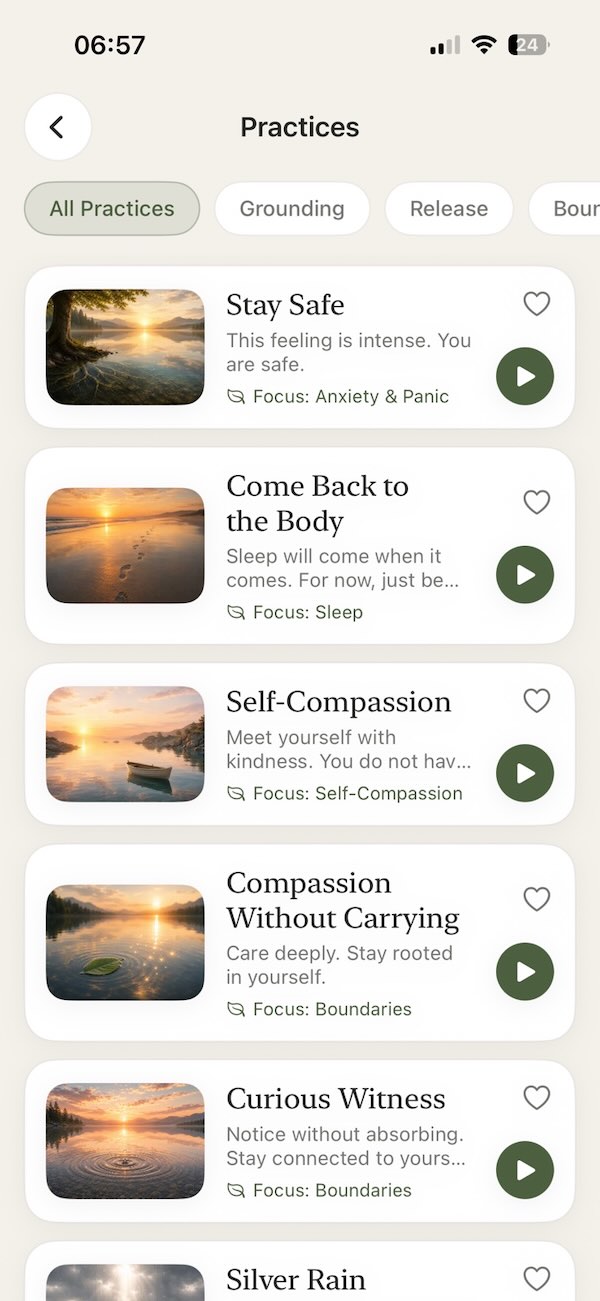
When worry about sleep takes over, it's easy to get stuck monitoring, calculating, and trying to force rest into being. Observe is a gentle practice for sleep worry, fear of not sleeping, and bedtime overthinking — a way to step back from the cycle of analysis and rest in simple awareness, without having to fix anything at all.

Try the practice
Observe
Let's step back and see more clearly
Ready for more support?
Continue your journey in Aira
Access the full library of guided practices, tools, and resources anytime, anywhere.
- 10+Guided Practices
- AnxietyRelief Tools
- SleepSupport
- TrackYour Progress
- OfflineAccess
Available on iPhone and iPad