Fear Before Sleep: Why You Feel Afraid to Fall Asleep
Why something as natural as sleep can trigger dread, how the nervous system learns to treat bedtime as a threat, and how a sense of safety can slowly return.

Most people think of sleep as something comforting — a time to rest, recover, and let the day end. But for some people, bedtime brings the opposite of comfort. As the evening goes on and sleep draws closer, a sense of dread begins to build. They may find themselves thinking "I'm afraid to go to sleep," even when they're exhausted and longing for rest.
If you've felt this, you're not alone. Fear before sleep isn't about whether you'll get enough rest or how tomorrow will go — that's a different kind of worry. This is fear of sleep itself: of the dark, of letting go, of what the night might hold. And it usually has less to do with sleep than with what your nervous system has learned to associate with it.
What fear before sleep feels like
Fear before sleep is an emotional dread that rises as bedtime approaches. Some people feel nervous or restless; others feel a strong sense of dread or a reluctance to let go of awareness. You might notice yourself delaying bed, keeping the lights or the TV on, or feeling your body tense as the room goes quiet. The feeling can range from mild unease to genuine fear, and it often grows stronger the closer sleep gets.
Why am I afraid to go to sleep?
When people ask "why am I afraid to go to sleep when I'm exhausted?", the answer is rarely about sleep itself. The nervous system learns through experience. If frightening or painful things have happened at night — nighttime panic attacks, long stretches of insomnia, a health scare, grief, or difficult emotions that tend to surface in the dark — the brain can begin to connect bedtime with danger. It starts treating the approach of sleep as something to brace against rather than relax into.
How sleep becomes associated with fear
Imagine touching a hot stove once: your brain learns "be careful" almost instantly. Emotional learning works the same way. If enough difficult experiences happen around bedtime, the nervous system starts sending warning signals as sleep approaches. You get into bed and your body responds as though something significant is about to happen — not because there's real danger, but because an association has formed. This matters, because an association that was learned can also be unlearned.
The fear of falling asleep itself
For some people, the fear centers on the moment of falling asleep — the act of letting go. Sleep asks you to stop monitoring, stop controlling, and surrender awareness, and for an anxious or hypervigilant nervous system that surrender can feel deeply uncomfortable. The mind may protest with questions like what if something happens while I'm asleep? what if I lose control? what if I don't wake up feeling okay? This isn't about sleep quality; it's about the vulnerability of letting go.
Why bedtime feels different
During the day there are distractions — people, tasks, movement, noise. At night those fall away, and you're left alone with your thoughts, your emotions, and your body. Many people discover that what they experience as fear of sleep is partly a fear of being alone with what they've been carrying. The quiet doesn't create the fear; it simply removes everything that was covering it.
What helps when you're scared to sleep
Stop fighting the fear
Fear tends to grow when we treat it as an enemy. Rather than forcing it away, try naming it gently: "I'm feeling afraid right now. This is anxiety, not danger. I don't have to make it disappear."
Aim for safety, not sleep
The goal isn't "I must fall asleep now." It's "how can I help my body feel a little safer right now?" Soft light, warmth, a familiar sound, a grounding practice — small signals of safety speak to the nervous system far more than willpower does.
Ground in the present
Notice the mattress beneath you, the blanket on your skin, the sounds in the room, the rhythm of your breath. Fear lives in imagined futures; the body lives here, in the present, where in this moment you are safe.
Remember that fear is not danger
This is the most important reminder. Feeling afraid does not mean you are unsafe. The nervous system can produce powerful fear without any real threat being present — the alarm can sound even when nothing is wrong.
The fuller picture
Underneath the dread is a quiet conviction: letting go into sleep is dangerous — if I drop my guard, something bad will happen. It feels true because your body floods with real fear as sleep approaches, and a body in alarm is persuasive: surely it wouldn't sound unless there were something to fear.
But the alarm isn't reporting a threat — it's replaying a memory. Somewhere along the way the nervous system learned to link bedtime with something hard (a night of panic, a stretch of insomnia, grief, fear in the dark), and now it braces on approach the way a hand flinches near a stove it once touched. That's a learned association, not a present danger — which is exactly why it can be unlearned. And letting go into sleep isn't surrendering your safety; you've done it every night of your life and woken up. The vulnerability you feel is hypervigilance, not exposure. So feeling afraid doesn't mean you're unsafe — fear and danger are not the same thing. You don't have to defeat the fear before you sleep. You only have to show your body, a little at a time, that the dark is safe again.
You are not alone
Fear before sleep is far more common than most people realize, and it's rarely spoken about. Many people quietly dread bedtime — and many of them recover, not by forcing themselves to stop feeling afraid, but by slowly teaching the nervous system that sleep is safe again. Bedtime can become a place of rest rather than a threat.
Final thoughts
If you're afraid to go to sleep, it doesn't mean something is wrong with you, that you're weak, or that sleep is your enemy. More often it means your nervous system has learned to associate bedtime with stress or fear — and nervous systems can learn new associations. Sleep can become something you move toward rather than brace against. Tonight, you don't need to force trust or force sleep. One small step toward feeling safe is enough. One breath. One moment. One gentle return to safety at a time.
Try a gentle practice
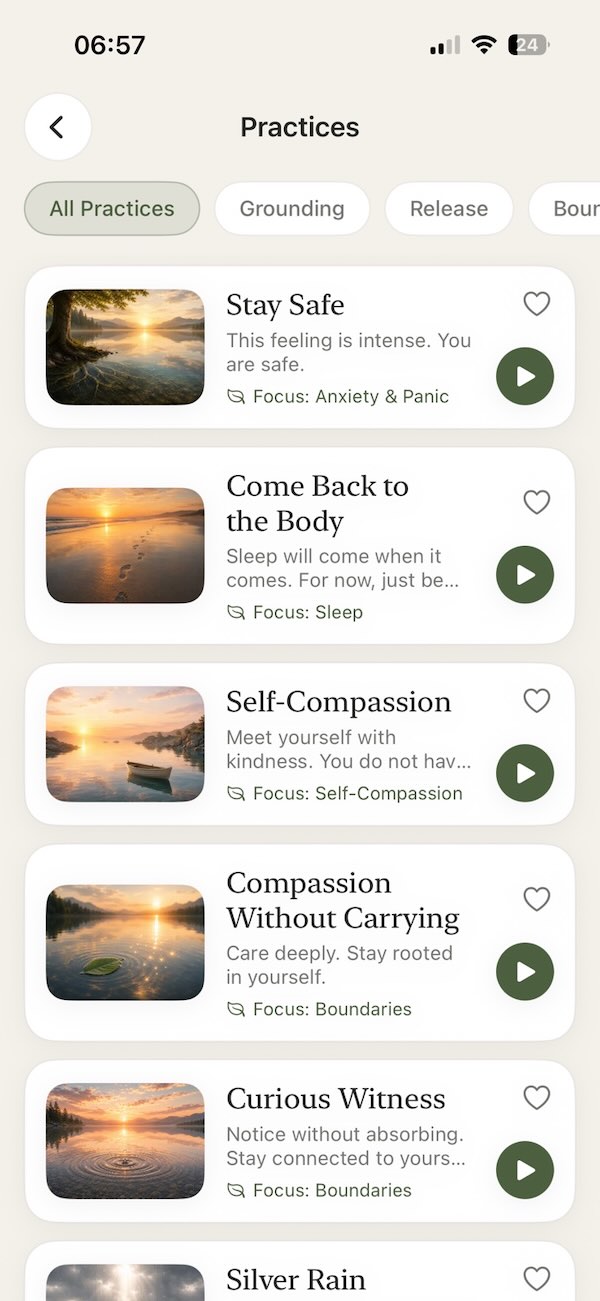
When bedtime feels frightening, the nervous system can stay braced even as your body aches for rest. Come Back to the Body is a gentle practice for fear before sleep — a way to step out of anxious thoughts and into the quiet of physical sensation, so the body can register that it is safe and begin to soften toward rest.

Try the practice
Come Back to the Body
Come back from thoughts to sensation.
Ready for more support?
Continue your journey in Aira
Access the full library of guided practices, tools, and resources anytime, anywhere.
- 10+Guided Practices
- AnxietyRelief Tools
- SleepSupport
- TrackYour Progress
- OfflineAccess
Available on iPhone and iPad