Sleep Anxiety: Understanding the Anxiety–Sleep Cycle
What sleep anxiety actually is, why anxiety and sleep feed each other in a two-way cycle, and why understanding that loop is often the first thing that loosens it.
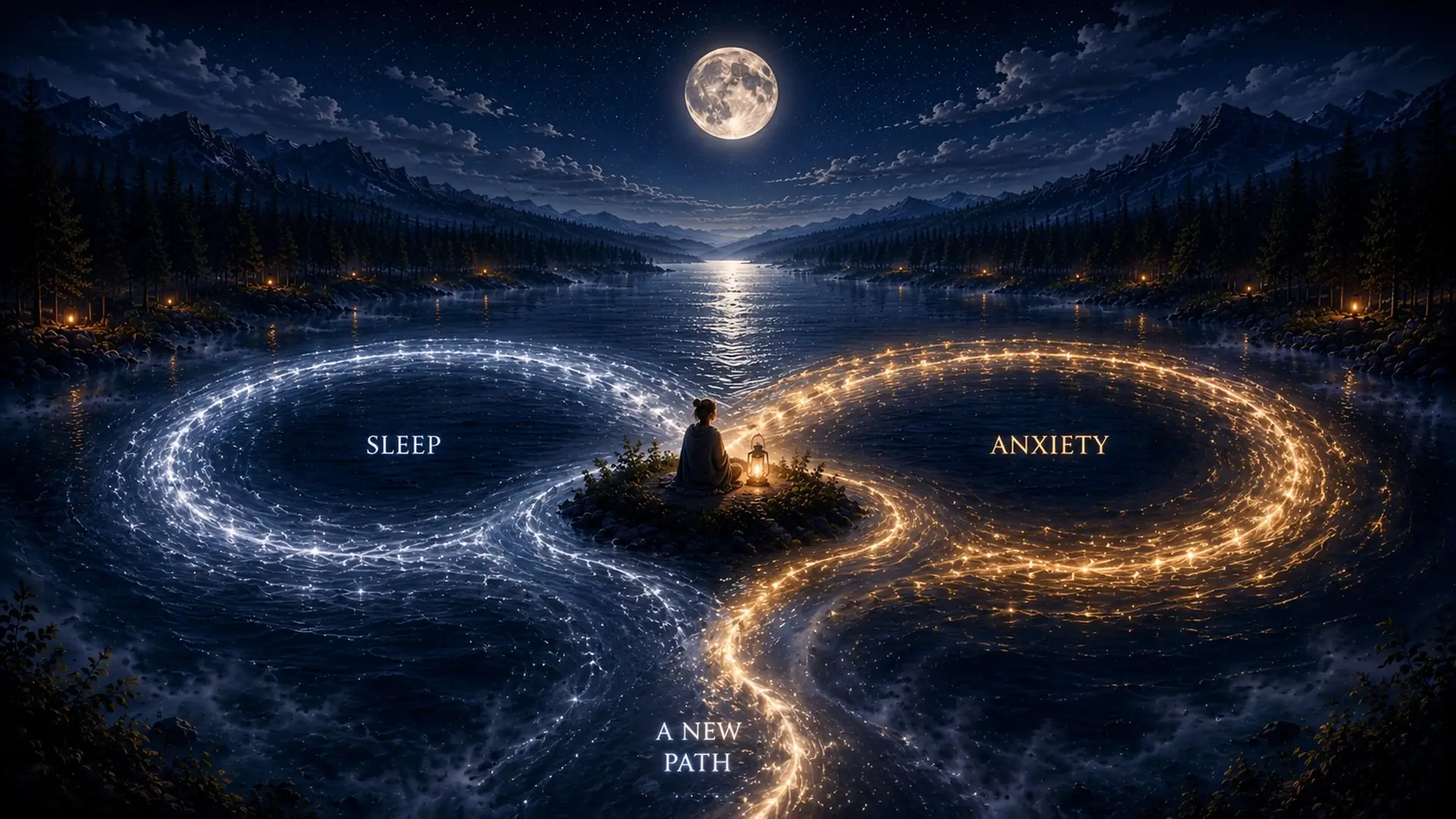
Sleep and anxiety can become so entangled that it's hard to tell where one ends and the other begins. You feel tired, your body wants rest, but the moment you try to sleep your mind becomes active and your body feels alert. Over time, sleep itself can start to feel like something to worry about. This experience has a name: sleep anxiety.
This article is the bigger-picture view — what sleep anxiety actually is, and why anxiety and sleep get locked together. If you're lying awake right now looking for practical steps, the companion piece on what to do when anxiety won't let you sleep is the more useful place to start. Here, the goal is to understand what's happening, because understanding the cycle is often the first thing that loosens it.
What is sleep anxiety?
Sleep anxiety is anxiety that has become attached to sleep itself. It isn't simply a bad night here and there — it's a pattern in which the prospect of sleeping, the act of falling asleep, or the fear of not sleeping becomes a source of worry. For some people it begins as ordinary stress that happens to disrupt a few nights. For others it grows out of insomnia, nighttime panic, or a difficult period of life. However it starts, the defining feature is the same: sleep stops feeling like rest and starts feeling like a test.
The two-way cycle: how anxiety and sleep feed each other
The heart of sleep anxiety is a loop that runs in both directions. Anxiety makes sleep harder, because an activated nervous system stays alert, and alertness is the opposite of sleep. But poor sleep also makes anxiety worse: after a short or broken night, the nervous system becomes more reactive, emotions feel bigger, and uncertainty feels harder to tolerate. So a difficult night raises anxiety, the raised anxiety disrupts the next night, and the loop reinforces itself. This is why sleep anxiety so often feels sticky — each side keeps feeding the other.
Why the nervous system links sleep with staying alert
Sleep requires a kind of surrender. To fall asleep, the nervous system has to move from vigilance toward rest — to stop monitoring, stop preparing, stop scanning for problems. For a system that already feels under pressure, that letting-go can feel unsafe, so the brain treats the approach of sleep as a moment to stay watchful rather than release. None of this is a malfunction; it's a protective system doing its job at the wrong time. But it explains how a tired body and an alert mind can exist in the same moment.
The different shapes sleep anxiety takes
Sleep anxiety doesn't look the same for everyone. It often appears as anticipatory anxiety, where worry begins hours before bed; onset anxiety, where the mind activates the moment you lie down; middle-of-the-night anxiety, where you wake and can't settle again; or fear of not sleeping, where the worry is specifically about the consequences of a bad night. These are different entry points into the same cycle, which is why two people who both have "sleep anxiety" can describe quite different nights.
Why it tends to grow over time
The nervous system learns by association. If enough difficult experiences happen around bedtime, the brain begins to connect the bed, the darkness, and the hour before sleep with stress rather than rest. Eventually the bedroom itself can become a cue for alertness. This learned association is what turns a rough patch into a persistent pattern — and, importantly, it's also what makes recovery possible, because an association that was learned can be unlearned.
Why understanding the cycle matters
When sleep anxiety is framed as "something is wrong with me," it tends to intensify. When it's understood as a self-reinforcing loop between an activated nervous system and disrupted sleep, it becomes something that can be worked with rather than feared. The fear of the cycle is often part of what keeps it spinning — so understanding it is not just informational, it's part of how the loop begins to soften.
The fuller picture
When the bad nights stack up, they start to feel like a diagnosis: I'm a bad sleeper now — this is just who I am, and the cycle is never going to break. It feels true because the loop is self-reinforcing, so each hard night really does seem to confirm the last.
But notice what's actually holding the loop together: the fear of it. The cycle keeps spinning because anxiety about sleep produces the alertness that disrupts sleep — which means the thing maintaining the pattern isn't a broken body, it's the worry wrapped around it. And that's strangely good news, because a loop held in place by fear is a loop that loosens as the fear does. "Bad sleeper" isn't an identity you've acquired; it's a state your nervous system is in, learned through association — and what was learned can be unlearned. People move out of this all the time, not by becoming different people, but by letting the pressure come off until the loop quietly unwinds. You're not stuck with this. You're in the middle of it — which is a very different thing.
Try a gentle practice
Much of sleep anxiety comes from the mind insisting there is still something to solve before rest is allowed. Nothing Left to Do is a gentle practice for exactly that feeling — a reminder that, for now, this moment asks nothing more of you than to lie still and let the day be finished.

Try the practice
Nothing Left to Do
Release the day. Prepare for deep restorative sleep.
Ready for more support?
Continue your journey in Aira
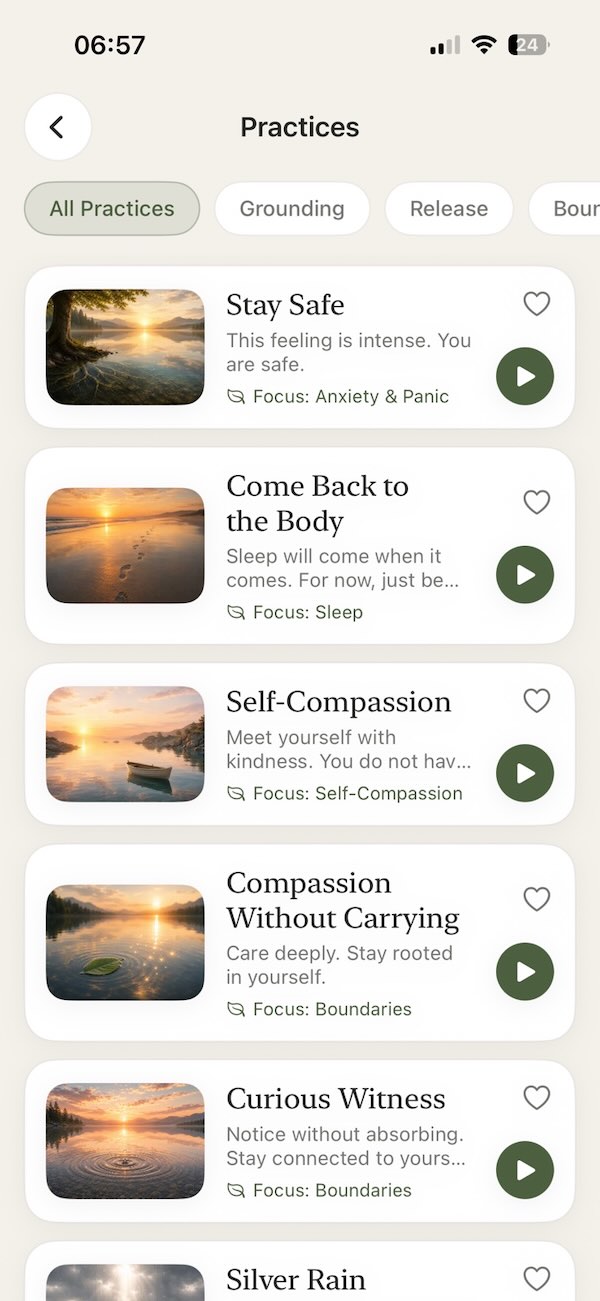
Access the full library of guided practices, tools, and resources anytime, anywhere.
- 10+Guided Practices
- AnxietyRelief Tools
- SleepSupport
- TrackYour Progress
- OfflineAccess
Available on iPhone and iPad