Anxiety and Depression: Why They Often Go Together
Anxiety and depression often arrive together. A compassionate look at why they overlap, how they differ, how they feed each other, and what genuinely helps when you're facing both.

Anxiety and depression are often spoken about as two separate conditions, but in real life they frequently arrive together. Many people who live with one also experience the other — sometimes at the same time, sometimes taking turns. If you've felt both the restless edge of anxiety and the heavy flatness of low mood, you're not alone, and it doesn't mean something is uniquely wrong with you.
This is a gentle look at why anxiety and depression so often overlap, how they differ, and what tends to help. It isn't a diagnosis — only a qualified professional can offer that — but understanding the connection can make the experience feel less confusing.
Two different experiences
At their core, anxiety and depression pull in somewhat different directions. Anxiety tends to be future-focused and activating: worry, restlessness, a body braced for something that might go wrong. Depression tends to be heavier and more still: low mood, loss of interest, fatigue, a sense of flatness or hopelessness, and a pull toward withdrawal. One often feels like too much energy in the system; the other like too little.
Why they so often go together
Despite those differences, anxiety and depression share a great deal underneath. They draw on overlapping biology, often grow from similar roots — prolonged stress, difficult experiences, exhaustion, harsh self-criticism — and each can wear the nervous system down in ways that make the other more likely. Living with constant anxiety is depleting, and that depletion can slide into low mood. Equally, the heaviness of depression can bring its own anxious worry about coping, the future, or whether things will improve. They tend to feed each other.
How one leads to the other
For many people, the two form a cycle. Long-term anxiety is exhausting, and carrying that much vigilance for that long can leave you depleted, flat, and hopeless — the territory of depression. From the other direction, depression can make everything feel harder and less certain, which stirs up anxiety about managing day to day. Neither causes the other in a simple, one-way sense; more often they reinforce each other, which is part of why they so commonly appear as a pair.
Symptoms that overlap
Because they share machinery, anxiety and depression also share symptoms, which can make them hard to tell apart. Both can bring trouble sleeping, difficulty concentrating, irritability, fatigue, changes in appetite, and a sense of being overwhelmed. The distinguishing thread is often the emotional tone: anxiety leans toward fear and worry, depression toward sadness, emptiness, and loss of interest. Many people experience a blend of both at once.
The weight of carrying both
Living with anxiety and depression together can be especially exhausting, because you may feel pulled in two directions at the same time — wired and depleted, restless and flat, worried about everything yet too tired to act. If that's your experience, it isn't a sign of weakness or failure. It usually means your nervous system has been working very hard, for a long time, with too little recovery and too little support.
What helps
Anxiety and depression are among the most treatable mental health experiences, and help genuinely works. Professional support — therapy, counselling, and sometimes medication decided with a doctor — is often the most important step, particularly when both are present together. Alongside that, gentle and consistent self-support matters: regular sleep, movement, connection with people you trust, time outdoors, and softening the harsh inner voice that so often accompanies both. Recovery rarely comes from willpower or pushing harder; it comes from support, patience, and small steps repeated over time.
The fuller picture
When you're carrying both the wired edge of anxiety and the heavy flatness of low mood, the mind often reaches for a brutal conclusion: something must be seriously, permanently wrong with me — everyone else copes and I just can't. It's such an understandable place to land. Feeling revved up and shut down at the same time is genuinely disorienting, and the inner critic loves to read that confusion as proof that you're broken.
But that thought is leaving out some big, true things. Feeling both at once isn't a glitch unique to you — it's one of the most common pairings there is, because the two run on the same worn-out nervous system. It isn't a verdict on who you are; it's a sign your system has been working too hard for too long with too little support. And "permanent" is one of the cruelest lies low mood tells — both of these are among the most treatable experiences there are. You're not broken. You're depleted, and depleted is something that heals.
When to reach out
If low mood, anxiety, or both are persistent, heavy, or interfering with your daily life, please consider speaking with a doctor or therapist. This is a genuinely sensitive area, and you don't have to carry it alone or figure it out by yourself. If you ever feel unsafe or in crisis, reaching out to a mental health professional or a local crisis line is a caring and important step. Asking for help isn't a sign of weakness — it's one of the most self-respecting things a person can do.
Frequently asked questions
Can you have anxiety and depression at the same time?
Yes, and it's very common. Many people experience both together, either at the same time or in alternating waves. They share overlapping roots and biology, which is part of why they so often appear as a pair.
What's the difference between anxiety and depression?
Anxiety tends to be future-focused and activating — worry, restlessness, a body on alert. Depression tends to be heavier and more still — low mood, loss of interest, fatigue, and a pull toward withdrawal. Many people experience a blend of the two.
Does anxiety cause depression?
Not in a simple one-way sense, but they strongly influence each other. Long-term anxiety is depleting and can slide into low mood, while depression can stir up anxiety about coping and the future. More often they reinforce each other than one straightforwardly causing the other.
Why do anxiety and depression share so many symptoms?
Because they draw on overlapping biology and the same nervous system. Both can bring disrupted sleep, poor concentration, irritability, fatigue, and overwhelm. The clearest difference is in emotional tone: fear and worry for anxiety, sadness and emptiness for depression.
Can anxiety and depression be treated together?
Yes. They're among the most treatable mental health experiences, and treatment often addresses both at once — therapy, sometimes medication decided with a doctor, and consistent self-support. If both are present, professional help is especially worth seeking.
Try a gentle practice
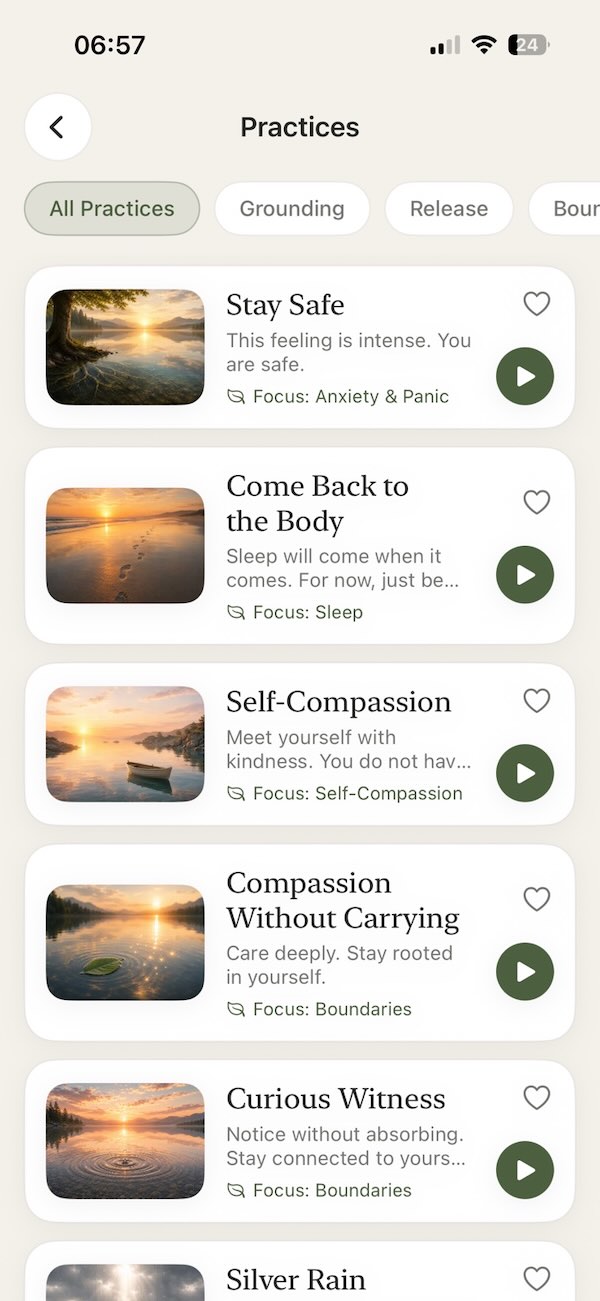
When anxiety and low mood arrive together, the inner voice often turns harsh — telling you that you should be coping better than you are. Self-Compassion is a gentle practice for exactly those moments: a way to soften that criticism, meet your own experience with the kindness you'd offer a friend, and remember you don't have to carry it alone.

Try the practice
Self-Compassion
Offer yourself the kindness you need.
Ready for more support?
Continue your journey in Aira
Access the full library of guided practices, tools, and resources anytime, anywhere.
- 10+Guided Practices
- AnxietyRelief Tools
- SleepSupport
- TrackYour Progress
- OfflineAccess
Available on iPhone and iPad