Generalized Anxiety Disorder (GAD): Symptoms, Causes, and Help
What generalized anxiety disorder (GAD) is, how chronic worry differs from everyday worry, its symptoms and causes, and the support that genuinely helps.

Everyone worries sometimes. But for some people, worry isn't an occasional visitor — it's a near-constant background hum, jumping from one concern to the next, rarely switching off. If you find yourself worrying about many things, most days, and struggling to control it, you may be experiencing generalized anxiety disorder, often shortened to GAD.
It's one of the most common anxiety conditions, it's well understood, and it responds well to support. Here's what it actually is.
What is generalized anxiety disorder?
Generalized anxiety disorder is a condition defined by excessive, persistent worry that is hard to control and shows up across many areas of life — work, health, family, money, small everyday things — rather than focusing on one specific fear. For a clinician, the worry typically needs to occur more days than not for at least six months and to come with physical and mental symptoms. What sets GAD apart from ordinary worry is its breadth, its persistence, and how difficult it is to switch off.
GAD vs everyday worry
Everyone worries, and worry itself isn't a disorder — it can even be useful, helping us prepare and solve problems. The difference with GAD is a matter of degree. Ordinary worry tends to be proportionate, temporary, and focused on a real issue, easing once the situation resolves. GAD worry is excessive relative to the situation, jumps from topic to topic, persists even when things are objectively fine, and feels uncontrollable. It's less about any single worry and more about a mind that worries as a default setting.
Symptoms of GAD
GAD is more than worried thoughts — it shows up in the body and in daily functioning too. Common symptoms include:
- persistent, hard-to-control worry across many areas
- restlessness or feeling on edge
- fatigue and feeling easily worn out
- difficulty concentrating, or the mind going blank
- irritability
- muscle tension
- sleep problems — trouble falling or staying asleep
Not everyone has every symptom, but the combination of relentless worry plus physical tension is the typical signature.
What causes GAD?
As with other anxiety conditions, there's rarely one cause. GAD usually develops from a combination of a genetic or temperamental tendency toward anxiety, prolonged stress, life experiences, and a nervous system that has learned to stay on high alert. Some people describe having been 'worriers' for as long as they can remember; for others, GAD develops during or after a stretch of sustained stress. None of it means something is wrong with you — it reflects an over-protective system, not a personal failing.
The role of uncertainty
At the heart of much GAD is difficulty tolerating uncertainty. The worrying mind treats not-knowing as a threat to be solved, and worry feels like a way to stay prepared and in control. But because life is endlessly uncertain, the worry never reaches a stopping point — one concern is resolved and another appears. Learning to sit with uncertainty, rather than worry it away, is often central to recovery.
How GAD is diagnosed
Only a qualified professional can diagnose GAD. A doctor or therapist will usually ask about the nature of the worry, how long it's lasted, how controllable it feels, and the physical symptoms, and will often rule out other causes first. Recognising yourself in this article isn't a diagnosis — but it may be a sign that talking to someone could help.
How GAD is treated
The hopeful part: GAD responds well to treatment. Cognitive behavioural therapy (CBT) is especially effective, helping you relate to worry differently, build tolerance for uncertainty, and reduce the behaviours that keep anxiety going. Many people also benefit from nervous-system regulation, breathing and grounding skills, lifestyle support such as sleep and reduced stimulants, and, for some, medication — which is a decision to make with a doctor. The aim isn't to never worry again; it's to take worry off its constant loop, so it no longer runs your days.
Can GAD improve?
Yes. With the right support, most people find their worry becomes much more manageable — quieter, less constant, easier to step back from. Recovery isn't usually about eliminating anxiety entirely; it's about changing your relationship with worry so it loses its grip. Progress can be gradual and isn't always linear, but the overall direction for most people who get support is toward more ease and freedom.
The fuller picture
If worry runs your days, there's usually a quiet belief holding it in place: if I stop worrying, I'll be caught off guard — the worrying is what keeps me safe and prepared. It feels completely logical, because worry disguises itself as vigilance, as doing something about the danger.
But look closely and the math doesn't hold. You can worry about something for weeks and change its outcome by exactly nothing — all the worry actually did was keep your body on high alert the whole time. Letting a worry go isn't dropping your guard; it's refusing to suffer something that may never even happen. The opposite of worry isn't carelessness — it's trust that you'll handle what comes, when it actually comes.
Frequently asked questions
What is generalized anxiety disorder?
GAD is a condition defined by excessive, persistent, hard-to-control worry that spans many areas of life rather than one specific fear. Clinically, the worry usually occurs more days than not for at least six months and comes with symptoms like restlessness, fatigue, tension, and trouble sleeping.
What's the difference between GAD and normal worry?
Normal worry is usually proportionate, temporary, and focused on a real issue. GAD worry is excessive, jumps between many topics, persists even when things are fine, feels uncontrollable, and comes with physical symptoms — it's worry as a near-constant default rather than an occasional response.
What are the symptoms of GAD?
Alongside relentless, hard-to-control worry, common symptoms include restlessness, fatigue, difficulty concentrating, irritability, muscle tension, and sleep problems. The mix of constant mental worry and physical tension is the typical pattern.
What causes generalized anxiety disorder?
Usually a combination: a genetic or temperamental tendency toward anxiety, prolonged stress, life experiences, and a nervous system primed to stay on alert. Difficulty tolerating uncertainty often sits at its core. There's rarely a single cause.
Is GAD treatable?
Very much so. Cognitive behavioural therapy (CBT) is particularly effective, and nervous-system regulation, breathing and grounding skills, lifestyle support, and sometimes medication (decided with a doctor) all help. Most people find their worry becomes far more manageable with support.
Try a gentle practice
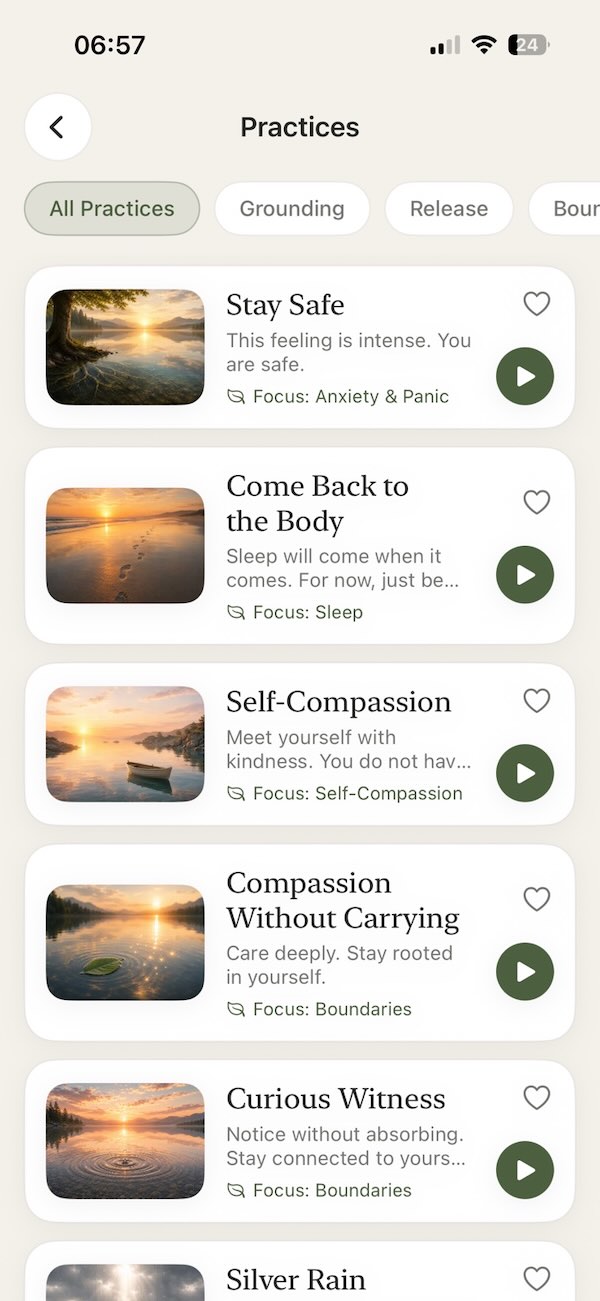
GAD keeps the mind tangled in worry about what might happen. Observe is a gentle practice for stepping back from anxious thoughts — a way to watch worries arise and pass with a little distance, instead of being pulled into every one, so the constant pull of worry begins to loosen.

Try the practice
Observe
Let's step back and see more clearly
Ready for more support?
Continue your journey in Aira
Access the full library of guided practices, tools, and resources anytime, anywhere.
- 10+Guided Practices
- AnxietyRelief Tools
- SleepSupport
- TrackYour Progress
- OfflineAccess
Available on iPhone and iPad