Anxiety, Relationships, and Connection: Why Being Around People Can Feel So Difficult
Anxiety often follows us into friendships, dating, family, and social life. A gentle look at why being around people can feel so hard — and why connection still matters most.

Anxiety is usually described as something that happens inside us — racing thoughts, worry, tension, restlessness. But it rarely stays contained in the mind. It follows us into conversations, friendships, dating, family, and everyday social life. If you've ever felt anxious around people, worried about being judged, or replayed a conversation long after it ended, you're not alone. Anxiety and connection are deeply linked, because connection is one of the most important things the nervous system tracks.
This article is about the inner experience of that — why simply being around people can feel so hard. (How anxiety then shapes the way we actually relate — the people-pleasing, the assumptions, the over-responsibility — is covered in its companion piece.)
Why anxiety shows up around other people
Human beings are wired for connection, and underneath most social moments the nervous system is quietly asking: am I safe here? do I belong? will I be accepted, or rejected? For many people, anxiety around others develops when the nervous system starts treating social situations as potential threats. That doesn't mean danger is present — it means your system is trying to protect you. The result can be anxiety in social situations, fear of judgment or rejection, difficulty relaxing around others, and a mind that overthinks conversations. The body responds as though something important is at stake, because emotionally it often is.
The fear of rejection
One of the most powerful drivers of social anxiety is the fear of rejection. People don't fear rejection because they're weak — they fear it because connection matters, and the nervous system experiences belonging as safety and separation as threat. So the anxious mind tries to predict rejection before it can happen: did I say the wrong thing? do they like me? are they pulling away? It isn't seeking suffering; it's seeking protection.
Why social situations feel so demanding
Social anxiety isn't always visible. Some people avoid gatherings entirely; others attend everything while feeling activated the whole time. Inwardly it can look like monitoring yourself constantly, worrying about being judged, struggling to relax, feeling self-conscious, and replaying interactions afterward. Many people who seem perfectly confident on the outside are working very hard on the inside — which is also why social situations can leave you so tired.
Friendships, family, and the people closest to us
Closeness can raise the stakes rather than lower them. In friendships you might worry about being forgotten, excluded, or not interesting enough. Family relationships carry their own history — old patterns around conflict, criticism, closeness, and belonging — which is part of why family interactions can feel surprisingly intense. The more a relationship matters, the more vulnerable it can feel.
Intimacy and vulnerability
Intimacy asks for the very thing anxiety finds hardest: uncertainty. To be close to someone is to let yourself be seen, known, and affected, and that can feel risky. The anxious mind asks what if I get hurt? what if they leave? what if I'm too much — or not enough? These fears are deeply human. They aren't signs of weakness; they're signs that connection matters to you.
The loneliness paradox
One of anxiety's cruelest tricks is that it often pushes us away from the very thing we most need. When anxiety runs high, many people withdraw, isolate, or go quiet — not because they don't want connection, but because connection feels difficult in the moment. Over time that can deepen into loneliness, and loneliness tends to feed anxiety. The nervous system genuinely settles in the presence of safe connection, which is why gently staying in contact, even imperfectly, matters so much.
Underneath it all: belonging
Beneath many forms of social anxiety sits a single quiet question: do I belong? The wish to be accepted, understood, and included isn't weakness — it's one of the most fundamental human needs. And belonging is rarely earned through a perfect performance; it grows through genuine, imperfect connection.
The fuller picture
A belief quietly runs under a lot of social anxiety: I have to get rid of my anxiety first — become calm, fearless, the right version of myself — before I can really have good relationships or deserve connection. It feels logical, as though you have to fix yourself before you're fit to be close to people.
But it's almost exactly backwards. Connection isn't the reward you collect after you've conquered anxiety — it's often the very thing that eases anxiety in the first place. The nervous system settles in the presence of safe people; being accepted while feeling vulnerable is what gradually heals the fear. You don't have to become fearless to be worthy of belonging, and you don't have to perform it flawlessly. You're allowed to show up anxious, imperfect, still figuring it out — and be wanted exactly there.
Final thoughts
Anxiety can make relationships feel complicated, conversations feel risky, and belonging feel uncertain. But it isn't proof that you're incapable of connection — more often it's proof that connection matters deeply to you. The goal isn't to stop caring or to stop feeling vulnerable; it's to learn that you can stay connected to yourself even while uncertainty exists. One conversation, one relationship, one moment of connection at a time.
Try a gentle practice
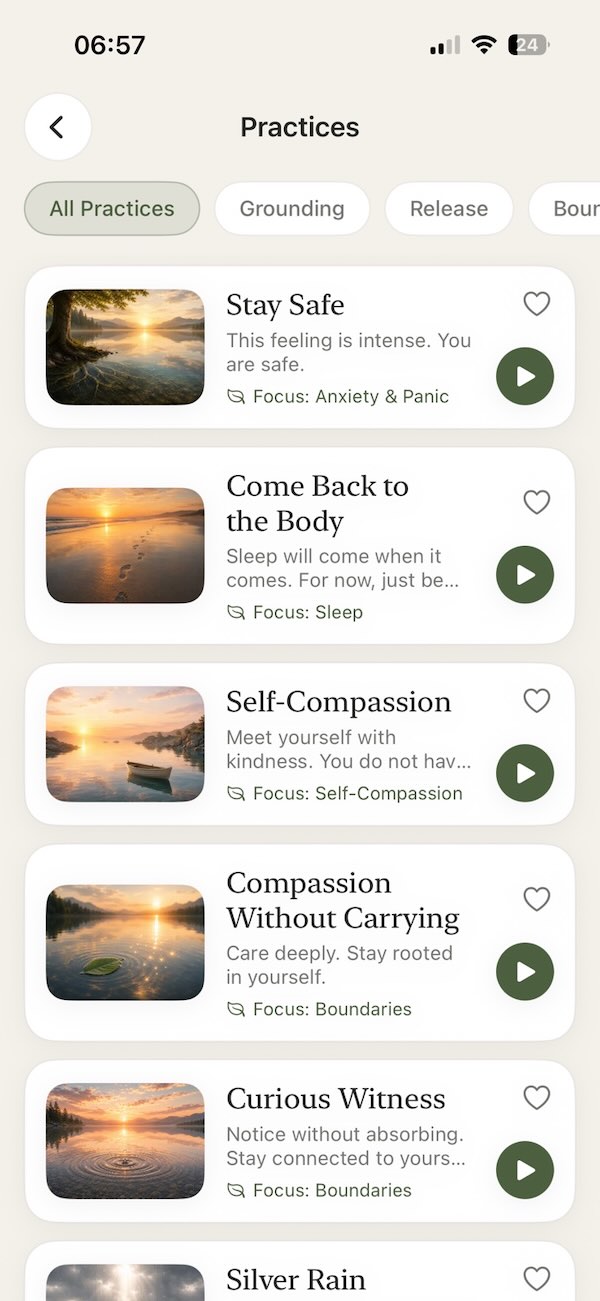
Connection gets harder when anxiety pulls you away from yourself — monitoring, comparing, adjusting, trying to be who you think others need you to be. Curious Witness is a gentle practice for those moments: a way to return to your own experience and discover what it feels like to stay within yourself while being with others.

Try the practice
Curious Witness
Notice without needing to change.
Ready for more support?
Continue your journey in Aira
Access the full library of guided practices, tools, and resources anytime, anywhere.
- 10+Guided Practices
- AnxietyRelief Tools
- SleepSupport
- TrackYour Progress
- OfflineAccess
Available on iPhone and iPad