How Anxiety Affects Relationships
Anxiety rarely stays inside one person — it shapes how we connect, communicate, and relate. A gentle look at how anxiety affects relationships, and how to stay present without losing yourself.

Anxiety is usually thought of as a personal experience — a racing mind, a tense body, a constant hum of worry. But it rarely stays inside one person. It shapes how we read conversations, what we assume, how much we take on, and how we behave with the people we care about. If you've noticed you relate differently when anxiety is high, you're not imagining it.
This article is about that — how anxiety shapes the way we relate, and how to relate differently. (Why being around people can feel so hard in the first place — the social anxiety, the fear of rejection, the longing to belong — is covered in its companion piece.)
Anxiety changes what you notice
When the nervous system feels unsettled, attention shifts toward potential problems. The mind becomes more watchful, more tuned to what could go wrong. In relationships that can look like overanalyzing conversations, worrying about what someone meant, replaying interactions afterward, seeking reassurance, and assuming the worst before you have all the information. The intention is protection — but the result is usually more uncertainty, not less.
When the mind fills in the gaps
Relationships are full of uncertainty: you can never fully know what another person is thinking or control how they feel. For an anxious mind, that gap is uncomfortable, so it fills it with stories — maybe they're upset with me, maybe I said the wrong thing, maybe they're pulling away. These stories can feel utterly convincing, but they're still stories, not facts. Learning to notice that difference is one of the most useful relationship skills there is.
The desire to be liked
Anxiety craves certainty, and in relationships certainty often looks like approval — knowing you're accepted, knowing everything's okay. That can quietly tip into people-pleasing: avoiding conflict, saying yes when you mean no, smoothing everything over. The wish for connection behind it is completely understandable. But when connection depends on keeping everyone happy, relationships start to cost more than they give.
Carrying what isn't yours
Many anxious people carry more emotional responsibility than actually belongs to them — worrying about how everyone feels, whether someone's upset, whether they've done enough. Over time that weight becomes exhausting, because some of it was never theirs to hold. Caring about people is healthy. Taking responsibility for every emotion around you is not.
Presence matters more than perfection
When anxiety is high, the mind tries to get relationships right — say the perfect thing, avoid mistakes, prevent any discomfort. But relationships don't grow through perfection; they grow through presence: through honesty, listening, and being human together. The aim isn't to never feel anxious. It's to stay connected even while anxiety is present.
A few questions that help
When anxiety starts steering a relationship, it can help to slow down and ask:
- What do I actually know? — separating facts from assumptions.
- What belongs to me? — noticing where your responsibility ends.
- What belongs to the other person? — letting them have their own feelings and experience.
- What's happening right now? — returning to the present instead of imagined scenarios.
Where anxiety creates pressure, these questions tend to create space.
Staying with yourself while staying close
Anxiety pulls attention outward — what are they thinking? did I do something wrong? Sometimes the most supportive move is to gently come back to yourself: notice your body, your breathing, your own experience. Not to disconnect from the other person, but to stay connected to yourself while being with them. That's a different kind of relating — built on presence rather than fear.
The fuller picture
Anxiety in relationships tends to speak in a very confident voice: they went quiet, they replied with one word — they must be upset with me, I've done something wrong, they're pulling away. It feels less like a guess and more like simply reading the room.
But that's the slip worth catching. The story feels like information, yet it's a guess wearing the costume of a fact — your nervous system wrote the worst-case version because not-knowing felt unsafe, not because you actually have evidence. And most of the time the real reason has nothing to do with you: they're tired, busy, lost in their own day. You're allowed to leave the gap open instead of filling it with the scariest option. "I don't actually know yet" isn't just kinder — it's more accurate than the story your anxiety just told you.
Final thoughts
Anxiety can make relationships feel more complicated than they are, turning uncertainty into worry, silence into stories, and questions into assumptions. But it doesn't have to define how you connect. You don't need to become perfect, read everyone's mind, or carry every emotion around you. You can care deeply, stay connected to others, and stay connected to yourself at the same time. One conversation, one breath, one moment of presence at a time.
Try a gentle practice
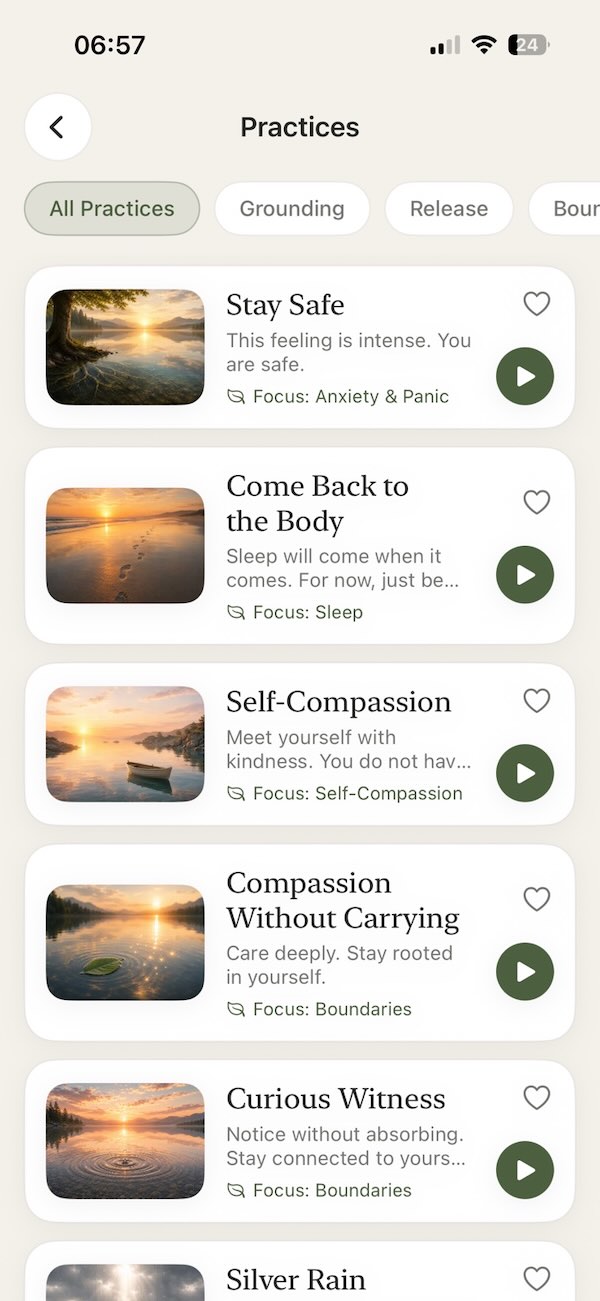
Anxiety can quietly turn connection into responsibility — until you're carrying other people's feelings, worries, and expectations as if they were your own. Compassion Without Carrying is a gentle practice for the moments when caring about others starts to feel overwhelming: a way to stay open, stay kind, and still set some of that weight down.

Try the practice
Compassion Without Carrying
Care without losing yourself.
Ready for more support?
Continue your journey in Aira
Access the full library of guided practices, tools, and resources anytime, anywhere.
- 10+Guided Practices
- AnxietyRelief Tools
- SleepSupport
- TrackYour Progress
- OfflineAccess
Available on iPhone and iPad