Boundaries with Family: Setting Limits with Parents and Relatives
Why boundaries with family feel hardest, handling the guilt, overbearing parents, in-laws, and enmeshment, and how to set limits while still loving them.

Boundaries are hard with almost everyone — and hardest of all with family. The people who raised you, or grew up beside you, know exactly which guilt buttons to press, often without meaning to. Years of roles and history are baked in, so a simple no, thank you with a parent can feel like a betrayal in a way it never would with a stranger. If setting limits with your family fills you with guilt and dread, that doesn't mean you're doing it wrong.
This is a guide to boundaries with family: why they're so uniquely difficult, the common challenges, and how to set limits while still loving the people involved.
Why boundaries with family are the hardest
Family boundaries carry weight that other relationships don't. There's history — decades of patterns where your role may have been the helper, the peacemaker, the easy one. There's obligation — the deep sense that family comes first, no matter what. And there's love tangled with hurt, which makes clean lines feel impossible. On top of that, family members are the ones most used to the old you, so they often resist the new boundaries most. None of that means the boundaries are wrong — only that they're swimming against a strong current.
Why guilt is strongest with family
The guilt that follows a family boundary can be overwhelming, and there's a reason. Many of us absorbed, early and deeply, that our job was to keep a parent happy, a household calm, or the family peace intact. Setting a limit can feel like breaking that unspoken contract — like you're being a bad daughter, son, or sibling. But guilt isn't proof you've done something wrong; with family, it's usually just proof that you're doing something the system isn't used to. (Guilt around boundaries has its own fuller guide.)
Common family boundary challenges
A few patterns show up again and again.
Overbearing or controlling parents
Unsolicited advice, criticism, or involvement in decisions that are yours to make. The boundary with a parent — a mother or father used to having a say — is often about what you will and won't discuss, and how much access they have to your choices.
Enmeshment
When a family treats separateness as betrayal — where everyone is expected to share feelings, opinions, and decisions, and individual space feels like rejection. The boundary in an enmeshed family is your right to be a separate person.
In-laws and extended family
New family with old dynamics. Boundaries with in-laws often need to be set as a couple, together, so no one is left defending alone.
Holidays and gatherings
Concentrated time, old roles, and high expectations. Holiday family boundaries — limits on length of visits, topics, and how much you take on — can protect the occasion rather than ruin it.
How to set boundaries with family
The principles are the same as anywhere, applied with extra steadiness. Keep the boundary clear and short; with family, long justifications invite the longest debates. Decide in advance what you'll do, not what you'll make them do — if this topic comes up, I'll change the subject or leave the room. Expect testing, and don't take resistance as a sign you were wrong. And where you can, set shared boundaries with a partner or sibling so you're not holding the line alone.
When family doesn't respect your boundaries
Some family members will keep pushing — that's often why the boundary was needed. You can hold a limit without convincing anyone it's valid; their disagreement doesn't make it invalid. With repeated crossings, or with genuinely toxic family dynamics, boundaries often come with natural consequences — shorter visits, fewer topics shared, more distance — not as punishment, but as protection. You're allowed to love someone and still limit your exposure to behaviour that harms you.
You can love them and still have limits
This is the heart of it: boundaries with family aren't a rejection of family. You can love your parents and not take their advice. You can care about a sibling and decline their requests. You can honour where you came from and still be a separate person with your own life. In fact, clear limits often make family relationships more bearable and more honest, because you're no longer quietly resentful or self-erasing every time you're together.
The fuller picture
The dread around a family limit rests on one belief: setting a boundary with family means I'm a bad daughter, son, or sibling — family comes first, so a limit is a betrayal. It feels true because the guilt is fierce and familiar, and because families often run on an unspoken contract you signed before you could read it.
But notice why it's so loud here specifically. Family boundaries swim against decades of history, obligation, and old roles — and the people most used to the old you tend to resist the new line hardest. That resistance, and the guilt riding along with it, isn't evidence you've done wrong; it's evidence you're doing something the system isn't used to. A boundary was never a rejection of the people. You can love your parents and not take their advice; care about a sibling and decline their request; honour where you came from and still be a separate person with your own life. In fact, clear limits usually make family closer and more honest, because you stop being quietly resentful or self-erasing every time you're together. You don't have to choose between loving your family and having a self. The boundary is how you keep both.
Final thoughts
Setting boundaries with family is some of the hardest emotional work there is, and the guilt can be fierce — not because you're doing something wrong, but because you're rewriting a very old script. Go gently, and expect it to feel uncomfortable for a while. You don't have to choose between loving your family and having a self; boundaries are how you keep both. One steady limit, one survived wave of guilt, one separate breath at a time.
Try a gentle practice
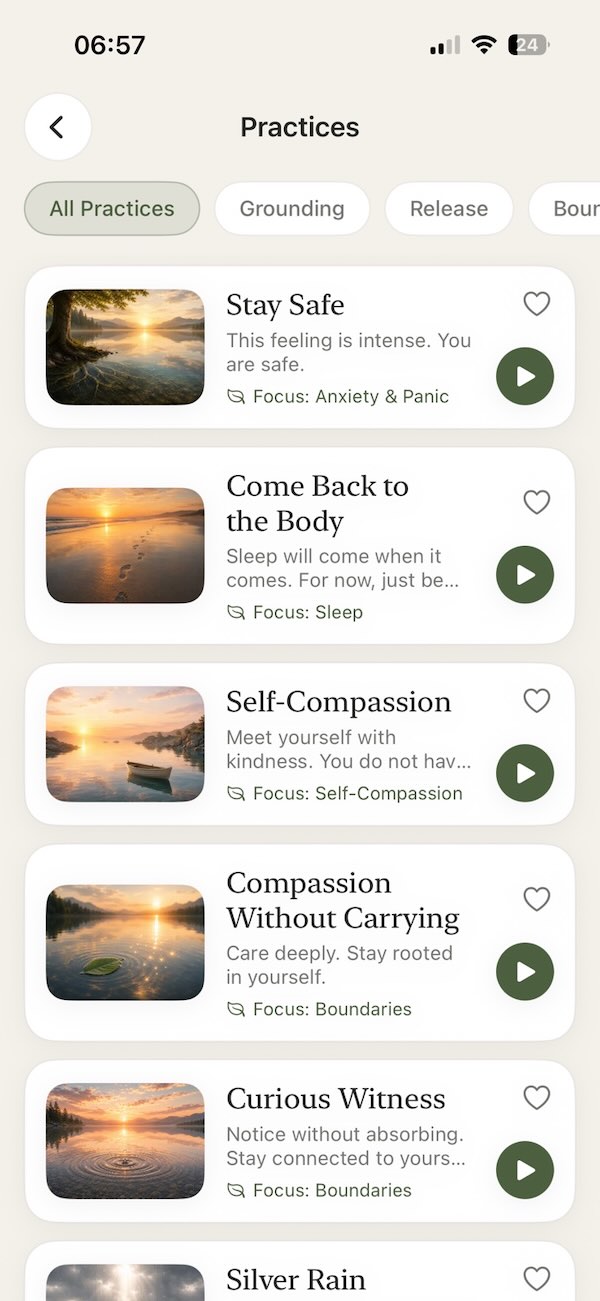
With family, it's easy to absorb everyone's feelings and lose track of where you end. Compassion Without Carrying is a gentle practice for staying with yourself in the middle of it — a way to care about your family without taking on their emotions as your own, let their reactions be theirs, and stay a separate, steady person even in the relationships that pull hardest.

Try the practice
Compassion Without Carrying
Care without losing yourself.
Ready for more support?
Continue your journey in Aira
Access the full library of guided practices, tools, and resources anytime, anywhere.
- 10+Guided Practices
- AnxietyRelief Tools
- SleepSupport
- TrackYour Progress
- OfflineAccess
Available on iPhone and iPad