When People Don't Respect Your Boundaries
What to do when someone ignores or pushes back on your boundaries — why it happens, how to hold the line, and enforcing limits with consequences, without guilt.

Setting a boundary is one thing. What happens when the other person simply ignores it — keeps doing the thing, pushes back, guilt-trips you, or acts as though you never said anything at all? This is where many people give up, because holding a boundary someone is actively resisting is far harder than stating it once.
This is a guide to what to do when people don't respect your boundaries: why it happens, how to hold the line, and how to enforce a limit without turning into someone you're not.
Why people don't respect boundaries
It helps to understand what's behind the pushback, because not all of it is the same. Sometimes a person genuinely didn't register the boundary — it was too soft, or buried in apology. Sometimes they're simply used to the old you, and a new limit takes time to land. And sometimes someone benefits from you having no boundaries, and resists because the limit inconveniences them. Telling these apart matters: the first needs a clearer restatement; the last needs you to hold firm regardless of their reaction.
Pushback doesn't mean you were wrong
When someone resists your boundary, it's easy to read their reaction as proof you asked for too much. Usually it's the opposite. Pushback often means the boundary was both needed and effective — it's changing a dynamic that used to work in their favour. Anger, guilt-tripping, sulking, or you've changed are frequently signs the limit is working, not signs you should drop it. The discomfort of the other person is not evidence of your wrongdoing.
How to hold a boundary that's being tested
Holding a boundary under pressure is its own skill, separate from setting one.
Restate it once, calmly
You don't need to argue or justify. A simple, calm repetition — like I said, that doesn't work for me — is often enough. You can be a broken record without being harsh.
Don't get pulled into debate
A boundary isn't up for negotiation, and you don't have to defend it. The moment you start justifying, you've handed them a chance to argue you out of it. No is a complete answer.
Let them have their reaction
They may be upset. That's allowed, and it's theirs. You can care about their feelings without taking responsibility for managing them, and without letting them decide your limit.
Stay steady, not harsh
Standing your ground doesn't require coldness or attack. You can hold a line warmly and firmly at once — rooted, not aggressive.
Enforcing boundaries with consequences
Sometimes restating isn't enough, and a boundary needs a consequence to be real. A consequence isn't a punishment or a threat — it's simply what you will do if the line keeps being crossed: if the conversation turns to this, I'll leave; if you raise your voice, I'll end the call. Crucially, consequences are about your actions, not controlling theirs. And they only work if you follow through; an unenforced boundary teaches people it isn't real. Following through calmly is what gives a boundary its weight.
When someone keeps crossing the line
If a person repeatedly disregards your boundaries despite clear restatement and consequences, that itself is information. Persistent boundary violations tell you something about the relationship and how much access that person should have to you. You may need more distance, less sharing, or — in serious cases — to step back from the relationship for a while. That isn't cruelty; it's protecting yourself from behaviour that has shown it won't change. (With difficult or manipulative people, holding boundaries has its own particular challenges, covered separately.)
The fuller picture
When someone resists your limit, one thought rises fast: their pushback means I asked for too much — I should give in to make the discomfort stop. It feels true because their displeasure is right there in front of you, loud and immediate, and caving would end it in seconds.
But read the resistance more carefully. Anger, guilt-trips, sulking, you've changed — these are frequently signs the boundary is working, not signs it was wrong. A limit that meets pushback is often one that's changing a dynamic which used to run in the other person's favour, which is exactly why they resist it. So their discomfort isn't evidence of your wrongdoing; it's evidence the line landed. And notice what caving actually teaches: that your boundary isn't real, that enough pressure makes it dissolve — which all but guarantees the next push. Holding steady isn't harshness. You can restate it once, let them have their reaction without taking responsibility for it, and stay warm and rooted at the same time. Every time you hold a line through the discomfort, you learn the thing that changes everything — that you can survive someone's displeasure without disappearing.
Final thoughts
When someone won't respect your boundary, the hardest part is staying steady while they're unhappy — resisting the pull to cave just to make the discomfort stop. But every time you hold a line through pushback, you teach two people something: them, that your boundary is real, and yourself, that you can survive someone's displeasure without disappearing. You don't have to be harsh, and you don't have to convince anyone. You only have to stay. One calm restatement, one followed-through consequence, one held line at a time.
Try a gentle practice
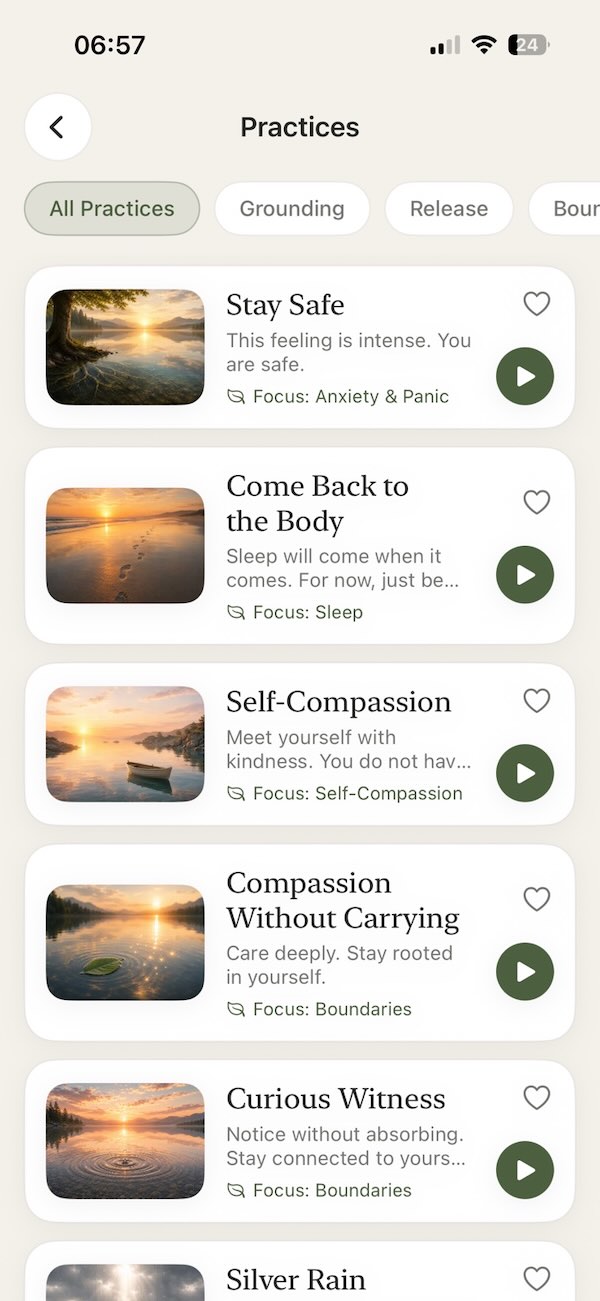
The moment a boundary is tested — when someone pushes and the urge to cave rises — is exactly where this practice lives. Hold the Line is a gentle practice for staying rooted under pressure: letting the other person have their feelings, riding out the guilt without undoing your limit, and holding your boundary steadily, without harshness or apology.

Try the practice
Hold the Line
Stay steady when you hold a boundary.
Ready for more support?
Continue your journey in Aira
Access the full library of guided practices, tools, and resources anytime, anywhere.
- 10+Guided Practices
- AnxietyRelief Tools
- SleepSupport
- TrackYour Progress
- OfflineAccess
Available on iPhone and iPad