Breathwork and the Nervous System: Breathing Techniques for Calm
How breathwork calms your nervous system, why the exhale matters most, and simple breathing techniques — physiological sigh, box breathing, 4-7-8 — to try.

Of all the ways to influence your nervous system, breathing is the most direct. It's the one part of the autonomic nervous system you can consciously control — and through it, you have a doorway to the rest. This is why breathwork has become such a popular tool for calm: a few minutes of the right breathing can shift you from wired to settled, with nothing but your own lungs.
This is a guide to breathwork and the nervous system: why breathing works, the one principle that matters most, and a handful of simple techniques to try.
Why breathing calms the nervous system
Breathing is unique: it runs automatically, but you can also take the wheel — which makes it a direct line into the autonomic nervous system that governs stress and calm. Your breath and your nervous system are constantly talking to each other: fast, shallow breathing signals activation, while slow, deep breathing signals safety. By deliberately changing how you breathe, you send your system a message it can't ignore, shifting it toward calm from the bottom up rather than trying to think your way there. (Much of this works through the vagus nerve, which has its own guide.)
The one principle: the exhale
If you remember only one thing about breathwork, make it this: the exhale calms you. Breathing in gently activates the system; breathing out gently calms it. So the key to almost every calming breath technique is making your out-breath longer than your in-breath. You don't need anything fancy — simply lengthening and slowing your exhale is enough to begin engaging the body's calming response. Every technique below is, at heart, a variation on this principle.
A few techniques to try
Different breathing patterns suit different moments. Here are some of the most useful and well-known.
The physiological sigh
Perhaps the fastest way to calm down in the moment: take a normal breath in through your nose, then a second small sip of air on top to fully inflate the lungs, and let it all out slowly through your mouth with a long exhale. Two or three of these in a row can take the edge off acute stress within seconds. It's the body's natural reset — the same double-breath you do involuntarily when you've been crying or are very upset.
Extended exhale breathing
The simplest ongoing practice: breathe in for a count of around four, and out for a count of six or more, keeping the exhale comfortably longer than the inhale. Continue for a minute or several. There's no magic in the exact numbers — the point is the longer out-breath. This is the most portable, reliable everyday calming breath, and a gentle place to start.
Box breathing
Box breathing (used by everyone from athletes to the military) uses equal counts: breathe in for four, hold for four, out for four, hold for four — like tracing the four sides of a box. The even rhythm and the holds make it steadying and focusing, useful for settling nerves before something stressful. If holding the breath feels uncomfortable or increases anxiety, shorten the holds or choose a different technique.
4-7-8 breathing
A popular calming pattern: breathe in for four, hold for seven, and exhale slowly for eight. The long exhale and the hold make it deeply settling, and many people find it helpful for winding down or getting to sleep. As with any breath-holding technique, go gently — if the counts feel like a strain, ease them; the goal is calm, not effort.
Coherent breathing
Coherent breathing means slowing your breath to around five or six full breaths per minute (roughly a count of five or six in, five or six out), with no holds. Practised for a few minutes, this slow, even pace gently shifts the nervous system toward balance, and is especially good as a regular daily practice for building a calmer baseline over time.
Going gently with breathwork
A few cautions. For some people, focusing on the breath — or holding it — can initially increase anxiety, especially if breathing is tied to panic; if a technique makes things worse, stop and try a gentler one, or another route to calm entirely. Don't force or strain the breath; calming breathwork should feel easeful, not effortful. And skip breath-holding or intense breathwork if you're pregnant or have a relevant medical condition without checking first. The aim is always gentle — you're inviting calm, not battling for it.
Final thoughts
Breathwork is one of the most accessible tools you have for calming your nervous system — always available, free, and surprisingly powerful. You don't need to master every technique; you only need the core principle (a longer exhale) and one or two patterns that work for you. A few slow breaths really can change your state, gently and from the inside out. One long exhale at a time.
Try a gentle practice
The simplest, most reliable calming breath is a slow inhale and a longer, slower exhale. Breathe is a gentle practice for exactly that — a guided way to slow your breathing and lengthen your out-breath, putting the core principle of breathwork to work whenever you need to come back toward calm.

Try the practice
Breathe
Help me slow down and find calm.
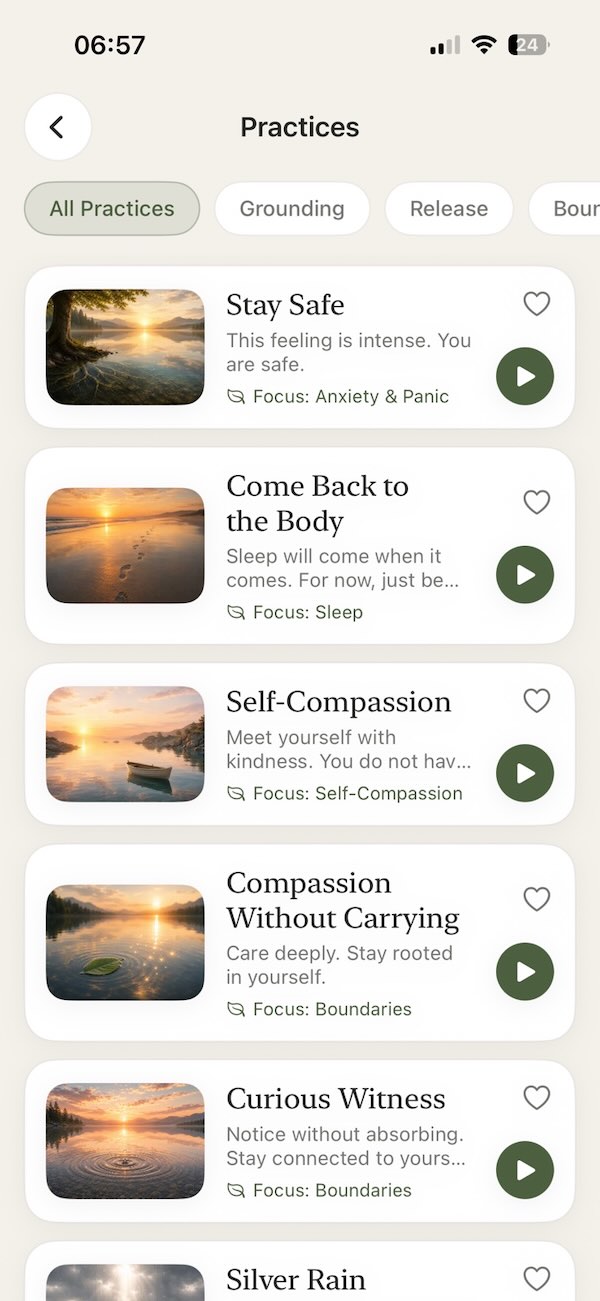
Ready for more support?
Continue your journey in Aira
Access the full library of guided practices, tools, and resources anytime, anywhere.
- 10+Guided Practices
- AnxietyRelief Tools
- SleepSupport
- TrackYour Progress
- OfflineAccess
Available on iPhone and iPad