The Vagus Nerve: How Your Body Finds Calm
A plain-language guide to the vagus nerve — what it is, how it calms your body, what vagal tone and polyvagal theory mean, and how to work with it.

If you've come across phrases like 'tone your vagus nerve' or 'polyvagal theory' and wondered what they actually mean, this is the nerve at the centre of how your body calms down. The vagus nerve is the main pathway your nervous system uses to shift out of stress and into rest — which is why it's become such a focus for anyone trying to feel calmer.
This is a plain-language guide to the vagus nerve: what it is, what it does, and how you can work with it to help your body settle.
What is the vagus nerve?
The vagus nerve is the longest nerve of the autonomic nervous system, wandering from the brainstem down through the body to the heart, lungs, and gut (its name means 'wandering'). It's the main highway of the parasympathetic — the 'rest and digest' — branch of your nervous system. In simple terms, it's the body's brake: the pathway that brings you down out of fight-or-flight and back toward calm once a threat has passed.
What does it do?
The vagus nerve helps regulate heart rate, breathing, digestion, and the body's overall shift between activation and rest. When it's working well, it lets you calm down efficiently after stress — slowing the heart, settling the breath, and signalling safety. It also carries a huge amount of information from the body up to the brain, which is part of why what happens in the body so strongly shapes how you feel.
Vagal tone, in plain terms
'Vagal tone' refers to how well your vagus nerve does its calming job — essentially, how efficiently your body can shift from stress back to rest. Higher vagal tone is associated with calming down more easily, greater emotional resilience, and feeling more settled in general; lower vagal tone with getting stuck in stress more readily. The encouraging part is that vagal tone isn't fixed — like a muscle, it can be strengthened with regular practice.
Polyvagal theory, briefly
You may have seen 'polyvagal theory,' an influential framework that describes how the vagus nerve underlies different states: a calm, socially-connected state when we feel safe; a fight-or-flight state under threat; and a shutdown state when overwhelmed. While aspects of the theory are still debated scientifically, it has given many people a useful language for understanding why they move between feeling calm, anxious, and shut down — and why a sense of safety is the gateway to calm.
How to work with your vagus nerve
You can gently stimulate the vagus nerve and support its calming effect, mostly through the body. Slow breathing with long exhales is the most direct route — a longer out-breath activates the vagal 'brake' and tells the body the emergency is over. Humming, gentle movement, exposure to cooler water, and feeling safe and connected with others all support vagal tone too. None of this is magic, but these simple, repeated practices genuinely help the body get better at finding its way back to calm.
Final thoughts
The vagus nerve isn't a wellness buzzword — it's a real and central part of how your body comes down from stress and back to calm. You don't need to understand all the science to benefit from it; you just need to know that working with your breath and body, especially the long exhale, speaks directly to this calming pathway. Strengthening it is a slow, gentle practice, and the more you do it, the more readily your body settles. One long exhale at a time.
Try a gentle practice
The most direct way to engage your vagus nerve is through slow breathing with a long, slow exhale. Breathe is a gentle practice for exactly that — a simple guided way to lengthen your out-breath, activate your body's natural calming brake, and help your nervous system shift from stress back toward rest.

Try the practice
Breathe
Help me slow down and find calm.
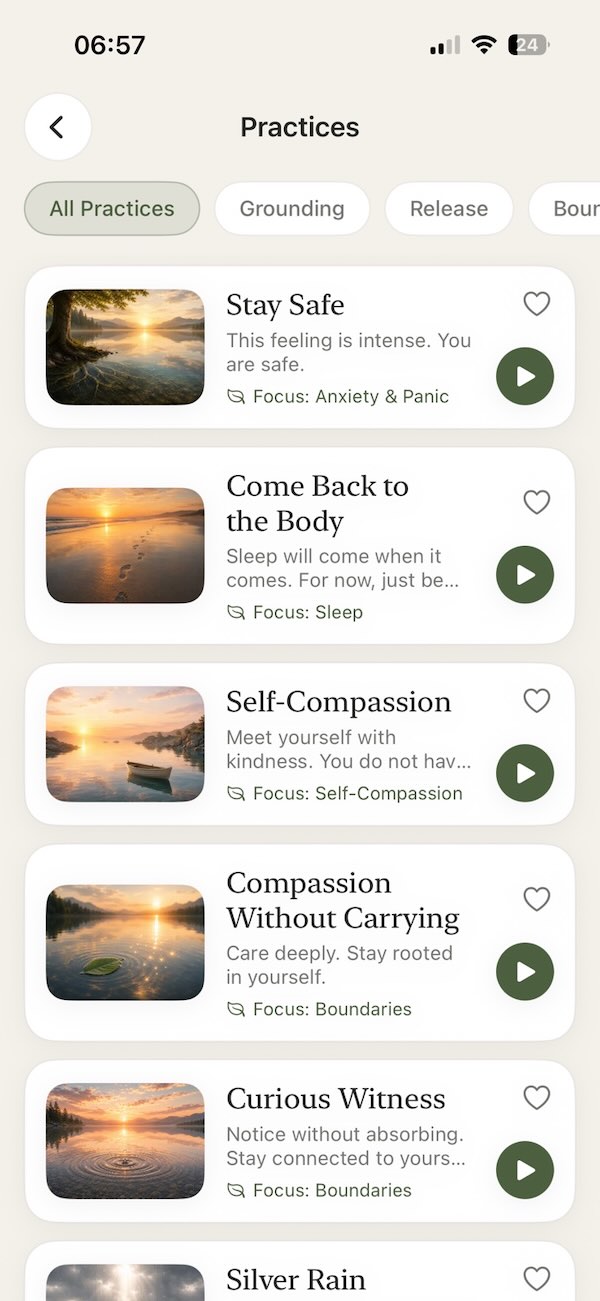
Ready for more support?
Continue your journey in Aira
Access the full library of guided practices, tools, and resources anytime, anywhere.
- 10+Guided Practices
- AnxietyRelief Tools
- SleepSupport
- TrackYour Progress
- OfflineAccess
Available on iPhone and iPad