Decision Anxiety: Why Making Decisions Feels So Difficult
Why decisions get harder the more you think, how analysis paralysis and decision fatigue work, and why thoughtful people often struggle most.
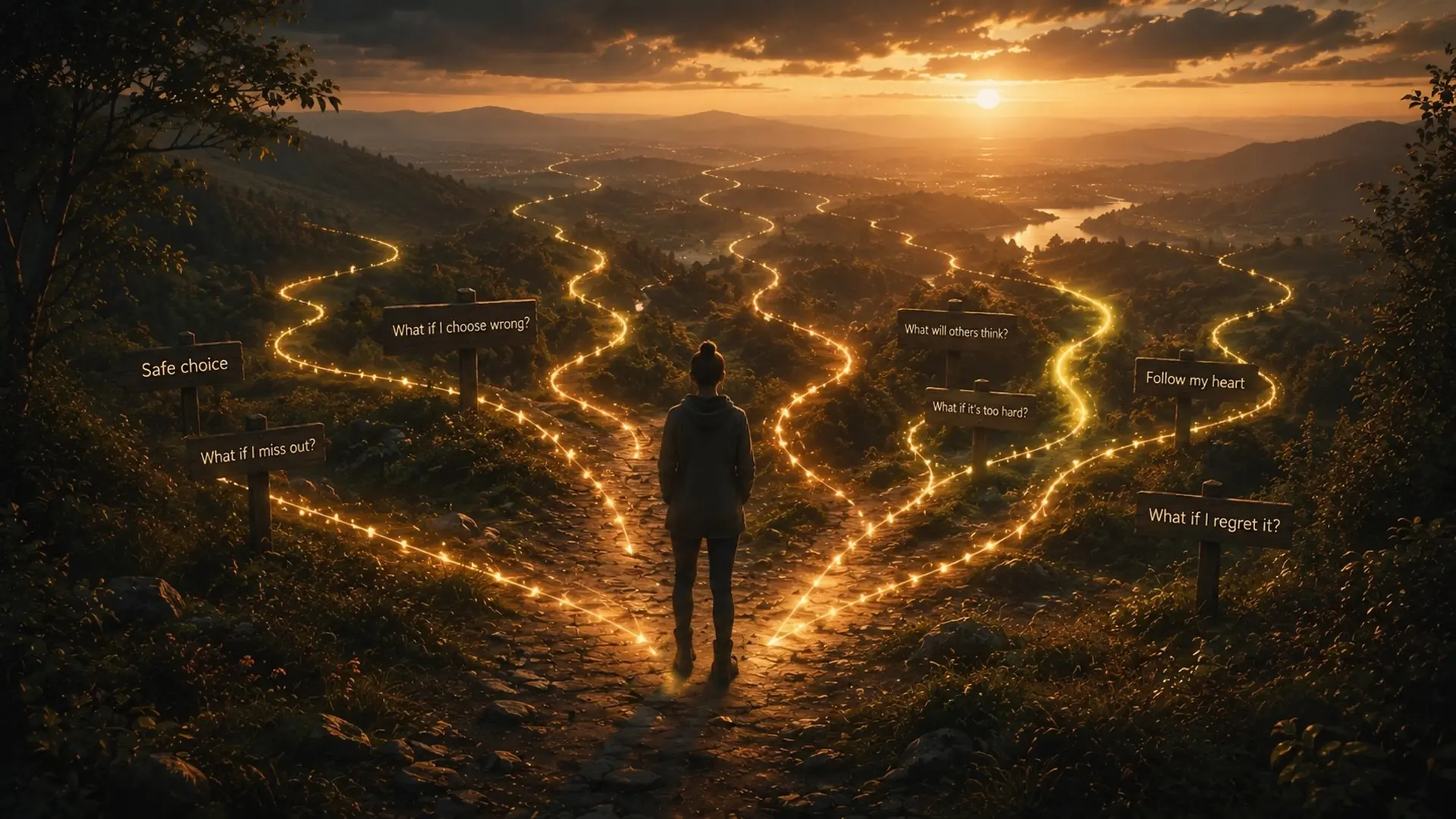
Most people think decisions should become easier once they have enough information. But if you struggle with decision anxiety, you may have discovered the opposite — the more you think, the harder the decision becomes.
You compare options. Research possibilities. Analyze outcomes. Imagine future consequences. Ask for advice. Then ask for more advice. And somehow you still feel stuck.
If this sounds familiar, you're not alone. Decision anxiety is one of the most common forms of anxiety, and it has very little to do with intelligence. In fact, highly thoughtful people often struggle with it the most.
What is decision anxiety?
Decision anxiety is the fear, stress, or overwhelm that arises when choosing between options. It can show up as indecisiveness, overthinking decisions, fear of making mistakes, constant comparison, analysis paralysis, second-guessing yourself, regret after making choices, and difficulty committing. Some people feel anxious before making a decision; others continue worrying long after the decision has been made.
Why is it so hard to make decisions?
Most people assume "I just need more information." But information is rarely the real problem — the real issue is often uncertainty. Every decision involves stepping into an unknown future. The anxious mind wants guarantees, certainty, proof that the choice will work out perfectly. Unfortunately, life rarely provides that.
Fear of making the wrong decision
At the heart of many decision struggles is a simple fear: "what if I choose wrong?" The mind starts imagining future regret, missed opportunities, negative consequences, disappointment, failure. Soon the decision begins to feel dangerous, and the brain responds by delaying action — not deciding starts to feel safer than deciding.
What is analysis paralysis?
Analysis paralysis happens when thinking becomes a substitute for choosing. The mind believes "just a little more research, one more comparison, one more opinion." But every new piece of information creates new uncertainty. Instead of moving closer to a decision, you become increasingly overwhelmed, and the search for certainty becomes endless.
Decision fatigue
Making decisions requires mental energy. The more choices you face, the more depleted your nervous system becomes — this is called decision fatigue. When exhausted, even simple choices can start feeling difficult (what should I eat? should I send that message? should I make this purchase?), and the brain becomes less confident and more avoidant.
Why thoughtful people often struggle more
People who are thoughtful, conscientious, and intelligent often experience more decision anxiety — because they can imagine more possibilities. More possibilities create more uncertainty, and more uncertainty creates more anxiety. The ability that helps them succeed in many areas of life can sometimes become a source of paralysis.
The hidden belief behind decision anxiety
Many anxious decision-makers carry an invisible assumption: "there is one perfect choice." This belief creates enormous pressure. But most decisions aren't about finding perfection — they're about choosing a reasonable path and adjusting as life unfolds. The perfect choice rarely exists, and perfect certainty certainly doesn't.
Why regret feels so threatening
People with decision anxiety often fear regret more than failure itself, worrying "what if I realize later that I should have chosen differently?" But regret is part of being human. Every path includes trade-offs; every choice closes some doors and opens others. Trying to eliminate all future regret often leads to remaining stuck in the present.
How to reduce decision anxiety
The goal isn't to eliminate uncertainty — it's to become more comfortable moving forward despite it.
Accept that certainty isn't coming
Many decisions can't be solved perfectly. At some point, action becomes more useful than analysis.
Focus on what you know right now
You can only decide with the information available today. Future information doesn't exist yet.
Let go of perfection
Most decisions don't require the perfect answer. They require a good-enough answer.
Trust your ability to adapt
Even if things don't go exactly as planned, you'll respond. You've handled uncertainty before, and you'll handle it again.
The fuller picture
Under the stuckness sits one quiet belief: there is one perfect choice, and if I just think hard enough I'll find it — so until I'm sure, not deciding is safer. It feels true because the stakes feel high and more analysis feels like diligence, like you're closing in on the right answer.
But watch what the extra thinking actually does. Every new comparison and opinion adds fresh uncertainty rather than removing it, so you don't move closer to a decision — you move further into the fog. The belief driving it — there's one perfect option — is the pressure itself: most choices aren't about finding perfection, they're about picking a reasonable path and adjusting as life unfolds. And "not deciding" was never the safe option it pretended to be — it's just a decision to stay stuck, with its own quiet cost. You can only ever choose with what you know today; the rest of the information doesn't exist yet. What actually carries you isn't certainty about the outcome — it's trust that whatever comes, you'll respond to it. You've done that before. You don't have to solve your whole future to take the next step.
The bottom line
Decision anxiety isn't a sign that you're incapable. It's often a sign that you care deeply about outcomes and want to avoid mistakes. The challenge is that life requires movement before certainty arrives. The future can't be fully predicted, and at some point the healthiest choice isn't finding the perfect answer — it's allowing yourself to choose.
Try a gentle practice
When anxiety turns every choice into a high-stakes decision, it can feel impossible to move forward — the mind keeps searching for certainty, even when certainty is unavailable. Nothing Left to Do is a gentle practice for decision anxiety, overthinking choices, fear of mistakes, and analysis paralysis, designed to help you step out of endless evaluation, soften the pressure to get everything right, and remember that you don't need to solve your entire future before taking the next step.

Try the practice
Nothing Left to Do
Release the day. Prepare for deep restorative sleep.
Ready for more support?
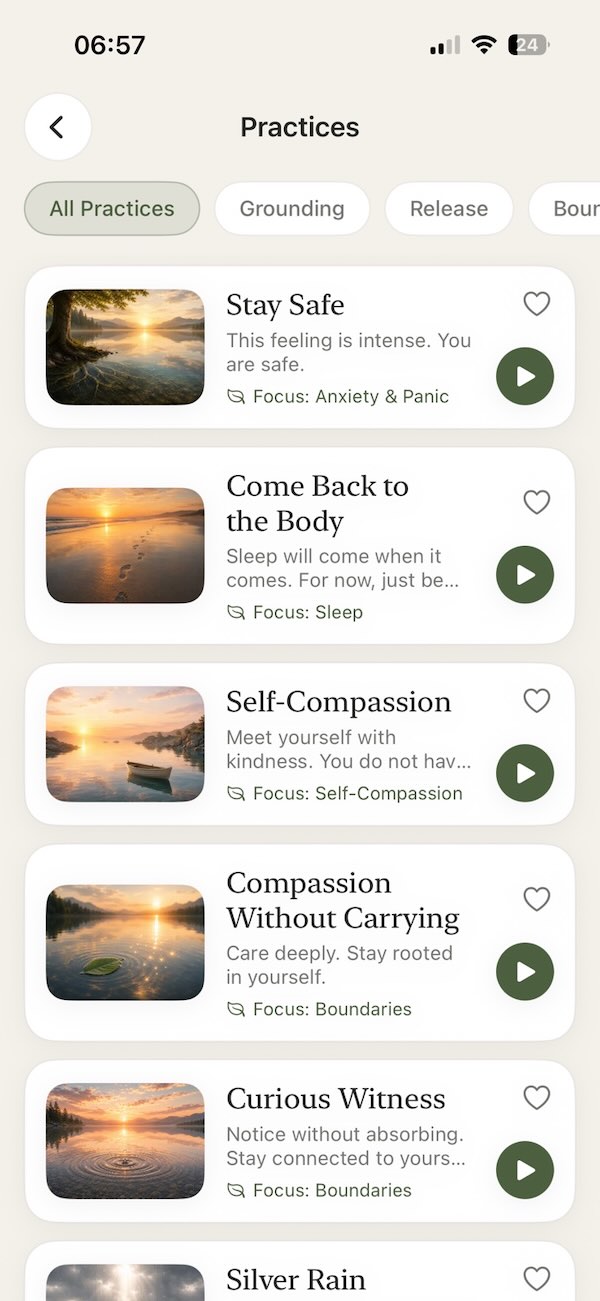
Continue your journey in Aira
Access the full library of guided practices, tools, and resources anytime, anywhere.
- 10+Guided Practices
- AnxietyRelief Tools
- SleepSupport
- TrackYour Progress
- OfflineAccess
Available on iPhone and iPad