Why Uncertainty Feels So Hard (and What Can Help)
Why the unknown feels so threatening, how intolerance of uncertainty drives the search for certainty, and how to feel safe without having all the answers.
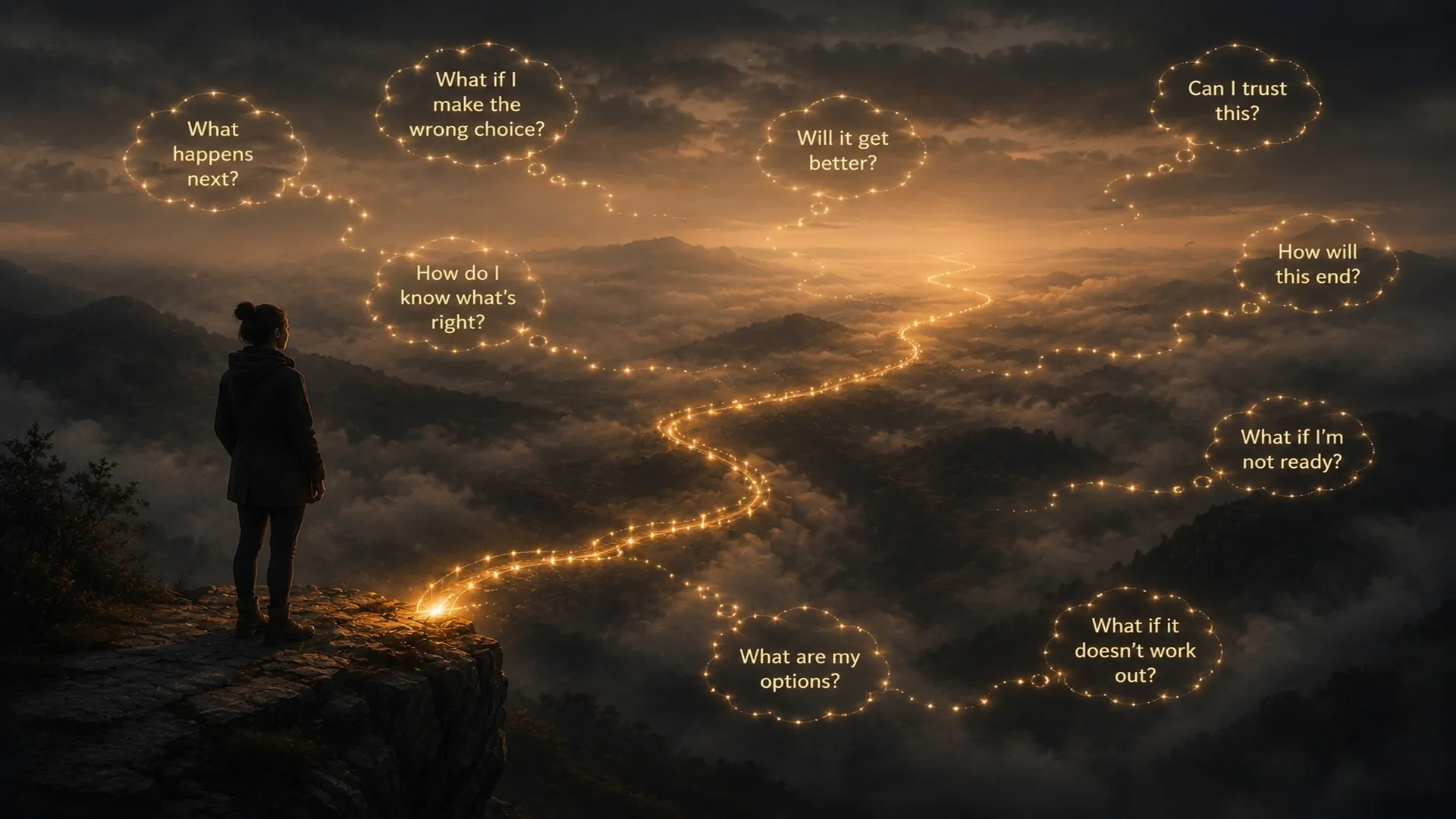
If anxiety had a favorite question, it would probably be: "but what if?" What if something goes wrong? What if I make the wrong decision? What if I miss something important? What if I don't know enough yet? What if I'm not prepared?
For many people, anxiety isn't really about danger — it's about uncertainty. The unknown feels uncomfortable. The unanswered question feels unbearable. The mind keeps searching for certainty, reassurance, and guarantees. Unfortunately, life rarely provides them.
What is intolerance of uncertainty?
Intolerance of uncertainty is the tendency to experience uncertainty as stressful, threatening, or unacceptable. People with high intolerance of uncertainty often feel uncomfortable when they don't know what will happen, whether things will work out, how others feel about them, whether they made the right choice, or whether they're safe, healthy, or prepared. The uncertainty itself becomes the problem.
Why does uncertainty feel so uncomfortable?
The brain is designed to predict, because prediction helps humans survive. When the future feels uncertain, the nervous system often responds as if something dangerous might be happening, and the brain starts asking "what information am I missing? what should I be worried about? how can I know for sure?" The search begins.
The search for certainty
Most people respond to uncertainty in ways that feel helpful — they research, analyze, reassure themselves, ask others for reassurance, check repeatedly, review conversations, plan excessively, and think through every possible outcome. At first these behaviors provide relief, but only temporarily. Soon the uncertainty returns, and the cycle starts again.
Why reassurance never lasts
Many people with anxiety ask for reassurance: "do you think everything will be okay? are you sure I didn't do anything wrong? does this sound normal? do you think I made the right decision?" Reassurance often feels helpful for a few minutes, then doubt returns and the mind wants reassurance again. The problem isn't the answer — it's the need for certainty itself. No amount of reassurance can completely remove uncertainty from life.
Anxiety and the need to know
The anxious mind often believes "once I know for sure, I'll finally relax." But certainty is rarely available. Most important parts of life contain uncertainty — relationships, health, career decisions, parenting, the future, personal growth. Waiting for complete certainty can keep people stuck for years.
Why uncertainty feels like danger
One of the biggest discoveries many people make is this: uncertainty is uncomfortable, but uncomfortable doesn't mean dangerous. The nervous system often confuses the two, and the body reacts as though uncertainty itself is a threat. This creates fear, the fear creates more searching, the searching reinforces the fear, and the cycle continues.
The hidden cost of certainty-seeking
When anxiety becomes focused on certainty, life can start shrinking. People may avoid decisions, delay action, stay in unhealthy situations, constantly seek reassurance, obsess over details, and struggle to trust themselves. The pursuit of certainty often creates more suffering than uncertainty itself.
Learning to live with uncertainty
The goal isn't to enjoy uncertainty — most people never do. The goal is to learn that uncertainty can exist without controlling your life. This begins by recognizing a simple truth: you've already lived through uncertainty thousands of times. Every meaningful chapter of your life began without guarantees — every relationship, every opportunity, every change. Every step forward required moving without complete certainty.
How to tolerate uncertainty
Notice the urge to seek certainty
Before acting on the urge to check, research, or ask for reassurance, pause. Simply notice: "my mind wants certainty right now." Awareness creates space.
Remember that uncertainty is normal
The future is uncertain for everyone. Anxiety often creates the illusion that certainty is available if you search hard enough. Most of the time, it isn't.
Focus on what exists right now
Uncertainty lives in imagined futures; this moment is already here. Return to your breathing, your body, your surroundings. The present moment is often more stable than the future your mind is imagining.
Practice safety instead of certainty
This is the shift that changes everything. The goal isn't "how can I know for sure?" It becomes "can I feel safe even when I don't know?"
The fuller picture
Driving the endless what if is one promise: once I know for sure, I'll finally be able to relax. It feels true because the not-knowing is so uncomfortable that certainty seems like the obvious cure — get the guarantee, and the fear will lift.
But watch what the body is actually doing: it's treating uncertainty as if it were danger, reacting to an open question the way it would to a real threat. Uncomfortable and dangerous aren't the same thing — the nervous system just confuses them. And the certainty it's waiting for mostly doesn't exist: relationships, health, the future, almost everything that matters carries no guarantee, so "I'll relax once I know" quietly becomes "I'll relax never." Here's the evidence you already hold, though: you have lived through uncertainty thousands of times. Every relationship, every change, every step forward began without a guarantee — and you met them anyway. So the question that frees you isn't how can I know for sure? but can I feel safe even when I don't know? Safety was never on the far side of certainty. It's available now, one unguaranteed step at a time.
The bottom line
Many anxiety struggles aren't actually about danger — they're about uncertainty. The mind searches for certainty because it hopes certainty will create safety. But certainty is rarely available. The good news is that safety doesn't require certainty. You don't need to know exactly what will happen. You don't need guarantees. You don't need every answer. You only need enough trust to take the next step.
Try a gentle practice
When uncertainty feels overwhelming, the mind starts searching for answers and guarantees it can't have. Curious Witness is a gentle practice for the discomfort of not knowing — a way to meet uncertainty with openness and curiosity instead of resistance, so the unknown begins to feel less like a threat to solve and more like something you can sit beside.

Try the practice
Curious Witness
Notice without needing to change.
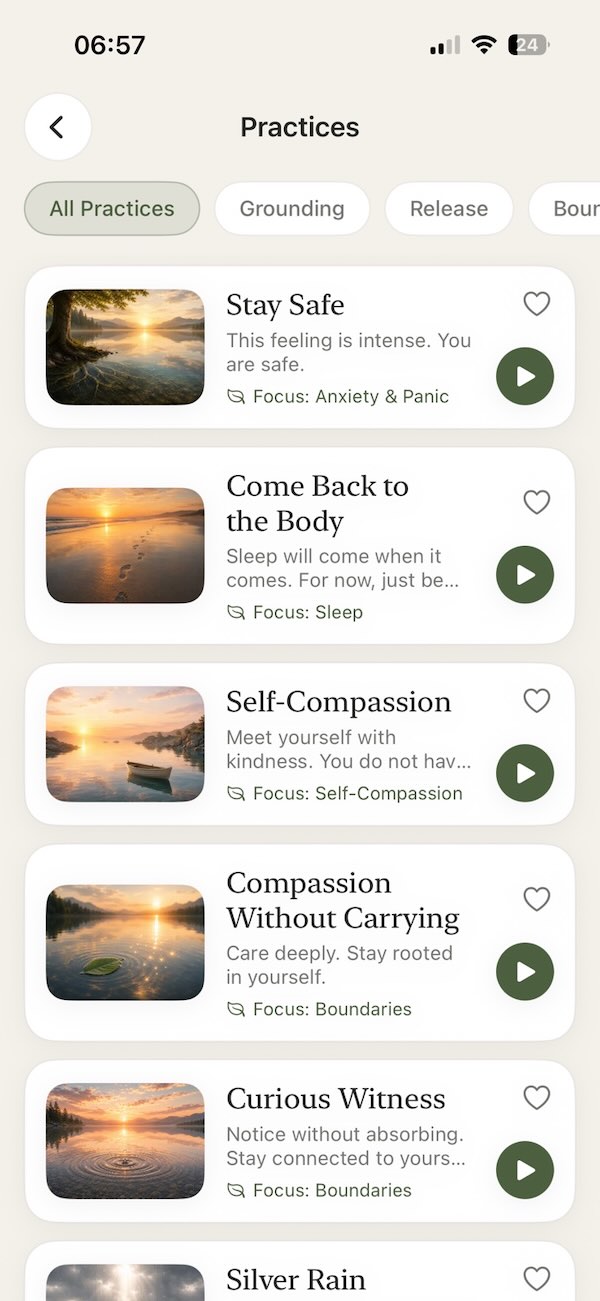
Ready for more support?
Continue your journey in Aira
Access the full library of guided practices, tools, and resources anytime, anywhere.
- 10+Guided Practices
- AnxietyRelief Tools
- SleepSupport
- TrackYour Progress
- OfflineAccess
Available on iPhone and iPad